72,95 €
72,95 €
inkl. MwSt.
Sofort per Download lieferbar

36 °P sammeln
72,95 €
Als Download kaufen
72,95 €
inkl. MwSt.
Sofort per Download lieferbar
36 °P sammeln
Jetzt verschenken
Alle Infos zum eBook verschenken
72,95 €
inkl. MwSt.
Sofort per Download lieferbar
Alle Infos zum eBook verschenken
36 °P sammeln

Andere Kunden interessierten sich auch für
") Criminality and Crime (eBook, PDF)72,95 €
Criminality and Crime (eBook, PDF)72,95 €") Criminality and the Modern (eBook, ePUB)25,95 €
Criminality and the Modern (eBook, ePUB)25,95 €") Cartel Criminality (eBook, ePUB)41,95 €
Cartel Criminality (eBook, ePUB)41,95 €") State Criminality (eBook, ePUB)35,95 €
State Criminality (eBook, ePUB)35,95 €") Crime and Violence in the Caribbean (eBook, ePUB)73,95 €
Crime and Violence in the Caribbean (eBook, ePUB)73,95 €") Drugs, Crime and Violence (eBook, ePUB)30,95 €
Drugs, Crime and Violence (eBook, ePUB)30,95 €") Masculinities and Crime (eBook, ePUB)28,95 €
Masculinities and Crime (eBook, ePUB)28,95 €





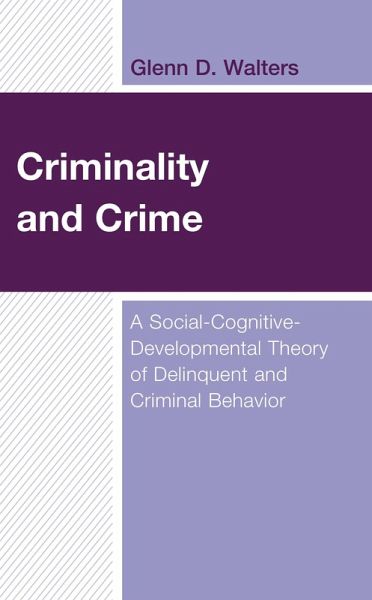
Walters provides a detailed description of how criminal thinking serves as a vital link between criminality and crime. Criminality, the propensity to become involved in criminal activity, and crime, participation in a specific criminal event, are normally treated as separate entities. Most criminological theories, in fact, can be classified as either theories of criminality or theories of crime. It is the author's contention that criminality and crime are two sides of the same coin, and that criminal thinking can explain both. The first of three sections explores the elements of criminality and crime across biological, social, cognitive, and developmental forms. The second section integrates the individual elements into three models using mediation and moderation methodologies. Two of the models are designed to explain criminality (moral and control) and the third is designed to explain crime (decision-making). The final section of the book emphasizes application and explains that change is a function of our ability to build competencies in offenders regardless of age. The result is an integrated approach in which criminality and crime are viewed as indispensable parts of a larger theory of criminological development.