36,95 €
36,95 €
inkl. MwSt.
Sofort per Download lieferbar

18 °P sammeln
36,95 €
Als Download kaufen
36,95 €
inkl. MwSt.
Sofort per Download lieferbar
18 °P sammeln
Jetzt verschenken
Alle Infos zum eBook verschenken
36,95 €
inkl. MwSt.
Sofort per Download lieferbar
Alle Infos zum eBook verschenken
18 °P sammeln

Andere Kunden interessierten sich auch für
") Crisis in the Professions (eBook, PDF)36,95 €
Crisis in the Professions (eBook, PDF)36,95 €") The Individual After Modernity (eBook, ePUB)41,95 €
The Individual After Modernity (eBook, ePUB)41,95 €") The Rise and Fall of Citizenship (eBook, ePUB)39,95 €
The Rise and Fall of Citizenship (eBook, ePUB)39,95 €") Making Sense of Expertise (eBook, ePUB)35,95 €
Making Sense of Expertise (eBook, ePUB)35,95 €") Business Bullshit (eBook, ePUB)33,95 €
Business Bullshit (eBook, ePUB)33,95 € (eBook, ePUB)") Max Weber's 'Science as a Vocation' (RLE Social Theory) (eBook, ePUB)45,95 €
Max Weber's 'Science as a Vocation' (RLE Social Theory) (eBook, ePUB)45,95 €") Identifying and Managing Risk at Work (eBook, ePUB)41,95 €
Identifying and Managing Risk at Work (eBook, ePUB)41,95 €
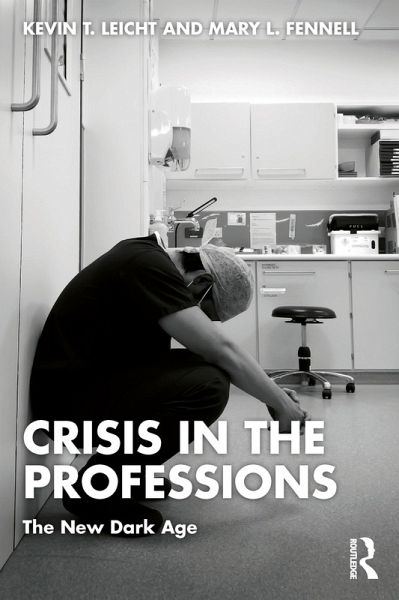
Crisis in the Professions: The New Dark Age presents a wide, panoramic view into the state of modern professional work in the United States. Struggling labor markets, growing inequalities, and increasing amounts of cultural and political mistrust are but a few major changes undermining the people seen as essential in society and needed to compete in a globalized, highly skilled world.
The authors explore this profound dilemma through a variety of methods, each one allowing them to identify significant areas of change and concern. They address macro-level social, political, and economic forces at the root of these changes and pair these explanations with illustrative vignettes of young, would-be professionals to paint a comprehensive, albeit complicated picture of professional work in the 21st century. Amid a backdrop of increasing globalization, technological advance, and cultural devaluation of expertise, the authors point attention to the mounting implications these shifts have for new generations of professionals and consider alternative models to address signs of precarity and instability within the professions.
With piercing insight and compelling evidence, Crisis in the Professions probes deeply enough to stimulate scholars and researchers invested in the sociological study of work and provides a valuable, versatile read for advanced students in these areas as well.
The authors explore this profound dilemma through a variety of methods, each one allowing them to identify significant areas of change and concern. They address macro-level social, political, and economic forces at the root of these changes and pair these explanations with illustrative vignettes of young, would-be professionals to paint a comprehensive, albeit complicated picture of professional work in the 21st century. Amid a backdrop of increasing globalization, technological advance, and cultural devaluation of expertise, the authors point attention to the mounting implications these shifts have for new generations of professionals and consider alternative models to address signs of precarity and instability within the professions.
With piercing insight and compelling evidence, Crisis in the Professions probes deeply enough to stimulate scholars and researchers invested in the sociological study of work and provides a valuable, versatile read for advanced students in these areas as well.
Dieser Download kann aus rechtlichen Gründen nur mit Rechnungsadresse in A, B, BG, CY, CZ, D, DK, EW, E, FIN, F, GR, HR, H, IRL, I, LT, L, LR, M, NL, PL, P, R, S, SLO, SK ausgeliefert werden.
The precarious situation found within professional work raises questions about how society will organize expert knowledge. This book provides valuable insights about the reasons for and implications of the decline of these elite occupations. - Arne L. Kalleberg, Kenan Professor of Sociology, University of North Carolina at Chapel Hill
This well-written and engaging book demonstrates how economic, social and political changes have undermined professional work and career opportunities in the United States. Long considered among the very best jobs in the economy - secure, well-paid, autonomous and fulfilling - professional work has become more precarious and hence less appealing. Leicht and Fennell document these changes, masterfully linking economic, social, and political trends to the changing labour market for professional workers, demonstrating how social change has implications for current and future professional workers. In so doing, they provide rich insights of interest to a broad audience. - Tracey L. Adams, Professor, Western University
Leicht and Fennell marshal evidence from many sources to document the declining prospects for the traditional professions - and the glimmers of hope for students who are hoping to become scientists, academicians, attorneys, or physicians. - Teresa A. Sullivan, President Emerita and University Professor, the University of Virginia
This well-written and engaging book demonstrates how economic, social and political changes have undermined professional work and career opportunities in the United States. Long considered among the very best jobs in the economy - secure, well-paid, autonomous and fulfilling - professional work has become more precarious and hence less appealing. Leicht and Fennell document these changes, masterfully linking economic, social, and political trends to the changing labour market for professional workers, demonstrating how social change has implications for current and future professional workers. In so doing, they provide rich insights of interest to a broad audience. - Tracey L. Adams, Professor, Western University
Leicht and Fennell marshal evidence from many sources to document the declining prospects for the traditional professions - and the glimmers of hope for students who are hoping to become scientists, academicians, attorneys, or physicians. - Teresa A. Sullivan, President Emerita and University Professor, the University of Virginia