38,99 €
inkl. MwSt.
Sofort per Download lieferbar
0 °P sammeln

Andere Kunden interessierten sich auch für
") Critical Neuroscience (eBook, ePUB)38,99 €
Critical Neuroscience (eBook, ePUB)38,99 €") Great Myths of the Brain (eBook, PDF)14,99 €
Great Myths of the Brain (eBook, PDF)14,99 €") Making up the Mind (eBook, PDF)28,99 €
Making up the Mind (eBook, PDF)28,99 €") Developmental Cognitive Neuroscience (eBook, PDF)37,99 €
Developmental Cognitive Neuroscience (eBook, PDF)37,99 €") The Wiley Handbook on the Cognitive Neuroscience of Learning (eBook, PDF)139,99 €
The Wiley Handbook on the Cognitive Neuroscience of Learning (eBook, PDF)139,99 €") Computational Models of Brain and Behavior (eBook, PDF)142,99 €
Computational Models of Brain and Behavior (eBook, PDF)142,99 €") Critical Neuroscience and Philosophy (eBook, PDF)72,95 €
Critical Neuroscience and Philosophy (eBook, PDF)72,95 €

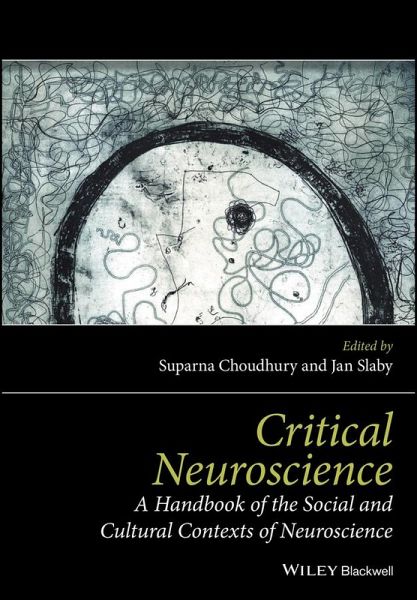
Critical Neuroscience: A Handbook of the Social and Cultural Contexts of Neuroscience brings together multi-disciplinary scholars from around the world to explore key social, historical and philosophical studies of neuroscience, and to analyze the socio-cultural implications of recent advances in the field. This text's original, interdisciplinary approach explores the creative potential for engaging experimental neuroscience with social studies of neuroscience while furthering the dialogue between neuroscience and the disciplines of the social sciences and humanities. Critical Neuroscience transcends traditional skepticism, introducing novel ideas about 'how to be critical' in and about science.
Dieser Download kann aus rechtlichen Gründen nur mit Rechnungsadresse in D ausgeliefert werden.
Neurological thinking has extended itself into a great many spheres of life, from "neuroanthropology" to "neurozoology". We have urgently needed to understand this development within a broad historical and cultural context and Critical Neuroscience provides us with the necessary tools to engage with neuroscience and its social impacts in productive and intelligent ways. The book will be an extremely important resource for anyone interested in understanding how and why neuroscientific research has led us to think about social life in new ways.
Emily Martin, Professor of Anthropology, New York University and author of 'Bipolar Expeditions: Mania and Depression in American Culture'
At a time where neuroscience, whether molecular or social, is expanding so rapidly to nearly all aspects of human societies, way beyond academia, this volume brings a welcome and refreshing perspective. Choudhury and Slaby are to be commended for bringing together various scholars within a framework that constructively criticizes and analyzes potentials and problems, promises and challenges, pitfalls and strengths associated with human neuroscience. This volume is extremely important to all, and is of special benefit to the emerging field of social neuroscience.
Jean Decety, Professor of Psychology and Psychiatry and Co-Director of Brain Research Imaging Centre, University of Chicago
The neurosciences today are at once the site of genuinely exciting research, of wild claims for the field's "revolutionary" significance for human self-understanding, and of skeptical dismissals of both. Critical Neuroscience shows instead how to analyze this scientific work with utmost seriousness, through critical reflection on its history and guiding assumptions, its involvement in multiple practical and institutional settings, its scientific prospects, and how it affects and is affected by how we think about ourselves. The book offers a model for thoughtful engagement with innovative, widely influential scientific research.
Joseph Rouse, Professor of Philosophy and Chair of the 'Science in Society' Program, Wesleyan University, USA
Emily Martin, Professor of Anthropology, New York University and author of 'Bipolar Expeditions: Mania and Depression in American Culture'
At a time where neuroscience, whether molecular or social, is expanding so rapidly to nearly all aspects of human societies, way beyond academia, this volume brings a welcome and refreshing perspective. Choudhury and Slaby are to be commended for bringing together various scholars within a framework that constructively criticizes and analyzes potentials and problems, promises and challenges, pitfalls and strengths associated with human neuroscience. This volume is extremely important to all, and is of special benefit to the emerging field of social neuroscience.
Jean Decety, Professor of Psychology and Psychiatry and Co-Director of Brain Research Imaging Centre, University of Chicago
The neurosciences today are at once the site of genuinely exciting research, of wild claims for the field's "revolutionary" significance for human self-understanding, and of skeptical dismissals of both. Critical Neuroscience shows instead how to analyze this scientific work with utmost seriousness, through critical reflection on its history and guiding assumptions, its involvement in multiple practical and institutional settings, its scientific prospects, and how it affects and is affected by how we think about ourselves. The book offers a model for thoughtful engagement with innovative, widely influential scientific research.
Joseph Rouse, Professor of Philosophy and Chair of the 'Science in Society' Program, Wesleyan University, USA