Sie sind bereits eingeloggt. Klicken Sie auf 2. tolino select Abo, um fortzufahren.
Bitte loggen Sie sich zunächst in Ihr Kundenkonto ein oder registrieren Sie sich bei bücher.de, um das eBook-Abo tolino select nutzen zu können.
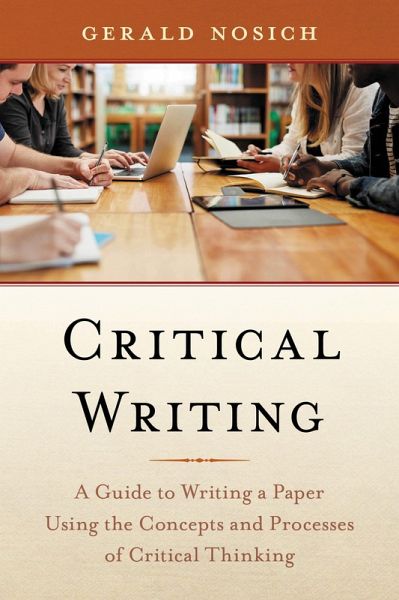
The main goal of Critical Writing is to provide students with a set of robust, integrated critical concepts and processes that will allow to them think through and write about a topic in a way that is built on-and permeated by-substantive critical thinking. This step-by-step guide shows: how to construct a thesis statement and the other main points that constitute the structure of the paper;how to write the paragraphs that make up the body of the paper;how to engage in productive research in a planned, self-directed way;how to make a point clear-not just grammatically or stylistically but also…mehr
The main goal of Critical Writing is to provide students with a set of robust, integrated critical concepts and processes that will allow to them think through and write about a topic in a way that is built on-and permeated by-substantive critical thinking. This step-by-step guide shows: how to construct a thesis statement and the other main points that constitute the structure of the paper;how to write the paragraphs that make up the body of the paper;how to engage in productive research in a planned, self-directed way;how to make a point clear-not just grammatically or stylistically but also how to clearly convey ideas to an audience;how to think your way through the numerous unanticipated issues (including aspects of grammatical correctness, transitions, and many others) that arise while writing papers.Each step provides close and careful processes for carrying out each of these tasks, through the use of critical thinking.
Die Herstellerinformationen sind derzeit nicht verfügbar.
Autorenporträt
Gerald Nosich is a noted authority on critical thinking across disciplines and has given more than 250 workshops on all aspects of teaching critical thinking. He is professor emeritus at both SUNY Buffalo State in New York and at the University of New Orleans. Nosich is the author of numerous books, articles, and audio and videotapes on critical thinking. He is a senior fellow of the Center and the Foundation for Critical Thinking.
Inhaltsangabe
Brief Overview To the Instructor A Framework for Critical Writing Main Features of the Book To the Student: Before You Begin Test It Out A Few Things to Keep in Mind as You Work Through This Book Acknowledgments CHAPTER 1 Thinking about Writing Writing and Critical Writing The Components of a Paper Getting Familiar with the Components of a Paper: Extended Examples Reflecting on the Process of Critical Writing Adapting Critical Writing to Your Own Individuality The Tasks That Lie Ahead Writing for Clarity: SEE-I A Framework for Critical Writing Chapter 1: Practice and Self-Assessment Exercises CHAPTER 2 Beginning the Paper: The Elements of Reasoning Introducing the Elements of Reasoning The Elements of Reasoning Getting a "Feel" for the Elements: Using the Elements to Understand a Topic Thinking Your Way through a Topic: Analyzing around-the-Circle Examples in Practice The Usefulness of the Elements of Reasoning So What Is Critical Thinking? Chapter 2: Practice and Self-Assessment Exercises Self-Assessment: Test It Out #1 CHAPTER 3 Constructing the Paper: Planning, Researching, Writing Constructing the Paper Out of the Analysis: Thesis, Main Points, Structure, Outline Enhanced SEE-I: Developing Your Paper Researching the Paper Two Roles of Research in Planning and Writing a Paper Doing Background Research Doing Focused Research Research and Critical Thinking Writing and Pre-writing Writing Better and Saving Time Where Are You in the Process? Chapter 3: Practice and Assessment Exercises Self-Assessment: Test It Out #2 CHAPTER 4 Other Minds, Other Views: Addressing "the Other Side" and Cultivating Critical Thinking Traits of Mind "The Other Side" "Weakpoints" Critical Thinking Traits of Mind The Traits and "the Other Side" of an Issue Three Problems in Thinking about "the Other Side" Seeing "the Other Side" Describing "the Other Side" Fairmindedly Incorporating "the Other Side" into Your Paper The Order of the Writing Process Chapter 4: Practice and Assessment Exercises Self-Assessment: Test It Out #3 CHAPTER 5 Making the Paper Better: Critical Thinking Standards and Socratic Questioning Revising the Paper: Making It Better The Standards of Critical Thinking How the Standards Help Using the Standards Implicitly Interventions: Enriching Your Paper with Socratic Questioning Making Socratic Questioning Interventions Socratic Interventions in Practice: Extended Examples Writing Longer Papers Chapter 5: Practice and Assessment Exercises CHAPTER 6 Making It Flow, Making It Complete: Content, Audience, Communication, and Criticality Fundamental and Powerful Concepts Making It Flow: Grammatical Issues How Grammar Works in Writing Impediments to Writing Grammatically Practical Guidelines Making It Complete Giving Credit Taking It Seriously The Larger Vision and Looking Ahead Chapter 6: Practice and Assessment Exercises Responses to Starred Practice and Assessment Exercises Bibliography Endnotes
Brief Overview To the Instructor A Framework for Critical Writing Main Features of the Book To the Student: Before You Begin Test It Out A Few Things to Keep in Mind as You Work Through This Book Acknowledgments CHAPTER 1 Thinking about Writing Writing and Critical Writing The Components of a Paper Getting Familiar with the Components of a Paper: Extended Examples Reflecting on the Process of Critical Writing Adapting Critical Writing to Your Own Individuality The Tasks That Lie Ahead Writing for Clarity: SEE-I A Framework for Critical Writing Chapter 1: Practice and Self-Assessment Exercises CHAPTER 2 Beginning the Paper: The Elements of Reasoning Introducing the Elements of Reasoning The Elements of Reasoning Getting a "Feel" for the Elements: Using the Elements to Understand a Topic Thinking Your Way through a Topic: Analyzing around-the-Circle Examples in Practice The Usefulness of the Elements of Reasoning So What Is Critical Thinking? Chapter 2: Practice and Self-Assessment Exercises Self-Assessment: Test It Out #1 CHAPTER 3 Constructing the Paper: Planning, Researching, Writing Constructing the Paper Out of the Analysis: Thesis, Main Points, Structure, Outline Enhanced SEE-I: Developing Your Paper Researching the Paper Two Roles of Research in Planning and Writing a Paper Doing Background Research Doing Focused Research Research and Critical Thinking Writing and Pre-writing Writing Better and Saving Time Where Are You in the Process? Chapter 3: Practice and Assessment Exercises Self-Assessment: Test It Out #2 CHAPTER 4 Other Minds, Other Views: Addressing "the Other Side" and Cultivating Critical Thinking Traits of Mind "The Other Side" "Weakpoints" Critical Thinking Traits of Mind The Traits and "the Other Side" of an Issue Three Problems in Thinking about "the Other Side" Seeing "the Other Side" Describing "the Other Side" Fairmindedly Incorporating "the Other Side" into Your Paper The Order of the Writing Process Chapter 4: Practice and Assessment Exercises Self-Assessment: Test It Out #3 CHAPTER 5 Making the Paper Better: Critical Thinking Standards and Socratic Questioning Revising the Paper: Making It Better The Standards of Critical Thinking How the Standards Help Using the Standards Implicitly Interventions: Enriching Your Paper with Socratic Questioning Making Socratic Questioning Interventions Socratic Interventions in Practice: Extended Examples Writing Longer Papers Chapter 5: Practice and Assessment Exercises CHAPTER 6 Making It Flow, Making It Complete: Content, Audience, Communication, and Criticality Fundamental and Powerful Concepts Making It Flow: Grammatical Issues How Grammar Works in Writing Impediments to Writing Grammatically Practical Guidelines Making It Complete Giving Credit Taking It Seriously The Larger Vision and Looking Ahead Chapter 6: Practice and Assessment Exercises Responses to Starred Practice and Assessment Exercises Bibliography Endnotes
Es gelten unsere Allgemeinen Geschäftsbedingungen: www.buecher.de/agb
Impressum
www.buecher.de ist ein Internetauftritt der buecher.de internetstores GmbH
Geschäftsführung: Monica Sawhney | Roland Kölbl | Günter Hilger
Sitz der Gesellschaft: Batheyer Straße 115 - 117, 58099 Hagen
Postanschrift: Bürgermeister-Wegele-Str. 12, 86167 Augsburg
Amtsgericht Hagen HRB 13257
Steuernummer: 321/5800/1497
USt-IdNr: DE450055826