1,99 €
1,99 €
inkl. MwSt.
Sofort per Download lieferbar

1 °P sammeln
1,99 €
Als Download kaufen
1,99 €
inkl. MwSt.
Sofort per Download lieferbar
1 °P sammeln
Jetzt verschenken
Alle Infos zum eBook verschenken
1,99 €
inkl. MwSt.
Sofort per Download lieferbar
Alle Infos zum eBook verschenken
1 °P sammeln

Andere Kunden interessierten sich auch für
") English Society (eBook, ePUB)1,99 €
English Society (eBook, ePUB)1,99 €") The Lost Art Of Reading (eBook, ePUB)1,99 €
The Lost Art Of Reading (eBook, ePUB)1,99 €") Browning's Shorter Poems (eBook, ePUB)1,99 €
Browning's Shorter Poems (eBook, ePUB)1,99 €") The Fashionable World Displayed (eBook, ePUB)0,99 €
The Fashionable World Displayed (eBook, ePUB)0,99 €") The Moon And Sixpence (eBook, ePUB)8,99 €
The Moon And Sixpence (eBook, ePUB)8,99 €") Aspects and Impressions (eBook, ePUB)1,82 €
Aspects and Impressions (eBook, ePUB)1,82 €") Search-Light Letters (eBook, ePUB)1,99 €
Search-Light Letters (eBook, ePUB)1,99 €





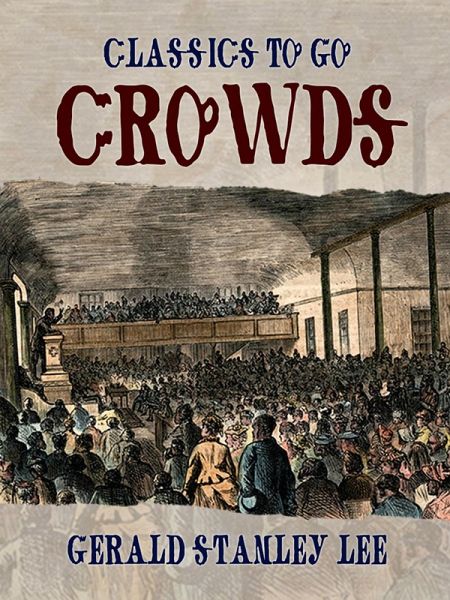
Excerpt: "The best picture I know of my religion is Ludgate Hill as one sees it going down the foot of Fleet Street. It would seem to many perhaps like a rather strange half-heathen altar, but it has in it the three things with which I worship most my Maker in this present world-the three things which it would be the breath of religion to me to offer to a God together-Cathedrals, Crowds, and Machines. With the railway bridge reaching over, all the little still locomotives in the din whispering across the street; with the wide black crowd streaming up and streaming down, and the big, faraway, other-worldly church above, I am strangely glad. It is like having a picture of one''s whole world taken up deftly, and done in miniature and hung up for one against the sky-the white steam which is the breath of modern life, the vast hurrying of our feet, and that Great Finger pointing toward heaven day and night for us all.... I never tire of walking out a moment from my nook in Clifford''s Inn and stealing a glimpse and coming back to my fireplace. I sit still a moment before going to work and look in the flames and think. The great roar outside the Court gathers it all up-that huge, boundless, tiny, summed-up world out there; flings it faintly against my quiet windows while I sit and think. And when one thinks of it a minute, it sends one half-fearfully, half-triumphantly back to one''s work-the very thought of it. The Crowd hurrying, the Crowd''s flurrying Machines, and the Crowd''s God, send one back to one''s work! In the afternoon I go out again, slip my way through the crowds along the Strand, toward Charing Cross. I never tire of watching the drays, the horses, the streaming taxis, all these little, fearful, gliding crowds of men and women, when a little space of street is left, flowing swiftly, flowing like globules, like mercury, between the cabs. But most of all I like looking up at that vast second story of the street, coming in over one like waves, like seas-all these happy, curious tops of ''buses; these dear, funny, way-up people on benches; these world-worshippers, sight-worshippers, and Americans-all these little scurrying congregations, hundreds of them, rolling past."
Dieser Download kann aus rechtlichen Gründen nur mit Rechnungsadresse in A, B, BG, CY, CZ, D, DK, EW, E, FIN, F, GR, HR, H, IRL, I, LT, L, LR, M, NL, PL, P, R, S, SLO, SK ausgeliefert werden.