45,95 €
inkl. MwSt.
Sofort per Download lieferbar
23 °P sammeln

Andere Kunden interessierten sich auch für
") Crucible of Freedom (eBook, PDF)45,95 €
Crucible of Freedom (eBook, PDF)45,95 €") Engaging Strangers (eBook, ePUB)79,95 €
Engaging Strangers (eBook, ePUB)79,95 €") Route 66 and the Formation of a National Cultural Icon (eBook, ePUB)67,95 €
Route 66 and the Formation of a National Cultural Icon (eBook, ePUB)67,95 €") Sorting Letters, Sorting Lives (eBook, ePUB)82,95 €
Sorting Letters, Sorting Lives (eBook, ePUB)82,95 €") Trains, Culture, and Mobility (eBook, ePUB)92,95 €
Trains, Culture, and Mobility (eBook, ePUB)92,95 €") Poverty and Place (eBook, ePUB)29,95 €
Poverty and Place (eBook, ePUB)29,95 €") Two Societies (eBook, ePUB)14,95 €
Two Societies (eBook, ePUB)14,95 €




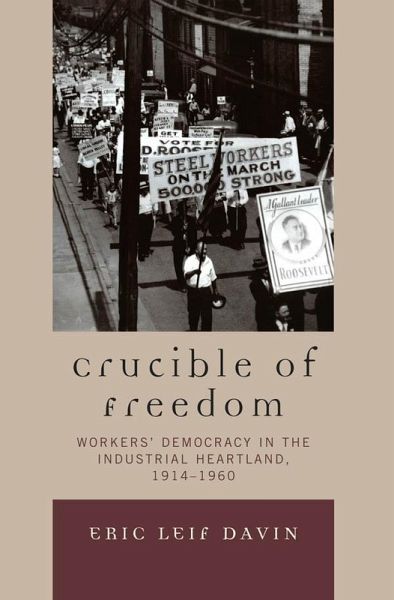
This book explores the relation between democracy and industrialization in United States history. Over the course of the 1930s, the political center almost disappeared as the Democratic New Deal became the litmus test of class, with blue collar workers providing its bedrock of support while white collar workers and those in the upper-income levels opposed it. By 1948 the class cleavage in American politics was as pronounced as in many of the Western European countries-such as France, Italy, Germany, or Britain-with which we usually associate class politics. Working people created a new America in the 1930s and 1940s which was a fundamental departure from the feudalistic and hierarchical America that existed before. They won the political rights of American citizenship which had been previously denied them. They democratized labor-capital relations and gained more economic security than they had ever known. They obtained more economic opportunity for them and their children than they had ever known and they created a respect for ethnic workers, which had not previously existed. In the process, class politics re-defined the political agenda of America as-for the first time in American history-the political universe polarized along class lines. Eric Leif Davin explores the meaning of the New Deal political mobilization by ordinary people by examining the changes it brought to the local, county, and state levels in Pittsburgh, Allegheny County, and Pennsylvania as a whole.