4,49 €
4,49 €
inkl. MwSt.
Sofort per Download lieferbar

0 °P sammeln
4,49 €
Als Download kaufen
4,49 €
inkl. MwSt.
Sofort per Download lieferbar
0 °P sammeln
Jetzt verschenken
Alle Infos zum eBook verschenken
4,49 €
inkl. MwSt.
Sofort per Download lieferbar
Alle Infos zum eBook verschenken
0 °P sammeln

Andere Kunden interessierten sich auch für
") 7 aliments tropicaux merveilleux à découvrir absolument ! (eBook, ePUB)39,99 €
7 aliments tropicaux merveilleux à découvrir absolument ! (eBook, ePUB)39,99 € (eBook, ePUB)") The Pasta Dreamers (Novels + Fictions, #1) (eBook, ePUB)4,49 €
The Pasta Dreamers (Novels + Fictions, #1) (eBook, ePUB)4,49 € (eBook, ePUB)") The Pratesi Diaspora (Flavors + Knowledge, #1) (eBook, ePUB)6,99 €
The Pratesi Diaspora (Flavors + Knowledge, #1) (eBook, ePUB)6,99 €") Kampong Kitchen - Eating in Old Singapore (eBook, ePUB)0,00 €
Kampong Kitchen - Eating in Old Singapore (eBook, ePUB)0,00 €") Ma sei di coccio? (eBook, ePUB)2,99 €
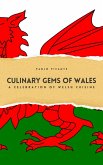
Ma sei di coccio? (eBook, ePUB)2,99 €") Culinary Gems of Wales: A Celebration of Welsh Cuisine (eBook, ePUB)4,99 €
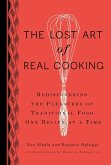
Culinary Gems of Wales: A Celebration of Welsh Cuisine (eBook, ePUB)4,99 €") The Lost Art of Real Cooking (eBook, ePUB)7,99 €
The Lost Art of Real Cooking (eBook, ePUB)7,99 €


Culinary Crossroads. Recipes and Stories from Rhode Island's Immigrant Kitchens
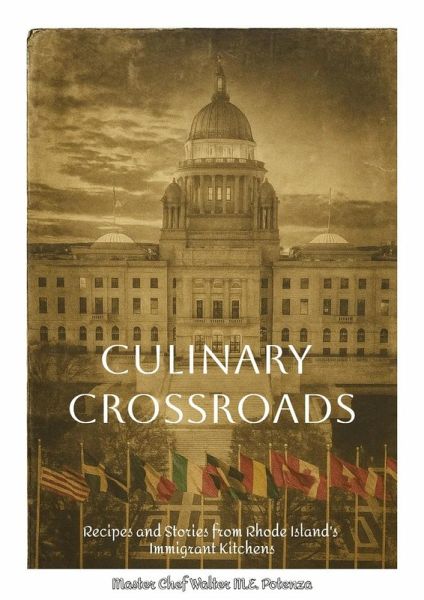
This book (Culinary Crossroads), explores the rich tapestry of culinary traditions that define Rhode Island, tracing the evolution of its food culture through various waves of immigration and historical influences. Beginning with the indigenous Narragansett people, it highlights how early European settlers shaped local gastronomy, introducing new ingredients and cooking methods that laid the groundwork for future culinary developments. The narrative then shifts to examine the significant contributions of Irish immigrants, whose resilience is symbolized by staple foods like potatoes, reflecting their adaptation to a new environment. Their culinary ingenuity also gave rise to hearty dishes that provided comfort in challenging times. The exploration continues into Federal Hill, a vibrant neighborhood known for its Italian heritage, showcasing how this community has enriched Rhode Island's food scene. The influence of Portuguese immigrants from the Azores is also detailed, illustrating their unique culinary practices and integration into local life. Furthermore, the book delves into Cape Verdean cuisine, particularly cachupa, emphasizing its role in fostering community bonds among residents. This dish, often enjoyed during gatherings, exemplifies the spirit of togetherness that defines communal meals. In addition to these cultural narratives, the text examines iconic regional dishes such as clam cakes and stuffies that symbolize shared coastal traditions. It also addresses everyday foods like ciambella and johnnycakes that sustain families across generations. Festivals celebrating diverse culinary heritages are highlighted as communal events that reinforce social ties, bringing together flavors and people from all walks of life. As recipes evolve in response to changing demographics and tastes, oral histories preserve family traditions while immigrant restaurants serve as vital hubs for cultural exchange. Stories of resilience and adaptation are interwoven with each dish, making the culinary landscape a living testament to Rhode Island's history. Ultimately, this work articulates how food serves as a language of belonging in Rhode Island-a reflection of its complex identity forged through history and community.
This book (Culinary Crossroads), explores the rich tapestry of culinary traditions that define Rhode Island, tracing the evolution of its food culture through various waves of immigration and historical influences. Beginning with the indigenous Narragansett people, it highlights how early European settlers shaped local gastronomy, introducing new ingredients and cooking methods that laid the groundwork for future culinary developments. The narrative then shifts to examine the significant contributions of Irish immigrants, whose resilience is symbolized by staple foods like potatoes, reflecting their adaptation to a new environment. Their culinary ingenuity also gave rise to hearty dishes that provided comfort in challenging times. The exploration continues into Federal Hill, a vibrant neighborhood known for its Italian heritage, showcasing how this community has enriched Rhode Island's food scene. The influence of Portuguese immigrants from the Azores is also detailed, illustrating their unique culinary practices and integration into local life. Furthermore, the book delves into Cape Verdean cuisine, particularly cachupa, emphasizing its role in fostering community bonds among residents. This dish, often enjoyed during gatherings, exemplifies the spirit of togetherness that defines communal meals. In addition to these cultural narratives, the text examines iconic regional dishes such as clam cakes and stuffies that symbolize shared coastal traditions. It also addresses everyday foods like ciambella and johnnycakes that sustain families across generations. Festivals celebrating diverse culinary heritages are highlighted as communal events that reinforce social ties, bringing together flavors and people from all walks of life. As recipes evolve in response to changing demographics and tastes, oral histories preserve family traditions while immigrant restaurants serve as vital hubs for cultural exchange. Stories of resilience and adaptation are interwoven with each dish, making the culinary landscape a living testament to Rhode Island's history. Ultimately, this work articulates how food serves as a language of belonging in Rhode Island-a reflection of its complex identity forged through history and community.
Dieser Download kann aus rechtlichen Gründen nur mit Rechnungsadresse in A, B, CY, CZ, D, DK, EW, E, FIN, F, GR, H, IRL, I, LT, L, LR, M, NL, PL, P, R, S, SLO, SK ausgeliefert werden.