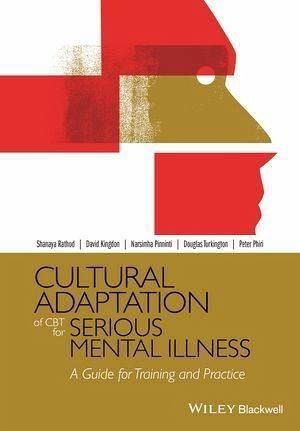
39,99 €
inkl. MwSt.
Sofort per Download lieferbar
0 °P sammeln

Andere Kunden interessierten sich auch für
") Cultural Adaptation of CBT for Serious Mental Illness (eBook, PDF)39,99 €
Cultural Adaptation of CBT for Serious Mental Illness (eBook, PDF)39,99 €") Handbook of Multicultural Counseling Competencies (eBook, ePUB)99,99 €
Handbook of Multicultural Counseling Competencies (eBook, ePUB)99,99 €") Person-Centered Recovery Planner for Adults with Serious Mental Illness (eBook, ePUB)47,99 €
Person-Centered Recovery Planner for Adults with Serious Mental Illness (eBook, ePUB)47,99 €") Counseling the Culturally Diverse (eBook, ePUB)99,99 €
Counseling the Culturally Diverse (eBook, ePUB)99,99 €") Foundations of Counseling and Psychotherapy (eBook, ePUB)87,99 €
Foundations of Counseling and Psychotherapy (eBook, ePUB)87,99 €") The Million Dollar Private Practice (eBook, ePUB)33,99 €
The Million Dollar Private Practice (eBook, ePUB)33,99 €") Clinical Supervision Activities for Increasing Competence and Self-Awareness (eBook, ePUB)56,99 €
Clinical Supervision Activities for Increasing Competence and Self-Awareness (eBook, ePUB)56,99 €



- A comprehensive guide designed to enable CBT practitioners to effectively engage people from diverse cultural backgrounds by applying culturally-sensitive therapeutic techniques
- Adapts core CBT techniques including reattribution, normalization, explanation development, formulating, reality testing, inference chaining and resetting expectations
- High profile author team includes specialists in culturally-sensitive CBT along with world-renowned pioneers in the application of CBT to serious mental illness
- Contains the most up-to-date research on CBT in ethnic minority groups available
Dieser Download kann aus rechtlichen Gründen nur mit Rechnungsadresse in D ausgeliefert werden.
This book pulls all the current data on the effectiveness ofculturally sensitive CBT in this area as well as providingclinicians with a manual to learn and practice culturally informedCBT. I can confidently recommend it as helpful for anyone workingwith severely mentally ill clients.--Aaron T. Beck, M.D.,University Professor Emeritus of Psychiatry, University ofPennsylvania
This volume offers a practical guide to culturally adapting CBTfor severe mental health conditions. The authors are giftedclinicians and investigators that present a sophisticated overviewof key conceptual and pragmatic issues in working with diversecommunities. The book proposes novel concepts and applications of awell-established evidenced-based treatment in which language,culture, race, and ethnicity, are integral to the conceptualizationand process of therapy. This book is a remarkablecontribution to the growing literature on cultural adaptations andas such it represents a major contribution to multiculturalpsychology and mental health. This is essential reading forclinicians and scholars interested in working with the diversemajority-world communities.--Guillermo Bernal, Ph.D.,Director, Institute for Psychological Research, University ofPuerto Rico, Rio Piedras, Puerto Rico.
There was a time when psychological therapies were not thoughtto be appropriate for all patients, especially those of lowsocio-economic or poor educational status, and ethnic minorities,refugees, migrants or people from low and middle-income countries.Clinicians did not have the tools to adapt their skills. No more!Combining psychoanalytic, cognitive behavioural and generaltherapeutics theory with evidence on the cultural adaptation ofpsychological therapies, this impressive, accessible and timelyvolume offers hope to patients of diverse cultural heritage,beliefs, and practices.--Kamaldeep Bhui, Professorof Cultural Psychiatry & Epidemiology, Queen Mary University ofLondon
In a globalized world we need methods to adapt interventions sothey are equally effective for different groups. One sizefits all and culture and color blind approaches hardwire inequity.Many have undertaken cultural adaptations but to have some of themajor voices in CBT produce guidance on cultural adaptationproduces a priceless treasure. Whether you are developingservices in a low income country or for marginalised groups in ahigh income country this book will help you produce the mosteffective CBT for the people you serve.--Kwame McKenzieM.D. FRCPsych (UK), Medical Director CAMH, Professor of PsychiatryUniversity of Toronto
"With its clear, thoughtful prose and its diverse, vivid caseexamples, this guide will help CBT practitioners sensitively handlethe challenges of working with individuals and families from a widevariety of cultural, religious, and spiritual backgrounds. Byusing these approaches, unique and thorny challenges to the crosscultural application of CBT can be creatively and collaborativelyaddressed and resolved."--Ron Unger
"Culturally informed mental health care is rapidly moving froman attitudinal orientation to an evidence-based approach. Thistextbook makes an important contribution towards understanding theconceptual basis and evidence behind cultural adaptation ofcognitive behavioral therapy, but also provides clinical andcontextual guidance in application for diverse populations andserious psychiatric disorders. A must-read for the clinician whowishes to serve the majority of patients we will be serving ascultural plurality is achieved in the US andglobally."--Andres J Pumariega, M.D., Professor and Chair,Cooper Medical School of Rowan University and Cooper HealthSystem
This volume offers a practical guide to culturally adapting CBTfor severe mental health conditions. The authors are giftedclinicians and investigators that present a sophisticated overviewof key conceptual and pragmatic issues in working with diversecommunities. The book proposes novel concepts and applications of awell-established evidenced-based treatment in which language,culture, race, and ethnicity, are integral to the conceptualizationand process of therapy. This book is a remarkablecontribution to the growing literature on cultural adaptations andas such it represents a major contribution to multiculturalpsychology and mental health. This is essential reading forclinicians and scholars interested in working with the diversemajority-world communities.--Guillermo Bernal, Ph.D.,Director, Institute for Psychological Research, University ofPuerto Rico, Rio Piedras, Puerto Rico.
There was a time when psychological therapies were not thoughtto be appropriate for all patients, especially those of lowsocio-economic or poor educational status, and ethnic minorities,refugees, migrants or people from low and middle-income countries.Clinicians did not have the tools to adapt their skills. No more!Combining psychoanalytic, cognitive behavioural and generaltherapeutics theory with evidence on the cultural adaptation ofpsychological therapies, this impressive, accessible and timelyvolume offers hope to patients of diverse cultural heritage,beliefs, and practices.--Kamaldeep Bhui, Professorof Cultural Psychiatry & Epidemiology, Queen Mary University ofLondon
In a globalized world we need methods to adapt interventions sothey are equally effective for different groups. One sizefits all and culture and color blind approaches hardwire inequity.Many have undertaken cultural adaptations but to have some of themajor voices in CBT produce guidance on cultural adaptationproduces a priceless treasure. Whether you are developingservices in a low income country or for marginalised groups in ahigh income country this book will help you produce the mosteffective CBT for the people you serve.--Kwame McKenzieM.D. FRCPsych (UK), Medical Director CAMH, Professor of PsychiatryUniversity of Toronto
"With its clear, thoughtful prose and its diverse, vivid caseexamples, this guide will help CBT practitioners sensitively handlethe challenges of working with individuals and families from a widevariety of cultural, religious, and spiritual backgrounds. Byusing these approaches, unique and thorny challenges to the crosscultural application of CBT can be creatively and collaborativelyaddressed and resolved."--Ron Unger
"Culturally informed mental health care is rapidly moving froman attitudinal orientation to an evidence-based approach. Thistextbook makes an important contribution towards understanding theconceptual basis and evidence behind cultural adaptation ofcognitive behavioral therapy, but also provides clinical andcontextual guidance in application for diverse populations andserious psychiatric disorders. A must-read for the clinician whowishes to serve the majority of patients we will be serving ascultural plurality is achieved in the US andglobally."--Andres J Pumariega, M.D., Professor and Chair,Cooper Medical School of Rowan University and Cooper HealthSystem