26,95 €
inkl. MwSt.
Sofort per Download lieferbar
13 °P sammeln

Andere Kunden interessierten sich auch für
") Atmospheric Pollution and Environmental Change (eBook, PDF)27,95 €
Atmospheric Pollution and Environmental Change (eBook, PDF)27,95 €") Wellbeing and Self-Transformation in Natural Landscapes (eBook, PDF)52,95 €
Wellbeing and Self-Transformation in Natural Landscapes (eBook, PDF)52,95 €") Global Hydrology (eBook, PDF)73,95 €
Global Hydrology (eBook, PDF)73,95 €") Environmental Archaeology (eBook, PDF)47,95 €
Environmental Archaeology (eBook, PDF)47,95 €") Energy, Society and Environment (eBook, PDF)41,95 €
Energy, Society and Environment (eBook, PDF)41,95 €") Nature (eBook, PDF)56,95 €
Nature (eBook, PDF)56,95 €") Evolving Narratives of Hazard and Risk (eBook, PDF)40,95 €
Evolving Narratives of Hazard and Risk (eBook, PDF)40,95 €




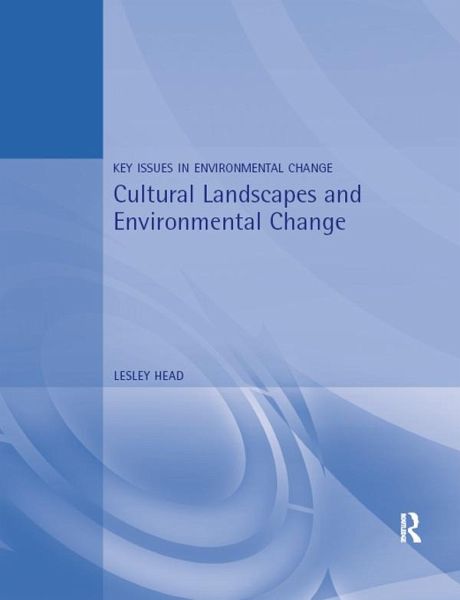
Cultural landscapes are usually understood within physical geography as those transformed by human action. As human influence on the earth increases, advances in palaeocological reconstruction have also allowed for new interpretations of the evidence for the earliest human impacts on the environment. It is essential that such evidence is examined in the context of modern trends in social sciences and humanities. This stimulating new book argues that convergence of the two approaches can provide a more holistic understanding of long-term physical and human processes.
Split into two major sections, this book attempts to bridge the gap between the sciences and humanities. The first section, provides an analysis of the methodological tools employed in examining processes of environmental change. Empirical research in the fields of palaecology and Quaternary studies is combined with the latest theoretical views of nature and landscape occurring in cultural geography, archaeology and anthropology. The author examines the way in which environmental management decisions are made. The book then moves on to discuss the relevance of this perspective to contemporary issues through a wide variety of international case studies, including World Heritage protection, landscape preservation, indigenous people and cultural tourism.
Split into two major sections, this book attempts to bridge the gap between the sciences and humanities. The first section, provides an analysis of the methodological tools employed in examining processes of environmental change. Empirical research in the fields of palaecology and Quaternary studies is combined with the latest theoretical views of nature and landscape occurring in cultural geography, archaeology and anthropology. The author examines the way in which environmental management decisions are made. The book then moves on to discuss the relevance of this perspective to contemporary issues through a wide variety of international case studies, including World Heritage protection, landscape preservation, indigenous people and cultural tourism.
Dieser Download kann aus rechtlichen Gründen nur mit Rechnungsadresse in A, B, BG, CY, CZ, D, DK, EW, E, FIN, F, GR, HR, H, IRL, I, LT, L, LR, M, NL, PL, P, R, S, SLO, SK ausgeliefert werden.