42,95 €
42,95 €
inkl. MwSt.
Sofort per Download lieferbar

21 °P sammeln
42,95 €
Als Download kaufen
42,95 €
inkl. MwSt.
Sofort per Download lieferbar
21 °P sammeln
Jetzt verschenken
Alle Infos zum eBook verschenken
42,95 €
inkl. MwSt.
Sofort per Download lieferbar
Alle Infos zum eBook verschenken
21 °P sammeln

Andere Kunden interessierten sich auch für
") Cultural Policies in the Era of the Korean Wave (eBook, ePUB)42,95 €
Cultural Policies in the Era of the Korean Wave (eBook, ePUB)42,95 €") The Travels of Media and Cultural Products (eBook, PDF)19,95 €
The Travels of Media and Cultural Products (eBook, PDF)19,95 €") South Asian Creative and Cultural Industries (eBook, PDF)41,95 €
South Asian Creative and Cultural Industries (eBook, PDF)41,95 €") Social Media and the Cultural Politics of Korean Pop Culture in East Asia (eBook, PDF)39,95 €
Social Media and the Cultural Politics of Korean Pop Culture in East Asia (eBook, PDF)39,95 €") Korean Literature Through the Korean Wave (eBook, PDF)39,95 €
Korean Literature Through the Korean Wave (eBook, PDF)39,95 €") Introducing Korean Popular Culture (eBook, PDF)35,95 €
Introducing Korean Popular Culture (eBook, PDF)35,95 €") State Propaganda in China's Entertainment Industry (eBook, PDF)45,95 €
State Propaganda in China's Entertainment Industry (eBook, PDF)45,95 €

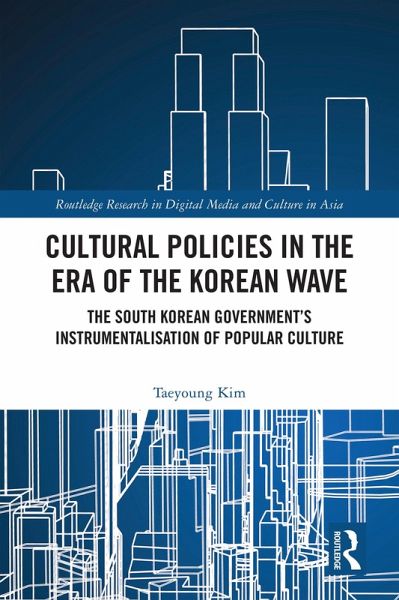
Cultural Policies in the Era of the Korean Wave explores how the state instrumentalises cultural industries, despite the bulk of their production and delivery mechanisms becoming subject to the market logic and foreign stakeholders, through an in-depth study of the South Korean government's cultural industry policies.
Drawing on interviews with policymakers and producers in the Korean film, music, and television industries, it investigates how the government's policy schemes-ranging from funding programmes and public agencies established to promote cultural industries to the blacklisting of those opposing the administration's political agendas-demonstrate the government's strong desire to influence cultural production. The findings highlight how the state retains political power to instrumentalise cultural products, even as market forces shape production mechanisms and genre characteristics that have become increasingly transnational.
This book sheds new light on how the state approves and reappropriates the doctrines of neoliberal globalisation to serve its interests in instrumentalising culture, making it relevant for scholars and students in the areas of media and cultural policy, media and cultural industries, global media, and Asian studies.
Drawing on interviews with policymakers and producers in the Korean film, music, and television industries, it investigates how the government's policy schemes-ranging from funding programmes and public agencies established to promote cultural industries to the blacklisting of those opposing the administration's political agendas-demonstrate the government's strong desire to influence cultural production. The findings highlight how the state retains political power to instrumentalise cultural products, even as market forces shape production mechanisms and genre characteristics that have become increasingly transnational.
This book sheds new light on how the state approves and reappropriates the doctrines of neoliberal globalisation to serve its interests in instrumentalising culture, making it relevant for scholars and students in the areas of media and cultural policy, media and cultural industries, global media, and Asian studies.
Dieser Download kann aus rechtlichen Gründen nur mit Rechnungsadresse in A, B, BG, CY, CZ, D, DK, EW, E, FIN, F, GR, HR, H, IRL, I, LT, L, LR, M, NL, PL, P, R, S, SLO, SK ausgeliefert werden.