Sie sind bereits eingeloggt. Klicken Sie auf 2. tolino select Abo, um fortzufahren.
Bitte loggen Sie sich zunächst in Ihr Kundenkonto ein oder registrieren Sie sich bei bücher.de, um das eBook-Abo tolino select nutzen zu können.
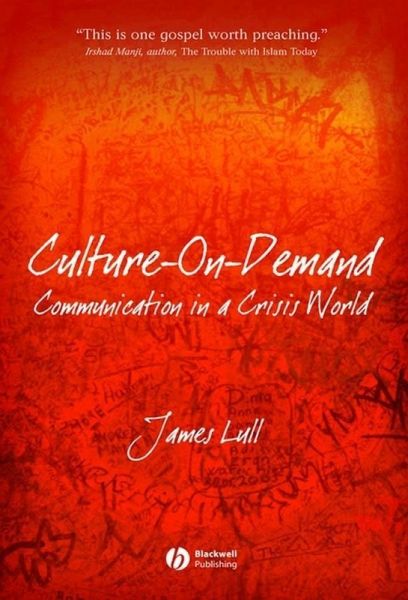
This highly original, thought-provoking book - written by a pioneer of communication studies - is the first to analyze the post 9/11 world in terms of global media and popular culture. | Written in an engaging and candid manner by a leading expert in this field | Argues that cross-cultural understanding can only be achieved by harnessing the power of global media, popular culture, information technology, and personal communications technologies | Examines the global trend of using film, video, music, and TV "on-demand" as the framework through which we experience all cultural activity | Draws…mehr
This highly original, thought-provoking book - written by a pioneer of communication studies - is the first to analyze the post 9/11 world in terms of global media and popular culture.
Written in an engaging and candid manner by a leading expert in this field
Argues that cross-cultural understanding can only be achieved by harnessing the power of global media, popular culture, information technology, and personal communications technologies
Examines the global trend of using film, video, music, and TV "on-demand" as the framework through which we experience all cultural activity
Draws inspiration from the work of a range of theorists, from Charles Darwin to Anthony Giddens
Candidly interrogates the very latest developments in world affairs, especially the roles of fundamentalist religious ideology, media globalization, and individualism, whose complex relationships have yet to be explained by social scientists
Dieser Download kann aus rechtlichen Gründen nur mit Rechnungsadresse in D ausgeliefert werden.
Die Herstellerinformationen sind derzeit nicht verfügbar.
Autorenporträt
James Lull is Professor Emeritus in the Department of Communication Studies at San José State University. He holds the first Honorary Doctorate in Communication at the University of Helsinki, Finland. He is also the recipient of two Fulbright Senior Scholar Fellowships and a Leverhulme Trust Fellowship. His many books include Culture in the Communication Age (2001) and Media, Communication, Culture (2000). Visit author online at JamesLull.com.
Inhaltsangabe
List of figures. Acknowledgments. Introduction. 1. All Eyes on the Global Stage. Media Globalization. Modern Media Development. The Global Divides. China and the Middle East: Responses to Modernity and. Globalization. The Communications Revolution. 2. Human Expression. The Cultural Politics of Expression. The Need for Expression. Symbolic Creativity and the Expressive Self. Emotional Communication. The fear factor and the pleasure principle. The Active Pleasures of Expression and Communication. Mobile expression. Cultural Open Sourcing. Symbolic Power to the People. 3. Programming Our Personal Supercultures. Cultural Experience. Culture, culture, Superculture. The "supers". Culture in common. Cultural Technology in the Communication Age. Cultural Programming. The Cultural Self and Self Culture. Encountering Culture. The Cultural Spheres. Universal values and concepts. Transnational cultural media. Civilizations. Nations. Regions and everyday life. The Cultural Mix in Action. Superculture Revisited. 4. The Push and Pull of Culture. The Push of Culture. Diaspora. Nation as contested push. The Pull of Culture. Individualism. "A life of one's own". New Cultural Horizons. 5. Globalized Islam. The Islamic Cultural Body. The visible visual body. Gender equality, political democracy, and economic prosperity. Islam in the West. The Opinion, and the Other Opinion. The global TV war. The New Imagined World of Islam. Instrumental modernity. The communications problem. 6. Cultural Transparency. Reflexive Cultural Globalization. The globalization of good and bad ideas. Loving to hate America. Open Society: The Guiding Principle for Cultural Development. The Power of Transparency. Transparency or surveillance?. 7. The Open Spaces of Global Communication. Stage 1: Cultural Technology, Industry, Abundance. Stage 2: Global Visibility and Transparency. Stage 3: Platforms for Participation. Stage 4: Global Consciousness and Public Opinion. Stage 5: Global Wisdom. Stage 6: Institutional Channels. Stage 7: Utopian Potential. 8. Fundamentalism and Cosmopolitanism. The Passion of the Religious Culture. Fundamentalist America. The active passivity of Islam. Other Fundamentalisms. Nationalism. Market fundamentalism. The Democratic Secular Imperative. One Moral Universe?. A "modest cosmopolitan" alternative. 9. Communicating the Future. The Paradox of Tolerance. The Great Chain of Communication. References. Index
Rezensionen
"James Lull shows that religion and media ravenously feed offeach other--often for the worse. But he also points the way to afuture of 'global wisdom,' which leverages the best ideals ofcommunication and faith. This is one gospel worth preaching." Irshad Manji, author, The Trouble with IslamToday
"With uncommon brilliance, extreme intellectual agility,and profound cultural wisdom, James Lull's latest book facescourageously and optimistically the most daunting challenges of ourtroubled times." Eduardo Neiva, University of Alabama at Birmingham
"Taking global cultural analysis in refreshing newdirections, James Lull offers the reader powerful insights into thesocial and symbolic realities of the 21st Century." Gabriela Pedroza, Monterrey Institute of Technology
"In this impressively wide-ranging study, Lull makes animpassioned plea for the new media technologies to be brought tothe forefront of the struggle against cultural prejudice. Callingfor cooperation rather than conflict, open-minded communicationrather than fundamentalist pronouncements, Lull persuasively arguesthe case for greater diversity and tolerance across globalsociety." Stuart Sim, University of Sunderland
"An intriguing essay on culture and modern culturalpractices. Lull is intellectually honest in assessing thecounterarguments to his positions." Communication ResearchTrends
Es gelten unsere Allgemeinen Geschäftsbedingungen: www.buecher.de/agb
Impressum
www.buecher.de ist ein Internetauftritt der buecher.de internetstores GmbH
Geschäftsführung: Monica Sawhney | Roland Kölbl | Günter Hilger
Sitz der Gesellschaft: Batheyer Straße 115 - 117, 58099 Hagen
Postanschrift: Bürgermeister-Wegele-Str. 12, 86167 Augsburg
Amtsgericht Hagen HRB 13257
Steuernummer: 321/5800/1497
USt-IdNr: DE450055826