
54,95 €
63,95 €**
54,95 €
inkl. MwSt.
**Preis der gedruckten Ausgabe (Broschiertes Buch)
Sofort per Download lieferbar

27 °P sammeln
54,95 €
63,95 €**
54,95 €
inkl. MwSt.
**Preis der gedruckten Ausgabe (Broschiertes Buch)
Sofort per Download lieferbar
Alle Infos zum eBook verschenken
27 °P sammeln
Als Download kaufen
63,95 €****
-14%11
54,95 €
inkl. MwSt.
**Preis der gedruckten Ausgabe (Broschiertes Buch)
Sofort per Download lieferbar
27 °P sammeln
Jetzt verschenken
Alle Infos zum eBook verschenken
63,95 €****
-14%11
54,95 €
inkl. MwSt.
**Preis der gedruckten Ausgabe (Broschiertes Buch)
Sofort per Download lieferbar
Alle Infos zum eBook verschenken
27 °P sammeln

Andere Kunden interessierten sich auch für
") Cures for Modernity (eBook, ePUB)54,95 €
Cures for Modernity (eBook, ePUB)54,95 €") Broadened Horizons (eBook, PDF)39,95 €
Broadened Horizons (eBook, PDF)39,95 €") Cultural Representations of Albinism in Africa (eBook, PDF)61,95 €
Cultural Representations of Albinism in Africa (eBook, PDF)61,95 €") Elsinor no Finis Terrae (eBook, PDF)61,95 €
Elsinor no Finis Terrae (eBook, PDF)61,95 €") The Deep (eBook, PDF)28,95 €
The Deep (eBook, PDF)28,95 €") Gesture in French Post-New Wave Cinema (eBook, PDF)52,95 €
Gesture in French Post-New Wave Cinema (eBook, PDF)52,95 €") The Art of Directing (eBook, PDF)83,95 €
The Art of Directing (eBook, PDF)83,95 €
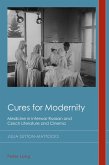



«This monograph makes an original and significant scholarly contribution, in addition to being a gripping read. Not only is it the first book in English to compare Russian and Czechoslovak literature and film of the interwar period in such a comprehensive way, but it does so via the growing discipline of the medical humanities. The book's greatest strength is its attention to detail, exemplified by Sutton-Mattocks's close readings of the medical implications of the creative works she selects.»
(Melissa Miller, Modern Language Review 120.1, January 2025)
«Her comparative approach using Czech and Russian work enriches the field by moving beyond national boundaries to show how interwar medical discourses were both locally specific and transnationally resonant. It also expands the scope of medical humanities beyond its usual Anglo-American and Western European focus, demonstrating the importance of Eastern European contributions.»
(Dylan Mohr, Studies in Russian and Soviet Cinema 1-2, 2025)
Surgery, bacteriology, psychiatry ... medicine fascinated writers and filmmakers in the 1920s and 1930s. But why did medicine capture the creative imagination at precisely that moment, and what does the prevalence of medical imagery in works of the period tell us about interwar culture? These are the questions at the heart of this book, which takes the Russian and Czech literary and cinematic contexts as case studies for interrogating the wider phenomenon.
Contributing to an emerging body of scholarship bringing the Medical Humanities and Slavonic Studies into dialogue, the book focuses on four particularly prevalent medical themes in the literature and cinema of the period: syphilis, nervous illness, surgery and childbirth. It offers new perspectives on works by well-known figures of interwar Russian and Czech culture (e.g. Mikhail Bulgakov, Evgenii Zamiatin, Gustav Machatý and Vladislav Vancura) as well as familiarizing readers with more obscure works by some of their lesser-known counterparts, such as Vladimír Raffel, Vikentii Veresaev, Nikolai Aseev and Noi Galkin.
(Melissa Miller, Modern Language Review 120.1, January 2025)
«Her comparative approach using Czech and Russian work enriches the field by moving beyond national boundaries to show how interwar medical discourses were both locally specific and transnationally resonant. It also expands the scope of medical humanities beyond its usual Anglo-American and Western European focus, demonstrating the importance of Eastern European contributions.»
(Dylan Mohr, Studies in Russian and Soviet Cinema 1-2, 2025)
Surgery, bacteriology, psychiatry ... medicine fascinated writers and filmmakers in the 1920s and 1930s. But why did medicine capture the creative imagination at precisely that moment, and what does the prevalence of medical imagery in works of the period tell us about interwar culture? These are the questions at the heart of this book, which takes the Russian and Czech literary and cinematic contexts as case studies for interrogating the wider phenomenon.
Contributing to an emerging body of scholarship bringing the Medical Humanities and Slavonic Studies into dialogue, the book focuses on four particularly prevalent medical themes in the literature and cinema of the period: syphilis, nervous illness, surgery and childbirth. It offers new perspectives on works by well-known figures of interwar Russian and Czech culture (e.g. Mikhail Bulgakov, Evgenii Zamiatin, Gustav Machatý and Vladislav Vancura) as well as familiarizing readers with more obscure works by some of their lesser-known counterparts, such as Vladimír Raffel, Vikentii Veresaev, Nikolai Aseev and Noi Galkin.
Dieser Download kann aus rechtlichen Gründen nur mit Rechnungsadresse in A, D ausgeliefert werden.