0,49 €
0,49 €
inkl. MwSt.
Sofort per Download lieferbar

0 °P sammeln
0,49 €
Als Download kaufen
0,49 €
inkl. MwSt.
Sofort per Download lieferbar
0 °P sammeln
Jetzt verschenken
Alle Infos zum eBook verschenken
0,49 €
inkl. MwSt.
Sofort per Download lieferbar
Alle Infos zum eBook verschenken
0 °P sammeln

Andere Kunden interessierten sich auch für
") Daniel Defoe (eBook, ePUB)1,99 €
Daniel Defoe (eBook, ePUB)1,99 €") The Life and Letters of Lewis Carroll (eBook, ePUB)7,99 €
The Life and Letters of Lewis Carroll (eBook, ePUB)7,99 €") A Chronicle History of the Life and Work of William Shakespeare (eBook, ePUB)0,49 €
A Chronicle History of the Life and Work of William Shakespeare (eBook, ePUB)0,49 €") A Political Biography of Daniel Defoe (eBook, ePUB)49,95 €
A Political Biography of Daniel Defoe (eBook, ePUB)49,95 €") Philip Gilbert Hamerton (eBook, ePUB)0,49 €
Philip Gilbert Hamerton (eBook, ePUB)0,49 €") Whitman: A Study (eBook, ePUB)0,49 €
Whitman: A Study (eBook, ePUB)0,49 €") Daniel Defoe and the Representation of Personal Identity (eBook, ePUB)46,95 €
Daniel Defoe and the Representation of Personal Identity (eBook, ePUB)46,95 €

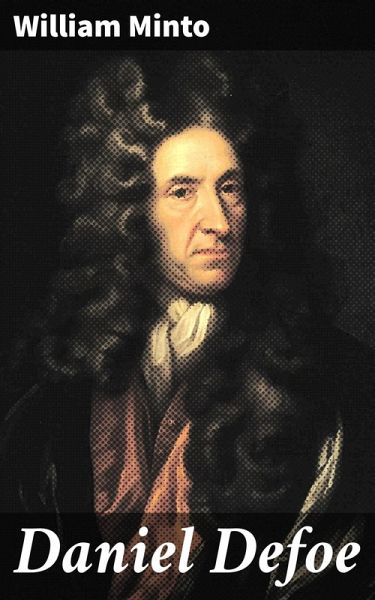
In "Daniel Defoe," William Minto offers a comprehensive analysis of the life and works of one of the most significant figures in English literature. Employing a scholarly yet accessible prose style, Minto delves into Defoe's multifaceted career as a novelist, journalist, and pamphleteer, revealing how these roles informed his narrative techniques and thematic preoccupations. Minto places Defoe's contributions within the broader context of the early 18th century, exploring the socio-political landscape that influenced works like "Robinson Crusoe" and "A Journal of the Plague Year," while reflecting on Defoe'Äôs innovative use of realism and first-person narrative that would shape modern fiction. William Minto, a Scottish critic, novelist, and philosopher, was deeply influenced by the Enlightenment ideals that permeated his era. His academic background and interest in the interplay between literature and society led him to delve into Defoe's works, unveiling the complexities of his character and writing. Minto's keen analytical eye not only provides insight into Defoe'Äôs literary genius but also sheds light on the challenges he faced as a writer in a transformative period in British history. This book is a must-read for students of literature, scholars of the novel, and anyone keen on understanding the foundational figures of English prose. Minto's engaging narrative and thorough research make this work an invaluable resource for appreciating Defoe's diverse contributions to literature, as well as for grasping the evolution of the novel as a genre.
Dieser Download kann aus rechtlichen Gründen nur mit Rechnungsadresse in A, B, BG, CY, CZ, D, DK, EW, E, FIN, F, GR, H, IRL, I, LT, L, LR, M, NL, PL, P, R, S, SLO, SK ausgeliefert werden.