24,95 €
24,95 €
inkl. MwSt.
Erscheint vor. 02.02.26

12 °P sammeln
24,95 €
Als Download kaufen
24,95 €
inkl. MwSt.
Erscheint vor. 02.02.26
12 °P sammeln
Jetzt verschenken
Alle Infos zum eBook verschenken
24,95 €
inkl. MwSt.
Erscheint vor. 02.02.26
Alle Infos zum eBook verschenken
12 °P sammeln

Andere Kunden interessierten sich auch für
") Qualitative Sozialforschung (eBook, ePUB)24,95 €
Qualitative Sozialforschung (eBook, ePUB)24,95 €") Qualitative Interviews (eBook, ePUB)29,95 €
Qualitative Interviews (eBook, ePUB)29,95 €") Qualitative Interviews (eBook, ePUB)34,95 €
Qualitative Interviews (eBook, ePUB)34,95 €") Qualitative Sozialforschung (eBook, ePUB)29,95 €
Qualitative Sozialforschung (eBook, ePUB)29,95 €") Data Analysis in Qualitative Research (eBook, ePUB)20,95 €
Data Analysis in Qualitative Research (eBook, ePUB)20,95 €") Behind the Scenes in Social Research (eBook, ePUB)37,95 €
Behind the Scenes in Social Research (eBook, ePUB)37,95 €") Digital Methods (eBook, ePUB)16,99 €
Digital Methods (eBook, ePUB)16,99 €






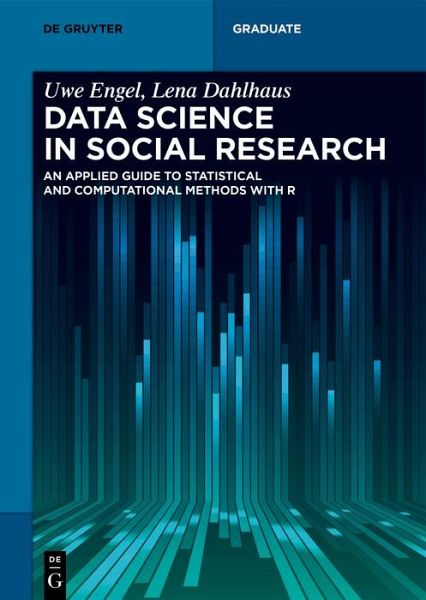
Society is changing - it is becoming more diverse and digital. Social media today plays a central role in human communication. With a changing society, the way social scientists analyze it is also evolving. In recent years, it has become significantly more difficult to encourage people to participate in surveys. Furthermore, digitization opens up data options that go beyond the survey method. Information published online represents valuable digital behavioral traces and provides social researchers with another important source of data alongside their scientific surveys, which in recent years have increasingly been conducted online.
Computational methods have played a central role in social research from the very beginning. This applies today more than ever to data analysis, but now also to data collection. The increasing attention paid to machine learning methods in the statistical analysis of social science data represents a further remarkable development in the analysis of social science data.
This textbook addresses these developments and familiarizes readers with both elementary and more advanced methods of data analysis. Fundamentals and techniques of data management, programming with R, statistical data analysis, descriptive and causal inference, as well as predictive modeling are covered in depth. All methods are exemplified using real data either from survey research, the social media platform Bluesky or a large digital newspaper archive. Thematically, these data are focused on current sociological topics, particularly those related to human happiness, energy transition and climate policy, AI, political attitudes and the rise in right-wing voting.
Data science encompasses more than the algorithms required for data analysis and statistical learning. No less relevant are the rules by which social research and data analysis are conducted, data quality is ensured, and the results are validated. This textbook aims to provide this overview.
Computational methods have played a central role in social research from the very beginning. This applies today more than ever to data analysis, but now also to data collection. The increasing attention paid to machine learning methods in the statistical analysis of social science data represents a further remarkable development in the analysis of social science data.
This textbook addresses these developments and familiarizes readers with both elementary and more advanced methods of data analysis. Fundamentals and techniques of data management, programming with R, statistical data analysis, descriptive and causal inference, as well as predictive modeling are covered in depth. All methods are exemplified using real data either from survey research, the social media platform Bluesky or a large digital newspaper archive. Thematically, these data are focused on current sociological topics, particularly those related to human happiness, energy transition and climate policy, AI, political attitudes and the rise in right-wing voting.
Data science encompasses more than the algorithms required for data analysis and statistical learning. No less relevant are the rules by which social research and data analysis are conducted, data quality is ensured, and the results are validated. This textbook aims to provide this overview.
Dieser Download kann aus rechtlichen Gründen nur mit Rechnungsadresse in A, B, BG, CY, CZ, D, DK, EW, E, FIN, F, GR, HR, H, IRL, I, LT, L, LR, M, NL, PL, P, R, S, SLO, SK ausgeliefert werden.