0,99 €
0,99 €
inkl. MwSt.
Sofort per Download lieferbar

0 °P sammeln
0,99 €
Als Download kaufen
0,99 €
inkl. MwSt.
Sofort per Download lieferbar
0 °P sammeln
Jetzt verschenken
Alle Infos zum eBook verschenken
0,99 €
inkl. MwSt.
Sofort per Download lieferbar
Alle Infos zum eBook verschenken
0 °P sammeln

Andere Kunden interessierten sich auch für
") The World of The Walking Dead (eBook, ePUB)19,95 €
The World of The Walking Dead (eBook, ePUB)19,95 €") Zombies, Consumption, and Satire in Capcom's Dead Rising (eBook, ePUB)21,95 €
Zombies, Consumption, and Satire in Capcom's Dead Rising (eBook, ePUB)21,95 €") Press Freedom in Contemporary Asia (eBook, ePUB)39,95 €
Press Freedom in Contemporary Asia (eBook, ePUB)39,95 €") High Static, Dead Lines (eBook, ePUB)12,95 €
High Static, Dead Lines (eBook, ePUB)12,95 €") The Walking Dead décrypté (eBook, ePUB)11,99 €
The Walking Dead décrypté (eBook, ePUB)11,99 €") The Economic Policy of Online Media (eBook, ePUB)38,95 €
The Economic Policy of Online Media (eBook, ePUB)38,95 €") That Book Is Dangerous! (eBook, ePUB)16,95 €
That Book Is Dangerous! (eBook, ePUB)16,95 €



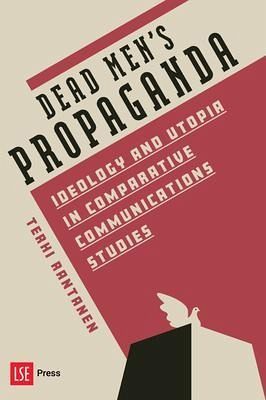
In Dead Men's Propaganda: Ideology and Utopia in Comparative Communications Studies, Terhi Rantanen investigates the shaping of early comparative communications research between the 1920s and 1950s, notably the work of academics and men of practice in the United States. Often neglected, this intellectual thread is highly relevant to understanding the 21st-century's challenges of war and rival streams of propaganda.
Borrowing her conceptual lenses from Karl Mannheim and Robert Merton, Rantanen draws on detailed archival research and case studies to analyse the extent and importance of work outside and inside the academy, illuminating the work of pioneers in the field. Some of these were well-known academics such as Harold Lasswell and the authors of the seminal book Four Theories of the Press. Others operated in the world of news agencies, such as Associated Press's Kent Cooper, or were marginalised as émigré scholars, notably Paul Kecskemeti and Nathan Leites. Her study shows how comparative communications, from its very beginning, can be understood as governed by the Mannheimian concepts of ideology and utopia and the power play between them. The close relationship between these two concepts resulted in a bias in knowledge production, contributed to dominant narratives of generational conflicts, and to the demarcation of Insiders and Outsiders.
By focusing on a generation at the forefront of comparative communications at this pivotal time in the 20th century, this book challenges orthodoxies in the intellectual histories of communication studies.
Borrowing her conceptual lenses from Karl Mannheim and Robert Merton, Rantanen draws on detailed archival research and case studies to analyse the extent and importance of work outside and inside the academy, illuminating the work of pioneers in the field. Some of these were well-known academics such as Harold Lasswell and the authors of the seminal book Four Theories of the Press. Others operated in the world of news agencies, such as Associated Press's Kent Cooper, or were marginalised as émigré scholars, notably Paul Kecskemeti and Nathan Leites. Her study shows how comparative communications, from its very beginning, can be understood as governed by the Mannheimian concepts of ideology and utopia and the power play between them. The close relationship between these two concepts resulted in a bias in knowledge production, contributed to dominant narratives of generational conflicts, and to the demarcation of Insiders and Outsiders.
By focusing on a generation at the forefront of comparative communications at this pivotal time in the 20th century, this book challenges orthodoxies in the intellectual histories of communication studies.
Dieser Download kann aus rechtlichen Gründen nur mit Rechnungsadresse in A, D ausgeliefert werden.