2,99 €
inkl. MwSt.
Sofort per Download lieferbar
0 °P sammeln

Andere Kunden interessierten sich auch für
") Law, Conscience, and Moral Judgment in St. Thomas Aquinas's Thought (eBook, ePUB)2,99 €
Law, Conscience, and Moral Judgment in St. Thomas Aquinas's Thought (eBook, ePUB)2,99 €") The Tension Between Humanists and Scholastics: Conflict and Dialogue (eBook, ePUB)2,99 €
The Tension Between Humanists and Scholastics: Conflict and Dialogue (eBook, ePUB)2,99 €") From Scholastic Cosmos to Mechanical Philosophy (eBook, ePUB)2,99 €
From Scholastic Cosmos to Mechanical Philosophy (eBook, ePUB)2,99 €") The Humanist Critique of Scholastic Theology (eBook, ePUB)2,99 €
The Humanist Critique of Scholastic Theology (eBook, ePUB)2,99 €") What Ought the State To Regulate? Explores Locke's limits on state interference in matters of conscience, and his criteria for legitimate coercion (eBook, ePUB)2,99 €
What Ought the State To Regulate? Explores Locke's limits on state interference in matters of conscience, and his criteria for legitimate coercion (eBook, ePUB)2,99 €") The Idea of Liberty and Knowledge in Patristic and Medieval Thought (eBook, ePUB)2,99 €
The Idea of Liberty and Knowledge in Patristic and Medieval Thought (eBook, ePUB)2,99 €") Commentary on Thomas Aquinas's Virtue Ethics (eBook, ePUB)15,95 €
Commentary on Thomas Aquinas's Virtue Ethics (eBook, ePUB)15,95 €


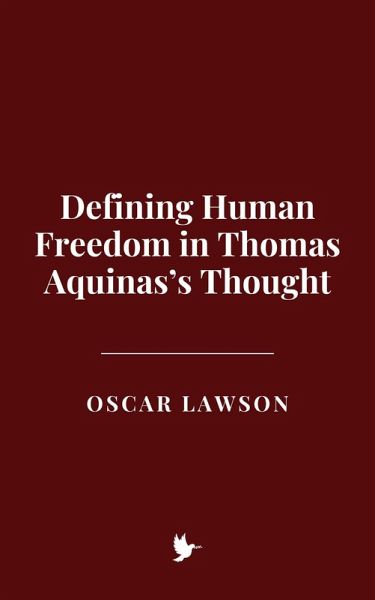
How free are we truly? In an age where questions of autonomy, choice, and moral responsibility dominate public discourse, the quest to understand the nature of human freedom is more urgent than ever. Defining Human Freedom in Thomas Aquinas's Thought offers a profound journey into the mind of one of history's greatest thinkers, revealing a timeless vision of freedom that bridges philosophy, theology, and ethics.
This meticulously researched and richly detailed work uncovers Thomas Aquinas's nuanced conception of liberum arbitrium-free will-unpacking his sophisticated distinctions between freedom of will and freedom of choice, and illuminating the vital role of reason in shaping human agency. Against the backdrop of medieval scholasticism and Aristotelian philosophy, the book explores Aquinas's groundbreaking synthesis that reconciles divine providence and human liberty, necessity and contingency, passion and rationality.
Through deep historical context, analysis of primary texts, and engagement with centuries of interpretation and debate, this book reveals how Aquinas's thought addresses perennial human dilemmas: How does freedom coexist with divine sovereignty? What is the nature of moral responsibility in a world influenced by passions and ignorance? How does grace perfect rather than negate freedom?
Accessible yet scholarly, this volume appeals to readers interested in philosophy, theology, ethics, and the history of ideas, as well as those seeking answers to foundational questions about human dignity and choice. By reintroducing Aquinas's timeless insights into freedom, the book invites contemporary readers to rethink autonomy not as mere independence but as rational self-determination oriented toward the highest good.
Whether you are a student, scholar, or curious thinker, Defining Human Freedom in Thomas Aquinas's Thought offers a compelling, authoritative, and inspiring exploration of freedom's true meaning-a concept as vital today as it was over seven centuries ago.
This meticulously researched and richly detailed work uncovers Thomas Aquinas's nuanced conception of liberum arbitrium-free will-unpacking his sophisticated distinctions between freedom of will and freedom of choice, and illuminating the vital role of reason in shaping human agency. Against the backdrop of medieval scholasticism and Aristotelian philosophy, the book explores Aquinas's groundbreaking synthesis that reconciles divine providence and human liberty, necessity and contingency, passion and rationality.
Through deep historical context, analysis of primary texts, and engagement with centuries of interpretation and debate, this book reveals how Aquinas's thought addresses perennial human dilemmas: How does freedom coexist with divine sovereignty? What is the nature of moral responsibility in a world influenced by passions and ignorance? How does grace perfect rather than negate freedom?
Accessible yet scholarly, this volume appeals to readers interested in philosophy, theology, ethics, and the history of ideas, as well as those seeking answers to foundational questions about human dignity and choice. By reintroducing Aquinas's timeless insights into freedom, the book invites contemporary readers to rethink autonomy not as mere independence but as rational self-determination oriented toward the highest good.
Whether you are a student, scholar, or curious thinker, Defining Human Freedom in Thomas Aquinas's Thought offers a compelling, authoritative, and inspiring exploration of freedom's true meaning-a concept as vital today as it was over seven centuries ago.
Dieser Download kann aus rechtlichen Gründen nur mit Rechnungsadresse in A, B, CY, CZ, D, DK, EW, E, FIN, F, GR, H, IRL, I, LT, L, LR, M, NL, PL, P, R, S, SLO, SK ausgeliefert werden.