0,00 €
0,00 €
inkl. MwSt.
Erscheint vor. 27.02.26

0 °P sammeln
0,00 €
Als Download kaufen
0,00 €
inkl. MwSt.
Erscheint vor. 27.02.26
0 °P sammeln
Jetzt verschenken
Alle Infos zum eBook verschenken
0,00 €
inkl. MwSt.
Erscheint vor. 27.02.26
Alle Infos zum eBook verschenken
0 °P sammeln

Andere Kunden interessierten sich auch für
") Cosmos and Republic (eBook, PDF)0,00 €
Cosmos and Republic (eBook, PDF)0,00 €") Der politische Konsens (eBook, PDF)0,00 €
Der politische Konsens (eBook, PDF)0,00 €") Populismus und autoritäre Ideologie (eBook, PDF)0,00 €
Populismus und autoritäre Ideologie (eBook, PDF)0,00 €") The Social Evolution of World Politics (eBook, PDF)0,00 €
The Social Evolution of World Politics (eBook, PDF)0,00 €") »We Are All Activists« (eBook, PDF)0,00 €
»We Are All Activists« (eBook, PDF)0,00 €") Den Staat aus der Gesellschaft denken (eBook, PDF)0,00 €
Den Staat aus der Gesellschaft denken (eBook, PDF)0,00 €") Von unmittelbarer Demokratie zur Repräsentation (eBook, PDF)0,00 €
Von unmittelbarer Demokratie zur Repräsentation (eBook, PDF)0,00 €







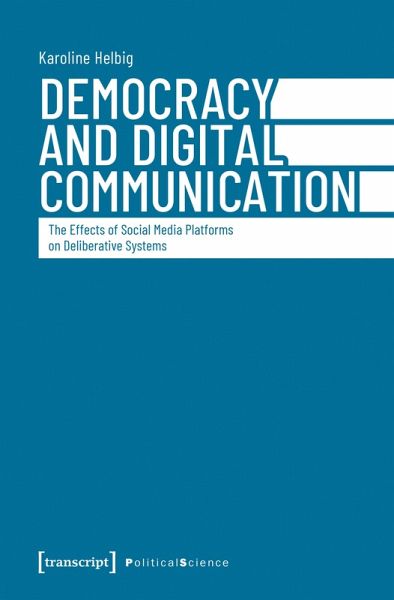
How do social media platforms influence democracy? Caroline Helbig explores how platform logics - from digital architectures to economic incentives - shape public discourse and interact with broader deliberative systems. Moving beyond techno-pessimism, she offers a nuanced account of how platforms both constrain and support democratic communication. Drawing on deliberative theory and digitisation research, the study speaks to scholars, policymakers, and readers interested in democracy in a digital world.
Dieser Download kann aus rechtlichen Gründen nur mit Rechnungsadresse in A, D ausgeliefert werden.