69,95 €
69,95 €
inkl. MwSt.
Sofort per Download lieferbar

35 °P sammeln
69,95 €
Als Download kaufen
69,95 €
inkl. MwSt.
Sofort per Download lieferbar
35 °P sammeln
Jetzt verschenken
Alle Infos zum eBook verschenken
69,95 €
inkl. MwSt.
Sofort per Download lieferbar
Alle Infos zum eBook verschenken
35 °P sammeln

Andere Kunden interessierten sich auch für
") Democracy without Engagement? (eBook, PDF)69,95 €
Democracy without Engagement? (eBook, PDF)69,95 €") Prophet and Statesmen in Crafting Democracy in India (eBook, ePUB)88,95 €
Prophet and Statesmen in Crafting Democracy in India (eBook, ePUB)88,95 €") The Power of Opposition (eBook, ePUB)41,95 €
The Power of Opposition (eBook, ePUB)41,95 €") Politics, Society, And Democracy Latin America (eBook, ePUB)45,95 €
Politics, Society, And Democracy Latin America (eBook, ePUB)45,95 €") Democratizing Central and Eastern Europe (eBook, ePUB)45,95 €
Democratizing Central and Eastern Europe (eBook, ePUB)45,95 €") Slovenian Politics and the State (eBook, ePUB)73,95 €
Slovenian Politics and the State (eBook, ePUB)73,95 €") Democracy and Political Culture in Eastern Europe (eBook, ePUB)45,95 €
Democracy and Political Culture in Eastern Europe (eBook, ePUB)45,95 €




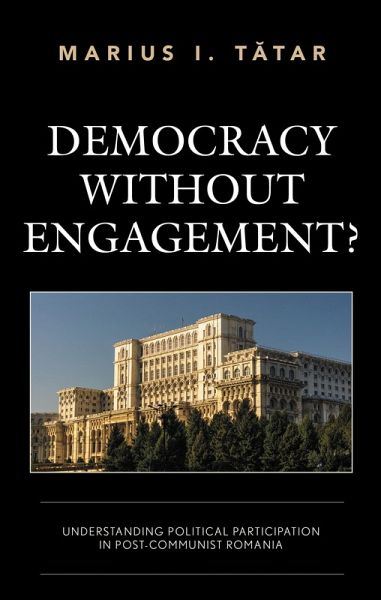
How do post-communist citizens engage in the new democracies of Eastern Europe after decades of repressive control exerted by the communist regimes? Are people's involvement in post-communist politics influenced by generic socioeconomic and attitudinal traits, or is it primarily driven by selective mobilization opportunities provided by social networks and organizations? Democracy without Engagement?: Understanding Political Participation in Post-Communist Romania presents a broad framework for conceptualizing and measuring citizen participation and applies it to Romania as a typical post-communist democracy illustrating the low rates of political activism in the region. Separate chapters examine post-communist citizens' participation in elections, attempts to influence authorities beyond voting, cognitive engagement in politics, and direct involvement in local decision-making. Using large-N statistical analyses, the author argues that individuals' socioeconomic and attitudinal characteristics have relatively weak influences on citizen participation in the post-communist context. Instead, various organizations and social networks act as politically recruiting and mobilizing agents, driving citizen participation into political actions that can challenge or strengthen democracy. In the absence of a well-developed participatory political culture that would enable citizens to act autonomously in the political sphere, the persistence of post-communist democracies largely depends on the goals and methods pursued by these mobilizing agents.