39,95 €
39,95 €
inkl. MwSt.
Sofort per Download lieferbar

20 °P sammeln
39,95 €
Als Download kaufen
39,95 €
inkl. MwSt.
Sofort per Download lieferbar
20 °P sammeln
Jetzt verschenken
Alle Infos zum eBook verschenken
39,95 €
inkl. MwSt.
Sofort per Download lieferbar
Alle Infos zum eBook verschenken
20 °P sammeln

Andere Kunden interessierten sich auch für
") Design for Emergency Management (eBook, ePUB)39,95 €
Design for Emergency Management (eBook, ePUB)39,95 €") Cultural Competency for Emergency and Crisis Management (eBook, PDF)43,95 €
Cultural Competency for Emergency and Crisis Management (eBook, PDF)43,95 €") Emergency Characterization of Unknown Materials (eBook, PDF)32,95 €
Emergency Characterization of Unknown Materials (eBook, PDF)32,95 €") Critical Infrastructure Protection, Risk Management, and Resilience (eBook, PDF)64,95 €
Critical Infrastructure Protection, Risk Management, and Resilience (eBook, PDF)64,95 €") Introduction to Homeland Security, Third Edition (eBook, PDF)61,95 €
Introduction to Homeland Security, Third Edition (eBook, PDF)61,95 €") Managing the Human Dimension of Disasters (eBook, PDF)61,95 €
Managing the Human Dimension of Disasters (eBook, PDF)61,95 €") Riding the Wave (eBook, PDF)47,95 €
Riding the Wave (eBook, PDF)47,95 €



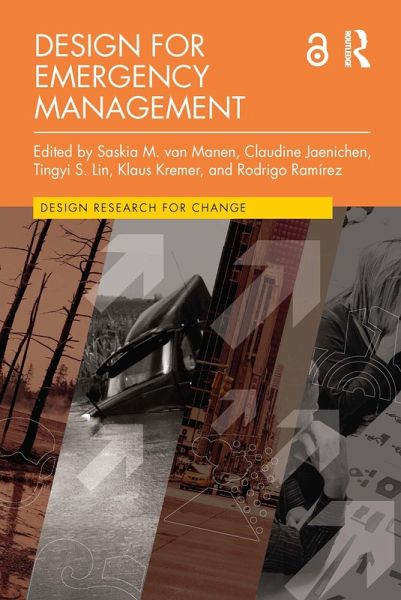
Through a combination of theory, practice, and a range of interdisciplinary case studies, this book expands how we define and think about the critical role and relationship between design and emergencies. This role extends far beyond aesthetics: the book highlights the urgency of ensuring that a wide range of stakeholders and a diverse representation of the public comes together to work towards preventing disasters.
Design in the context of disasters, such as earthquakes, hurricanes, flooding and (wild) fires, provides new ways of looking at challenges. It contributes methods to actively engage communities in managing and minimizing disaster risk. Contributors present the latest research on how (collaborative) design and design thinking contribute to the development of processes and solutions to increase disaster literacy and decrease disaster risk for individuals and entire communities. Chapters highlight applied research and implementation of design and design thinking before, during, and after emergencies, resulting in a set of design guidelines derived from best practice.
The book will be of interest to scholars and practitioners in emergency management, product and service design, strategic design, design research, co-design, social design, design for change, and human-centered design.
Chapter 8 of this book is available for free in PDF format as Open Access from the individual product page at www.taylorfrancis.com. It has been made available under a Creative Commons Attribution-Non Commercial-No Derivatives (CC-BY-NC-ND) 4.0 license. Funded by Massey University. Chapter 9 of this book is available for free in PDF format as Open Access from the individual product page at www.taylorfrancis.com. It has been made available under a Creative Commons Attribution-Non Commercial-No Derivatives (CC-BY-NC-ND) 4.0 license. Funded by University of Otago.
Design in the context of disasters, such as earthquakes, hurricanes, flooding and (wild) fires, provides new ways of looking at challenges. It contributes methods to actively engage communities in managing and minimizing disaster risk. Contributors present the latest research on how (collaborative) design and design thinking contribute to the development of processes and solutions to increase disaster literacy and decrease disaster risk for individuals and entire communities. Chapters highlight applied research and implementation of design and design thinking before, during, and after emergencies, resulting in a set of design guidelines derived from best practice.
The book will be of interest to scholars and practitioners in emergency management, product and service design, strategic design, design research, co-design, social design, design for change, and human-centered design.
Chapter 8 of this book is available for free in PDF format as Open Access from the individual product page at www.taylorfrancis.com. It has been made available under a Creative Commons Attribution-Non Commercial-No Derivatives (CC-BY-NC-ND) 4.0 license. Funded by Massey University. Chapter 9 of this book is available for free in PDF format as Open Access from the individual product page at www.taylorfrancis.com. It has been made available under a Creative Commons Attribution-Non Commercial-No Derivatives (CC-BY-NC-ND) 4.0 license. Funded by University of Otago.
Dieser Download kann aus rechtlichen Gründen nur mit Rechnungsadresse in A, B, BG, CY, CZ, D, DK, EW, E, FIN, F, GR, HR, H, IRL, I, LT, L, LR, M, NL, PL, P, R, S, SLO, SK ausgeliefert werden.