112,95 €
112,95 €
inkl. MwSt.
Sofort per Download lieferbar

56 °P sammeln
112,95 €
Als Download kaufen
112,95 €
inkl. MwSt.
Sofort per Download lieferbar
56 °P sammeln
Jetzt verschenken
Alle Infos zum eBook verschenken
112,95 €
inkl. MwSt.
Sofort per Download lieferbar
Alle Infos zum eBook verschenken
56 °P sammeln

Andere Kunden interessierten sich auch für
") Assessment Reform in Education (eBook, PDF)104,95 €
Assessment Reform in Education (eBook, PDF)104,95 €") Self-directed Learning Oriented Assessments in the Asia-Pacific (eBook, PDF)112,95 €
Self-directed Learning Oriented Assessments in the Asia-Pacific (eBook, PDF)112,95 €") Assessment Rubrics Decoded (eBook, PDF)37,95 €
Assessment Rubrics Decoded (eBook, PDF)37,95 €") Student Self-Assessment (eBook, PDF)35,95 €
Student Self-Assessment (eBook, PDF)35,95 €") Assessment for Learning: Meeting the Challenge of Implementation (eBook, PDF)120,95 €
Assessment for Learning: Meeting the Challenge of Implementation (eBook, PDF)120,95 €") Assessment in Education (eBook, PDF)72,95 €
Assessment in Education (eBook, PDF)72,95 €") Standard Setting in Education (eBook, PDF)104,95 €
Standard Setting in Education (eBook, PDF)104,95 €
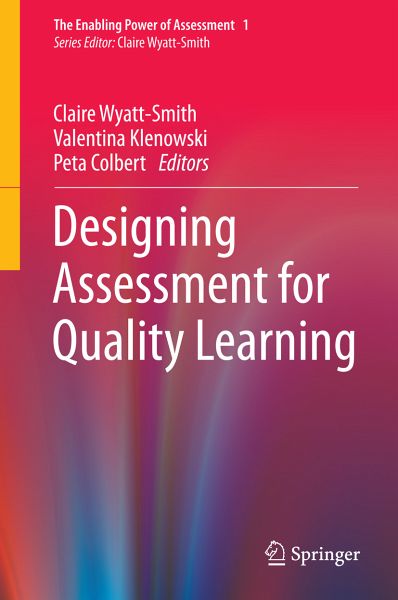
This book brings together internationally recognised scholars with an interest in how to use the power of assessment to improve student learning and to engage with accountability priorities at both national and global levels. It includes distinguished writers who have worked together for some two decades to shift the assessment paradigm from a dominant focus on assessment as measurement towards assessment as central to efforts to improve learning. These writers have worked with the teaching profession and, in so doing, have researched and generated key insights into different ways of understanding assessment and its relationship to learning.
The volume contributes to the theorising of assessment in contexts characterised by heightened accountability requirements and constant change. The book's structure and content reflect already significant and growing international interest in assessment as contextualised practice, as well as theories of learning and teaching that underpinand drive particular assessment approaches. Learning theories and practices, assessment literacies, teachers' responsibilities in assessment, the role of leadership, and assessment futures are the organisers within the book's structure and content.
The contributors to this book have in common the view that quality assessment, and quality learning and teaching are integrally related. Another shared view is that the alignment of assessment with curriculum, teaching and learning is linchpin to efforts to improve both learning opportunities and outcomes for all. Essentially, the book presents new perspectives on the enabling power of assessment. In so doing, the writers recognise that validity and reliability - the traditional canons of assessment - remain foundational and therefore necessary. However, they are not of themselves sufficient for quality education. The book argues that assessment needs to be radically reconsidered in the context of unprecedented societal change. Increasingly, communities are segregating more by wealth, with clear signs of social, political, economic and environmental instability. These changes raise important issues relating to ethics and equity, taken to be core dimensions in enabling the power of assessment to contribute to quality learning for all. This book offers readers new knowledge about how assessment can be used to re/engage learners across all phases of education.
The volume contributes to the theorising of assessment in contexts characterised by heightened accountability requirements and constant change. The book's structure and content reflect already significant and growing international interest in assessment as contextualised practice, as well as theories of learning and teaching that underpinand drive particular assessment approaches. Learning theories and practices, assessment literacies, teachers' responsibilities in assessment, the role of leadership, and assessment futures are the organisers within the book's structure and content.
The contributors to this book have in common the view that quality assessment, and quality learning and teaching are integrally related. Another shared view is that the alignment of assessment with curriculum, teaching and learning is linchpin to efforts to improve both learning opportunities and outcomes for all. Essentially, the book presents new perspectives on the enabling power of assessment. In so doing, the writers recognise that validity and reliability - the traditional canons of assessment - remain foundational and therefore necessary. However, they are not of themselves sufficient for quality education. The book argues that assessment needs to be radically reconsidered in the context of unprecedented societal change. Increasingly, communities are segregating more by wealth, with clear signs of social, political, economic and environmental instability. These changes raise important issues relating to ethics and equity, taken to be core dimensions in enabling the power of assessment to contribute to quality learning for all. This book offers readers new knowledge about how assessment can be used to re/engage learners across all phases of education.
Dieser Download kann aus rechtlichen Gründen nur mit Rechnungsadresse in A, B, BG, CY, CZ, D, DK, EW, E, FIN, F, GR, HR, H, IRL, I, LT, L, LR, M, NL, PL, P, R, S, SLO, SK ausgeliefert werden.
"This is very well written and reader friendly; Designing assessment for quality learning is a must for those working in the field. Many will find excellent points for consideration and many teachers and researchers will be glad of the near future views of what, how, where and why assessment will change the way we teach and learn." (Jesús García Laborda, British Journal of Educational Technology, Vol. 46 (3), 2015)