55,95 €
55,95 €
inkl. MwSt.
Sofort per Download lieferbar

28 °P sammeln
55,95 €
Als Download kaufen
55,95 €
inkl. MwSt.
Sofort per Download lieferbar
28 °P sammeln
Jetzt verschenken
Alle Infos zum eBook verschenken
55,95 €
inkl. MwSt.
Sofort per Download lieferbar
Alle Infos zum eBook verschenken
28 °P sammeln

Andere Kunden interessierten sich auch für
") Designing for the Museum Visitor Experience (eBook, PDF)55,95 €
Designing for the Museum Visitor Experience (eBook, PDF)55,95 €") Doing Museology Differently (eBook, ePUB)52,95 €
Doing Museology Differently (eBook, ePUB)52,95 €") Curating Lively Objects (eBook, ePUB)39,95 €
Curating Lively Objects (eBook, ePUB)39,95 €") Museum Gallery Interpretation and Material Culture (eBook, ePUB)55,95 €
Museum Gallery Interpretation and Material Culture (eBook, ePUB)55,95 €") The Brain-Friendly Museum (eBook, ePUB)36,95 €
The Brain-Friendly Museum (eBook, ePUB)36,95 €") Fashionability, Exhibition Culture and Gender Politics (eBook, ePUB)39,95 €
Fashionability, Exhibition Culture and Gender Politics (eBook, ePUB)39,95 €") The Performance of Viking Identity in Museums (eBook, ePUB)42,95 €
The Performance of Viking Identity in Museums (eBook, ePUB)42,95 €

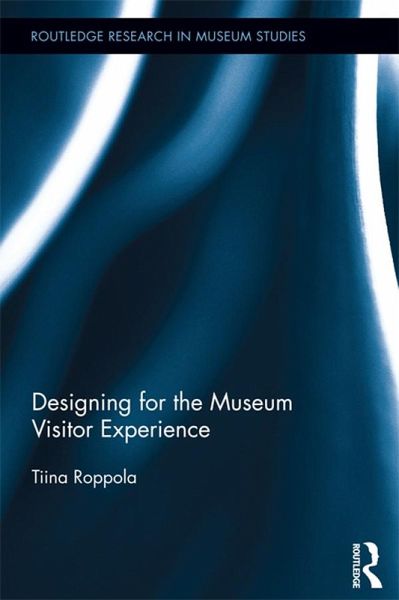
Exhibition environments are enticingly complex spaces: as facilitators of experience; as free-choice learning contexts; as theaters of drama; as encyclopedic warehouses of cultural and natural heritage; as two-, three- and four-dimensional storytellers; as sites for self-actualizing leisure activity. But how much do we really know about the moment-by-moment transactions that comprise the intricate experiences of visitors? To strengthen the disciplinary knowledge base supporting exhibition design, we must understand more about what 'goes on' as people engage with the multifaceted communication environments that are contemporary exhibition spaces.
The in-depth, visitor-centered research underlying this book offers nuanced understandings of the interface between visitors and exhibition environments. Analysis of visitors' meaning-making accounts shows that the visitor experience is contingent upon four processes: framing, resonating, channeling, and broadening. These processes are distinct, yet mutually influencing. Together they offer an evidence-based conceptual framework for understanding visitors in exhibition spaces. Museum educators, designers, interpreters, curators, researchers, and evaluators will find this framework of value in both daily practice and future planning. Designing for the Museum Visitor Experience provides museum professionals and academics with a fresh vocabulary for understanding what goes on as visitors wander around exhibitions.
The in-depth, visitor-centered research underlying this book offers nuanced understandings of the interface between visitors and exhibition environments. Analysis of visitors' meaning-making accounts shows that the visitor experience is contingent upon four processes: framing, resonating, channeling, and broadening. These processes are distinct, yet mutually influencing. Together they offer an evidence-based conceptual framework for understanding visitors in exhibition spaces. Museum educators, designers, interpreters, curators, researchers, and evaluators will find this framework of value in both daily practice and future planning. Designing for the Museum Visitor Experience provides museum professionals and academics with a fresh vocabulary for understanding what goes on as visitors wander around exhibitions.
Dieser Download kann aus rechtlichen Gründen nur mit Rechnungsadresse in A, B, BG, CY, CZ, D, DK, EW, E, FIN, F, GR, HR, H, IRL, I, LT, L, LR, M, NL, PL, P, R, S, SLO, SK ausgeliefert werden.
'In Designing for the Museum Visitor Experience, Tiina Roppola eloquently and expertly explores the museum experience, drawing from an inspiring qualitative analysis of extensive visitor interviews. Tiina's findings certainly "resonate" with my own work in this field and "broaden" our theoretical understanding of the visitor experience.' - Jan Packer, University of Queensland, Australia
'This is an important and timely book, not least because of its very clear recognition of the consequences of the indeterminacies of signification for our engagement with museums and their contents. Roppola offers a sensitive, finely-tuned, and comprehensive account of the actualities of these encounters and their wider contemporary theoretical and social implications.' --Donald Preziosi, University of California Los Angeles, USA
'It offers a fresh insight on issues up to now usually addressed by museum learning experts or researchers with a learning agenda. Tina Roppola is an expert in visitor experiece having worked for a long time in interpretation and in science communication. Her attempt here is to write from 'inside the visitor experience' with the eyes of an exhibition designer. This, in my view, makes the book an important contribution to professional reflection for several reasons.' - Maria Xanthoudaki, National Museum of Science and Technology, Visitor Studies
'This is an important and timely book, not least because of its very clear recognition of the consequences of the indeterminacies of signification for our engagement with museums and their contents. Roppola offers a sensitive, finely-tuned, and comprehensive account of the actualities of these encounters and their wider contemporary theoretical and social implications.' --Donald Preziosi, University of California Los Angeles, USA
'It offers a fresh insight on issues up to now usually addressed by museum learning experts or researchers with a learning agenda. Tina Roppola is an expert in visitor experiece having worked for a long time in interpretation and in science communication. Her attempt here is to write from 'inside the visitor experience' with the eyes of an exhibition designer. This, in my view, makes the book an important contribution to professional reflection for several reasons.' - Maria Xanthoudaki, National Museum of Science and Technology, Visitor Studies