25,95 €
25,95 €
inkl. MwSt.
Sofort per Download lieferbar

13 °P sammeln
25,95 €
Als Download kaufen
25,95 €
inkl. MwSt.
Sofort per Download lieferbar
13 °P sammeln
Jetzt verschenken
Alle Infos zum eBook verschenken
25,95 €
inkl. MwSt.
Sofort per Download lieferbar
Alle Infos zum eBook verschenken
13 °P sammeln

Andere Kunden interessierten sich auch für
") The Political Economy of Civil War and UN Peace Operations (eBook, ePUB)36,95 €
The Political Economy of Civil War and UN Peace Operations (eBook, ePUB)36,95 €") UN Peacekeeping Doctrine in a New Era (eBook, ePUB)56,95 €
UN Peacekeeping Doctrine in a New Era (eBook, ePUB)56,95 €") UN Security Council (eBook, ePUB)37,95 €
UN Security Council (eBook, ePUB)37,95 €") The UN and the Global South, 1945 and 2015 (eBook, ePUB)45,95 €
The UN and the Global South, 1945 and 2015 (eBook, ePUB)45,95 €") Understanding Humanitarian Protection (eBook, ePUB)37,95 €
Understanding Humanitarian Protection (eBook, ePUB)37,95 €") United Nations Peace Operations in Africa (eBook, ePUB)36,95 €
United Nations Peace Operations in Africa (eBook, ePUB)36,95 €") Alternatives to Neoliberal Peacebuilding and Statebuilding in Africa (eBook, ePUB)21,95 €
Alternatives to Neoliberal Peacebuilding and Statebuilding in Africa (eBook, ePUB)21,95 €

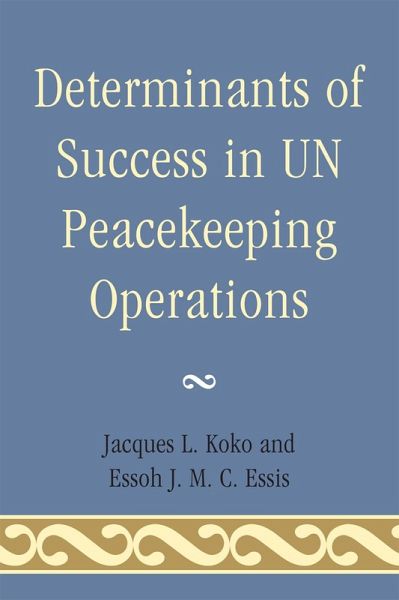
This book examines forty-six UN peacekeeping operations, initiated from 1956 through 2006 to manage cases of intrastate and interstate conflicts, to identify the most significant factors that could help to explain the success or lack of success of such operations. Factor analysis is used to exploit the correlations between independent variables in order to regroup them into a smaller set of factors explaining the success or failure of these operations. The results show that the success of a UN peacekeeping operation can be explained by factors that are related to four categories of variables: i) the scope of resources invested in peacekeeping; ii) the duration and intensity of conflict and time of preparation for peacekeeping intervention; iii) the political support for peacekeeping from the UN Security Council; and iv) the type of conflict.