11,95 €
11,95 €
inkl. MwSt.
Sofort per Download lieferbar

6 °P sammeln
11,95 €
Als Download kaufen
11,95 €
inkl. MwSt.
Sofort per Download lieferbar
6 °P sammeln
Jetzt verschenken
Alle Infos zum eBook verschenken
11,95 €
inkl. MwSt.
Sofort per Download lieferbar
Alle Infos zum eBook verschenken
6 °P sammeln

Andere Kunden interessierten sich auch für
") Night and the City (eBook, ePUB)11,95 €
Night and the City (eBook, ePUB)11,95 €") The Bigamist (eBook, ePUB)11,95 €
The Bigamist (eBook, ePUB)11,95 €") Colour Films in Britain (eBook, ePUB)83,95 €
Colour Films in Britain (eBook, ePUB)83,95 €") Red River (eBook, ePUB)11,95 €
Red River (eBook, ePUB)11,95 €") Signs and Meaning in the Cinema (eBook, ePUB)21,95 €
Signs and Meaning in the Cinema (eBook, ePUB)21,95 €") Warhol in Ten Takes (eBook, ePUB)27,95 €
Warhol in Ten Takes (eBook, ePUB)27,95 €") M (eBook, ePUB)11,95 €
M (eBook, ePUB)11,95 €






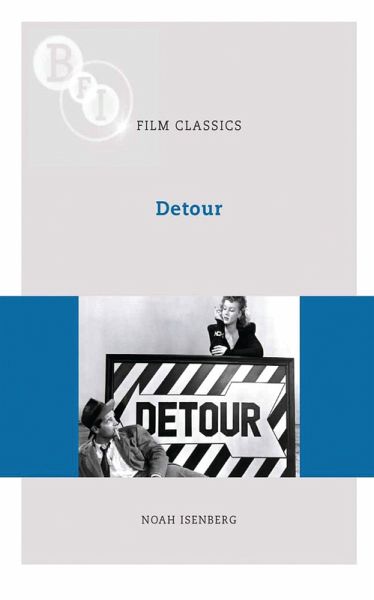
Long considered an unpolished gem of film noir, the private treasure of film buffs, cinephiles and critics, Edgar G. Ulmer's Detour (1945) has recently earned a new wave of recognition. In the words of film critic David Thomson, it is simply 'beyond remarkable.' The only B-picture to make it into the National Film Registry of the Library of Congress, Detour has outrun its fate as the bastard child of one of Hollywood's lowliest studios. Ulmer's film follows, in flashback, the journey of Al Roberts (Tom Neal), a pianist hitching from New York to California to join his girlfriend Sue (Claudia Drake), a singer gone to seek her fortune in Hollywood. In classic noir style, Detour features mysterious deaths, changes of identity, an unforgettable femme fatale called Vera (Ann Savage), and, in Roberts, a wretched, masochistic antihero. Noah Isenberg's study of Detour draws on a vast array of archival sources, unpublished letters and interviews, to provide an animated and thorough account of the film's production history, its critical reception, its afterlife (including various remakes) and the different ways in which the film has been understood since its release. He devotes significant attention to each of the key players in the film - the crew as well as the principal actors - while charting the uneasy transformation of Martin Goldsmith's pulp novel into Ulmer's signature film, the disagreements between the director and writer, and the severe financial and formal limitations with which Ulmer grappled. The story that Isenberg tells, rich in historical and critical insight, replicates the briskness of a B-movie.