22,95 €
22,95 €
inkl. MwSt.
Erscheint vor. 03.03.26

11 °P sammeln
22,95 €
Als Download kaufen
22,95 €
inkl. MwSt.
Erscheint vor. 03.03.26
11 °P sammeln
Jetzt verschenken
Alle Infos zum eBook verschenken
22,95 €
inkl. MwSt.
Erscheint vor. 03.03.26
Alle Infos zum eBook verschenken
11 °P sammeln

Andere Kunden interessierten sich auch für
") Family Legal Vulnerability (eBook, ePUB)22,95 €
Family Legal Vulnerability (eBook, ePUB)22,95 €") Slow and Sudden Violence (eBook, ePUB)22,95 €
Slow and Sudden Violence (eBook, ePUB)22,95 €") No Restraint (eBook, ePUB)18,95 €
No Restraint (eBook, ePUB)18,95 €") How Does It Feel to Be Unwanted? (eBook, ePUB)10,95 €
How Does It Feel to Be Unwanted? (eBook, ePUB)10,95 €") Female Prostitution in Costa Rica (eBook, ePUB)47,95 €
Female Prostitution in Costa Rica (eBook, ePUB)47,95 €") We Are Home (eBook, ePUB)12,99 €
We Are Home (eBook, ePUB)12,99 €") Politics and Practices of Transborderism (eBook, ePUB)29,95 €
Politics and Practices of Transborderism (eBook, ePUB)29,95 €







A new perspective on the relationship between race and space in Detroit
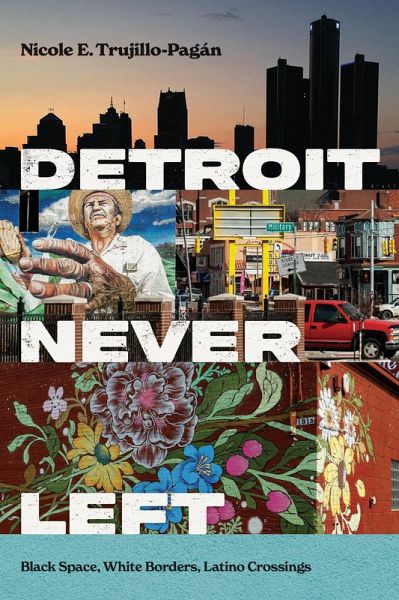
Detroit seemed to experience an explosive rebirth following its bankruptcy, the largest in US municipal history. It was as if the slate had been wiped clean and the color line erased in the nation's largest Black city. Detroit Never Left explains the relation between racism and space by analyzing the ways opportunities changed in the years leading up to and following bankruptcy.
Based on a variety of data, including in-depth interviews with people who identify as "Latina/o/x" in their early 20s, ethnographic observation, and media coverage, Nicole E. Trujillo-Pagán shows how a dialectic between empty and concrete abstractions created new opportunities for outside investment, often at the expense of residents' fortunes. She reveals space is much more than a neutral backdrop; It is continually produced through abstractions that act like bordering and crossing practices to control resources and opportunities. With broad implications for analyses of space and opportunity, Detroit Never Left tackles important contradictions in the post-bankruptcy city. For example, urban youth do not want to be moved out or isolated in their barrio. Similarly, many Detroiters feel spatial changes happen "to," instead of "for" them. Ultimately, residents' concerns underscored broader tensions between democratic inclusion and racialized capitalism.
Detroit seemed to experience an explosive rebirth following its bankruptcy, the largest in US municipal history. It was as if the slate had been wiped clean and the color line erased in the nation's largest Black city. Detroit Never Left explains the relation between racism and space by analyzing the ways opportunities changed in the years leading up to and following bankruptcy.
Based on a variety of data, including in-depth interviews with people who identify as "Latina/o/x" in their early 20s, ethnographic observation, and media coverage, Nicole E. Trujillo-Pagán shows how a dialectic between empty and concrete abstractions created new opportunities for outside investment, often at the expense of residents' fortunes. She reveals space is much more than a neutral backdrop; It is continually produced through abstractions that act like bordering and crossing practices to control resources and opportunities. With broad implications for analyses of space and opportunity, Detroit Never Left tackles important contradictions in the post-bankruptcy city. For example, urban youth do not want to be moved out or isolated in their barrio. Similarly, many Detroiters feel spatial changes happen "to," instead of "for" them. Ultimately, residents' concerns underscored broader tensions between democratic inclusion and racialized capitalism.
Dieser Download kann aus rechtlichen Gründen nur mit Rechnungsadresse in A, D ausgeliefert werden.