42,95 €
42,95 €
inkl. MwSt.
Sofort per Download lieferbar

21 °P sammeln
42,95 €
Als Download kaufen
42,95 €
inkl. MwSt.
Sofort per Download lieferbar
21 °P sammeln
Jetzt verschenken
Alle Infos zum eBook verschenken
42,95 €
inkl. MwSt.
Sofort per Download lieferbar
Alle Infos zum eBook verschenken
21 °P sammeln

Andere Kunden interessierten sich auch für
") The Limits of the Green Economy (eBook, PDF)43,95 €
The Limits of the Green Economy (eBook, PDF)43,95 €") Development Banks and the Green Transition (eBook, ePUB)42,95 €
Development Banks and the Green Transition (eBook, ePUB)42,95 €") The Routledge Handbook of Green Finance (eBook, PDF)47,95 €
The Routledge Handbook of Green Finance (eBook, PDF)47,95 €") Prosperity without Growth (eBook, PDF)22,95 €
Prosperity without Growth (eBook, PDF)22,95 €") The Sustainable Economics of Elinor Ostrom (eBook, PDF)41,95 €
The Sustainable Economics of Elinor Ostrom (eBook, PDF)41,95 €") Economic Development and Political Action in the Arab World (eBook, PDF)45,95 €
Economic Development and Political Action in the Arab World (eBook, PDF)45,95 €") Green Growth and Low Carbon Development in East Asia (eBook, PDF)43,95 €
Green Growth and Low Carbon Development in East Asia (eBook, PDF)43,95 €





The greatest challenge humanity faces in the 21st century is the climate crisis. A successful green transition towards a sustainable economy requires various policy initiatives, including promoting innovation, financing, and tax incentives for selected activities, cheap credit, and subsidies. To achieve these aims, a massive redistribution of capital will be necessary, requiring cooperation between public and private sectors, the States, and civil society.
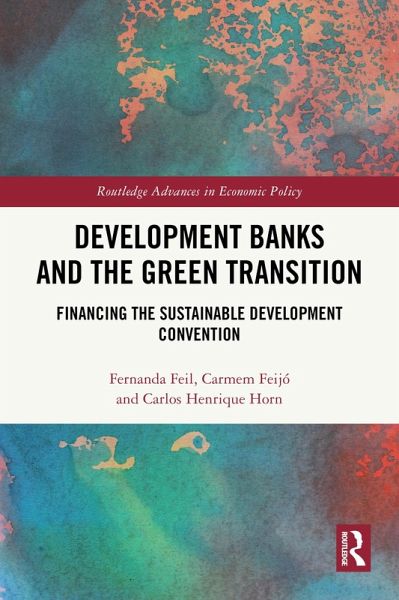
This book introduces the idea of a "Sustainable Development Convention". A convention is a form of social production and shared knowledge that establishes collective reality. The Sustainable Development Convention is proposed in opposition to the neoliberal convention, according to which pure market coordination is superior to State coordination. The Sustainable Development Convention intends to effect a radical change in both the mission and actions of the State, developing new economic policy tools and institutions focusing on the green transition. In particular, the transition calls for a complete reordering of financial systems and capital flows, making the actions of development banks ever more critical. Development banks have been essential institutions in promoting public policies worldwide - their credit and other forms of finance and cooperation have been central tools in catching-up processes for developing and emerging economies. In times of structural change, such as the green transition, development banks are required to play a central role.
This book marks a significant addition to the literature on development banks, the green transition, the political economy of climate change, and economic and monetary policy.
This book introduces the idea of a "Sustainable Development Convention". A convention is a form of social production and shared knowledge that establishes collective reality. The Sustainable Development Convention is proposed in opposition to the neoliberal convention, according to which pure market coordination is superior to State coordination. The Sustainable Development Convention intends to effect a radical change in both the mission and actions of the State, developing new economic policy tools and institutions focusing on the green transition. In particular, the transition calls for a complete reordering of financial systems and capital flows, making the actions of development banks ever more critical. Development banks have been essential institutions in promoting public policies worldwide - their credit and other forms of finance and cooperation have been central tools in catching-up processes for developing and emerging economies. In times of structural change, such as the green transition, development banks are required to play a central role.
This book marks a significant addition to the literature on development banks, the green transition, the political economy of climate change, and economic and monetary policy.
Dieser Download kann aus rechtlichen Gründen nur mit Rechnungsadresse in A, B, BG, CY, CZ, D, DK, EW, E, FIN, F, GR, HR, H, IRL, I, LT, L, LR, M, NL, PL, P, R, S, SLO, SK ausgeliefert werden.