81,95 €
81,95 €
inkl. MwSt.
Sofort per Download lieferbar

41 °P sammeln
81,95 €
Als Download kaufen
81,95 €
inkl. MwSt.
Sofort per Download lieferbar
41 °P sammeln
Jetzt verschenken
Alle Infos zum eBook verschenken
81,95 €
inkl. MwSt.
Sofort per Download lieferbar
Alle Infos zum eBook verschenken
41 °P sammeln

Andere Kunden interessierten sich auch für
") Devices for Mobility and Manipulation for People with Reduced Abilities (eBook, ePUB)81,95 €
Devices for Mobility and Manipulation for People with Reduced Abilities (eBook, ePUB)81,95 €") Building Tissues (eBook, PDF)48,95 €
Building Tissues (eBook, PDF)48,95 €") Orthopaedic Biomaterials in Research and Practice (eBook, PDF)73,95 €
Orthopaedic Biomaterials in Research and Practice (eBook, PDF)73,95 €") Medical Devices and Human Engineering (eBook, PDF)91,95 €
Medical Devices and Human Engineering (eBook, PDF)91,95 €") Medical Regulatory Affairs (eBook, PDF)190,95 €
Medical Regulatory Affairs (eBook, PDF)190,95 €") Smart Biomaterial Devices (eBook, PDF)65,95 €
Smart Biomaterial Devices (eBook, PDF)65,95 €") An Introduction to Biomaterials (eBook, PDF)143,95 €
An Introduction to Biomaterials (eBook, PDF)143,95 €


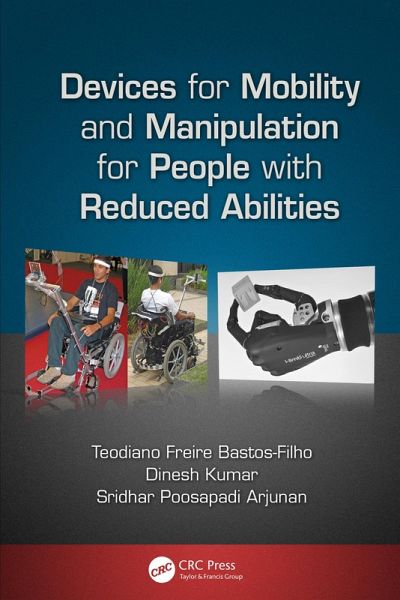
The development and application of assistive technology can help those with reduced abilities improve their quality of life and reduce their dependence on others. Written in layman's terms, Devices for Mobility and Manipulation for People with Reduced Abilities provides research and information on assistive technologies for non-technical people. Wh
Dieser Download kann aus rechtlichen Gründen nur mit Rechnungsadresse in A, B, BG, CY, CZ, D, DK, EW, E, FIN, F, GR, HR, H, IRL, I, LT, L, LR, M, NL, PL, P, R, S, SLO, SK ausgeliefert werden.