39,95 €
39,95 €
inkl. MwSt.
Sofort per Download lieferbar

20 °P sammeln
39,95 €
Als Download kaufen
39,95 €
inkl. MwSt.
Sofort per Download lieferbar
20 °P sammeln
Jetzt verschenken
Alle Infos zum eBook verschenken
39,95 €
inkl. MwSt.
Sofort per Download lieferbar
Alle Infos zum eBook verschenken
20 °P sammeln

Andere Kunden interessierten sich auch für
") Digital Approaches to Inclusion and Participation in Cultural Heritage (eBook, ePUB)39,95 €
Digital Approaches to Inclusion and Participation in Cultural Heritage (eBook, ePUB)39,95 €") Literary Cultures and Digital Humanities in India (eBook, PDF)37,95 €
Literary Cultures and Digital Humanities in India (eBook, PDF)37,95 €") Infoglut (eBook, PDF)45,95 €
Infoglut (eBook, PDF)45,95 €") Reading Ruskin's Cultural Heritage (eBook, PDF)39,95 €
Reading Ruskin's Cultural Heritage (eBook, PDF)39,95 €") Future Memory Practices (eBook, PDF)39,95 €
Future Memory Practices (eBook, PDF)39,95 €") A Theory of Cultural Heritage (eBook, PDF)39,95 €
A Theory of Cultural Heritage (eBook, PDF)39,95 €") Rethinking Heritage in Precarious Times (eBook, PDF)39,95 €
Rethinking Heritage in Precarious Times (eBook, PDF)39,95 €





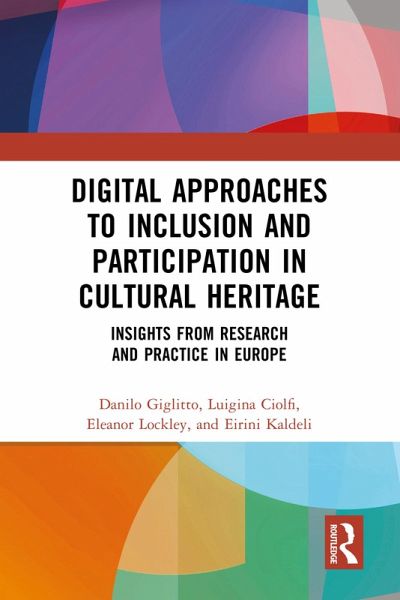
This edited book brings together best examples and practices of digital and interactive approaches and platforms from a number of projects based in European countries to foster social inclusion and participation in heritage and culture. It engages with ongoing debates on the role of culture and heritage in contemporary society relating to inclusion and exclusion, openness, access, and bottom-up participation.
The contributions address key themes such as the engagement of marginalised communities, the opening of debates and new interpretations around socially and historically contested heritages, and the way in which digital technologies may foster more inclusive cultural heritage practices. They will also showcase examples of work that can inspire reflection, further research, and also practice for readers such as practice-focused researchers in both HCI and design. Indeed, as well as consolidating the achievements of researchers, the contributions also represent concrete approaches to digital heritage innovation for social inclusion purposes.
The book's primary audience is academics, researchers, and students in the fields of cultural heritage, digital heritage, human-computer interaction, digital humanities, and digital media, as well as practitioners in the cultural sector.
The contributions address key themes such as the engagement of marginalised communities, the opening of debates and new interpretations around socially and historically contested heritages, and the way in which digital technologies may foster more inclusive cultural heritage practices. They will also showcase examples of work that can inspire reflection, further research, and also practice for readers such as practice-focused researchers in both HCI and design. Indeed, as well as consolidating the achievements of researchers, the contributions also represent concrete approaches to digital heritage innovation for social inclusion purposes.
The book's primary audience is academics, researchers, and students in the fields of cultural heritage, digital heritage, human-computer interaction, digital humanities, and digital media, as well as practitioners in the cultural sector.
Dieser Download kann aus rechtlichen Gründen nur mit Rechnungsadresse in A, B, BG, CY, CZ, D, DK, EW, E, FIN, F, GR, HR, H, IRL, I, LT, L, LR, M, NL, PL, P, R, S, SLO, SK ausgeliefert werden.