35,95 €
35,95 €
inkl. MwSt.
Sofort per Download lieferbar

18 °P sammeln
35,95 €
Als Download kaufen
35,95 €
inkl. MwSt.
Sofort per Download lieferbar
18 °P sammeln
Jetzt verschenken
Alle Infos zum eBook verschenken
35,95 €
inkl. MwSt.
Sofort per Download lieferbar
Alle Infos zum eBook verschenken
18 °P sammeln

Andere Kunden interessierten sich auch für
") Digital Inequalities in Media Education in South Asia (eBook, PDF)42,95 €
Digital Inequalities in Media Education in South Asia (eBook, PDF)42,95 €") Media Challenges to Digital Flourishing (eBook, PDF)52,95 €
Media Challenges to Digital Flourishing (eBook, PDF)52,95 €") Making Media Futures (eBook, PDF)39,95 €
Making Media Futures (eBook, PDF)39,95 €") Classics in Media Theory (eBook, PDF)42,95 €
Classics in Media Theory (eBook, PDF)42,95 €") Rethinking Media Studies (eBook, PDF)42,95 €
Rethinking Media Studies (eBook, PDF)42,95 €") Digital Platforms, Imperialism and Political Culture (eBook, PDF)49,95 €
Digital Platforms, Imperialism and Political Culture (eBook, PDF)49,95 €") Digital Democracy, Social Media and Disinformation (eBook, PDF)39,95 €
Digital Democracy, Social Media and Disinformation (eBook, PDF)39,95 €







Bringing together leading scholars from media studies and digital sociology, this edited volume provides a comprehensive introduction to digital media metaphors, unpacking their power and limitations.
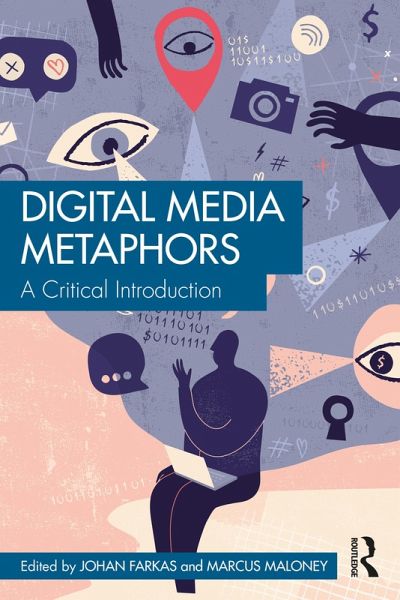
Digital technologies have reshaped our way of life. To grasp their dynamics and implications, people often rely on metaphors to provide a shared frame of reference. Scholars, journalists, tech companies, and policymakers alike speak of digital clouds, bubbles, frontiers, platforms, trolls, and rabbit holes. Some of these metaphors distort the workings of the digital realm and neglect key consequences. This collection, structured in three parts, explores metaphors across digital infrastructures, content, and users. Within these parts, each chapter examines a specific metaphor that has become near-ubiquitous in public debate. Doing so, the book engages not only with the technological, but also the social, political, and environmental implications of digital technologies and relations.
This unique collection will interest students and scholars of digital media and the broader fields of media and communication studies, sociology, and science and technology studies.
Digital technologies have reshaped our way of life. To grasp their dynamics and implications, people often rely on metaphors to provide a shared frame of reference. Scholars, journalists, tech companies, and policymakers alike speak of digital clouds, bubbles, frontiers, platforms, trolls, and rabbit holes. Some of these metaphors distort the workings of the digital realm and neglect key consequences. This collection, structured in three parts, explores metaphors across digital infrastructures, content, and users. Within these parts, each chapter examines a specific metaphor that has become near-ubiquitous in public debate. Doing so, the book engages not only with the technological, but also the social, political, and environmental implications of digital technologies and relations.
This unique collection will interest students and scholars of digital media and the broader fields of media and communication studies, sociology, and science and technology studies.
Dieser Download kann aus rechtlichen Gründen nur mit Rechnungsadresse in A, B, BG, CY, CZ, D, DK, EW, E, FIN, F, GR, HR, H, IRL, I, LT, L, LR, M, NL, PL, P, R, S, SLO, SK ausgeliefert werden.