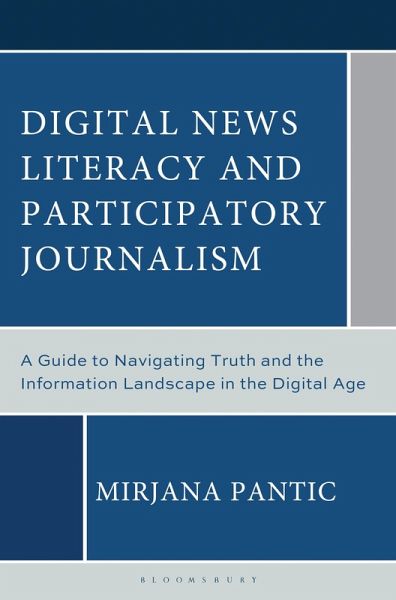
61,95 €
inkl. MwSt.
Erscheint vor. 05.02.26
31 °P sammeln

Andere Kunden interessierten sich auch für
") Digital News Literacy and Participatory Journalism (eBook, ePUB)61,95 €
Digital News Literacy and Participatory Journalism (eBook, ePUB)61,95 €") News Discourse (eBook, PDF)21,95 €
News Discourse (eBook, PDF)21,95 €") Introducing the Language of the News (eBook, PDF)38,95 €
Introducing the Language of the News (eBook, PDF)38,95 €") Mediensprache (eBook, PDF)29,95 €
Mediensprache (eBook, PDF)29,95 €") The Discourse of News Values (eBook, PDF)24,95 €
The Discourse of News Values (eBook, PDF)24,95 €") Blogging (eBook, PDF)30,95 €
Blogging (eBook, PDF)30,95 €") Obesity in the News (eBook, PDF)20,95 €
Obesity in the News (eBook, PDF)20,95 €
Mirjana Pantic investigates key challenges of the digital news ecosystem with a focus on false and misleading information, highlighting journalism's vital role in democratic societies and emphasizing the importance of understanding journalistic standards in cultivating digital news literacy in an era defined by information overload and questionable content.
Using clear definitions and examples of misinformation, disinformation, and malinformation, Pantic demonstrates how audiences can strengthen their ability to identify relevant sources and differentiate between facts, opinions, and false information, ultimately learning to both recognize and resist instances of unreliable content through critical thinking and informed media consumption.
With an increase in the exchange of polarizing viewpoints online and the proliferation of opinion journalism and argument culture, Pantic positions participatory journalism-in which citizens contribute to the production and dissemination of news-as a potential solution. Increased participation in storytelling, she contends, can encourage greater public engagement and accountability in a digitized media ecosystem.
Using clear definitions and examples of misinformation, disinformation, and malinformation, Pantic demonstrates how audiences can strengthen their ability to identify relevant sources and differentiate between facts, opinions, and false information, ultimately learning to both recognize and resist instances of unreliable content through critical thinking and informed media consumption.
With an increase in the exchange of polarizing viewpoints online and the proliferation of opinion journalism and argument culture, Pantic positions participatory journalism-in which citizens contribute to the production and dissemination of news-as a potential solution. Increased participation in storytelling, she contends, can encourage greater public engagement and accountability in a digitized media ecosystem.