69,95 €
69,95 €
inkl. MwSt.
Sofort per Download lieferbar

35 °P sammeln
69,95 €
Als Download kaufen
69,95 €
inkl. MwSt.
Sofort per Download lieferbar
35 °P sammeln
Jetzt verschenken
Alle Infos zum eBook verschenken
69,95 €
inkl. MwSt.
Sofort per Download lieferbar
Alle Infos zum eBook verschenken
35 °P sammeln

Andere Kunden interessierten sich auch für
") Digital Peripheries (eBook, PDF)69,95 €
Digital Peripheries (eBook, PDF)69,95 €") Time-Space Compression (eBook, ePUB)55,95 €
Time-Space Compression (eBook, ePUB)55,95 €") Accessibility (eBook, ePUB)29,95 €
Accessibility (eBook, ePUB)29,95 €") Understanding Local Economic Development (eBook, ePUB)38,95 €
Understanding Local Economic Development (eBook, ePUB)38,95 €") The City as a Global Political Actor (eBook, ePUB)43,95 €
The City as a Global Political Actor (eBook, ePUB)43,95 € (eBook, ePUB)") Exploring Social Geography (Routledge Revivals) (eBook, ePUB)39,95 €
Exploring Social Geography (Routledge Revivals) (eBook, ePUB)39,95 €") Non-Representational Theory (eBook, ePUB)46,95 €
Non-Representational Theory (eBook, ePUB)46,95 €





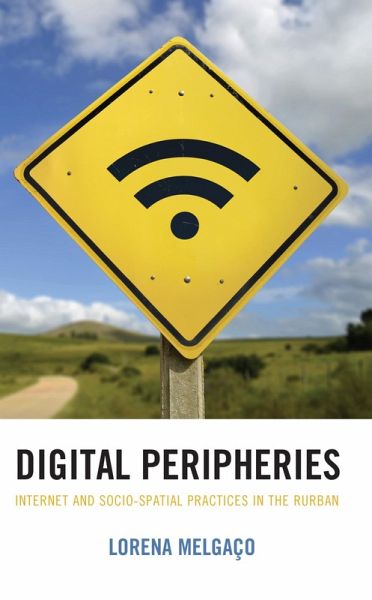
Despite an unprecedented presence of digital technologies in the everyday, a clear urban/non-urban divide in accessing and effectively using the internet remains. This divide is identifiable not only in the Global South-perceived as peripheral-but also in the Global North-regarded as advanced and the motor of technological development. Such a phenomenon suggests the emergence and endurance of socio-technological peripheries, places where socio-spatial inequalities are reinforced by unjust access to the internet.
To understand how such peripherality is manifested and challenged in rurban settings-where the rural and the urban mingle and clash-the first part of this book draws from dependency theory and the decolonial thinking to discuss the impacts of uneven production, access, and use of digital technology. The second part draws on Actor-Network Theory as a methodological frame to understand the recursive entwinement of the everyday and the use of the internet in three villages: two in Brazil and one in the UK. By bringing to the fore challenges that cross North-South divides, Digital Peripheries proposes an open theory of the connected rurban as a framework that addresses and accommodates the specificities of these communities in the twenty-first century.
To understand how such peripherality is manifested and challenged in rurban settings-where the rural and the urban mingle and clash-the first part of this book draws from dependency theory and the decolonial thinking to discuss the impacts of uneven production, access, and use of digital technology. The second part draws on Actor-Network Theory as a methodological frame to understand the recursive entwinement of the everyday and the use of the internet in three villages: two in Brazil and one in the UK. By bringing to the fore challenges that cross North-South divides, Digital Peripheries proposes an open theory of the connected rurban as a framework that addresses and accommodates the specificities of these communities in the twenty-first century.