51,95 €
51,95 €
inkl. MwSt.
Sofort per Download lieferbar

26 °P sammeln
51,95 €
Als Download kaufen
51,95 €
inkl. MwSt.
Sofort per Download lieferbar
26 °P sammeln
Jetzt verschenken
Alle Infos zum eBook verschenken
51,95 €
inkl. MwSt.
Sofort per Download lieferbar
Alle Infos zum eBook verschenken
26 °P sammeln

Andere Kunden interessierten sich auch für
") Euripides' Revolution under Cover (eBook, ePUB)38,95 €
Euripides' Revolution under Cover (eBook, ePUB)38,95 €") Structure and Performance of Euripides' Helen (eBook, ePUB)16,95 €
Structure and Performance of Euripides' Helen (eBook, ePUB)16,95 €") CliffsNotes on Euripides' Electra & Medea (eBook, ePUB)4,99 €
CliffsNotes on Euripides' Electra & Medea (eBook, ePUB)4,99 €") Disclosed poetics (eBook, ePUB)17,95 €
Disclosed poetics (eBook, ePUB)17,95 €") Reading the Odyssey (eBook, ePUB)43,95 €
Reading the Odyssey (eBook, ePUB)43,95 €") Poetics (eBook, ePUB)0,99 €
Poetics (eBook, ePUB)0,99 €") Doctors' Stories (eBook, ePUB)36,95 €
Doctors' Stories (eBook, ePUB)36,95 €






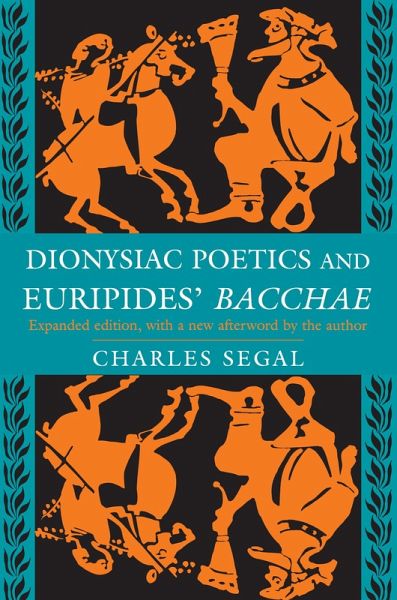
In his play Bacchae, Euripides chooses as his central figure the god who crosses the boundaries among god, man, and beast, between reality and imagination, and between art and madness. In so doing, he explores what in tragedy is able to reach beyond the social, ritual, and historical context from which tragedy itself rises. Charles Segal's reading of Euripides' Bacchae builds gradually from concrete details of cult, setting, and imagery to the work's implications for the nature of myth, language, and theater. This volume presents the argument that the Dionysiac poetics of the play characterize a world view and an art form that can admit logical contradictions and hold them in suspension.
Dieser Download kann aus rechtlichen Gründen nur mit Rechnungsadresse in A, D ausgeliefert werden.