62,95 €
62,95 €
inkl. MwSt.
Sofort per Download lieferbar

31 °P sammeln
62,95 €
Als Download kaufen
62,95 €
inkl. MwSt.
Sofort per Download lieferbar
31 °P sammeln
Jetzt verschenken
Alle Infos zum eBook verschenken
62,95 €
inkl. MwSt.
Sofort per Download lieferbar
Alle Infos zum eBook verschenken
31 °P sammeln

Andere Kunden interessierten sich auch für
") Chinese Diaspora Archaeology in North America (eBook, PDF)69,95 €
Chinese Diaspora Archaeology in North America (eBook, PDF)69,95 €") Sowing Modernity (eBook, PDF)121,95 €
Sowing Modernity (eBook, PDF)121,95 €") Bodies, Love, and Faith in the First World War (eBook, PDF)64,95 €
Bodies, Love, and Faith in the First World War (eBook, PDF)64,95 €") Entangling Migration History (eBook, PDF)58,95 €
Entangling Migration History (eBook, PDF)58,95 €") Embracing Protestantism (eBook, PDF)55,95 €
Embracing Protestantism (eBook, PDF)55,95 €") The American South and the Atlantic World (eBook, PDF)55,95 €
The American South and the Atlantic World (eBook, PDF)55,95 €") Negotiating Masculinities and Modernity in the Maritime World, 1815-1940 (eBook, PDF)96,95 €
Negotiating Masculinities and Modernity in the Maritime World, 1815-1940 (eBook, PDF)96,95 €







Exploring twentieth-century urban America through trash and artifacts from the 1893 Chicago World's Fair
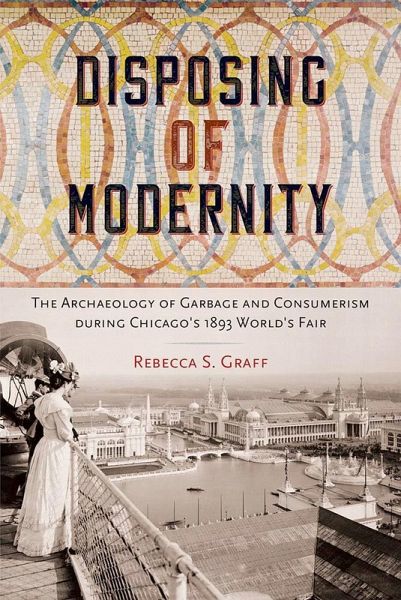
Through archaeological and archival research from sites associated with the 1893 World's Columbian Exposition in Chicago, Disposing of Modernity explores the changing world of urban America at the turn of the twentieth century. Featuring excavations of trash deposited during the fair, Rebecca Graff's first-of-its-kind study reveals changing consumer patterns, notions of domesticity and progress, and anxieties about the modernization of society.
Graff examines artifacts, architecture, and written records from the 1893 fair's Ohio Building, which was used as a clubhouse for fairgoers in Jackson Park, and the Charnley-Persky House, an aesthetically modern city residence designed by Louis Sullivan and Frank Lloyd Wright. Many of the items she uncovers were products that first debuted at world's fairs, and materials such as mineral water bottles, cheese containers, dentures, and dinnerware illustrate how fairs created markets for new goods and influenced consumer practices.
Graff discusses how the fair's ephemeral nature gave it transformative power in Chicago society, and she connects its accompanying conspicuous disposal habits to today's waste disposal regimes. Reflecting on the planning of the the Obama Presidential Center at the site of the Chicago World's Fair, she draws attention to the ways the historical trends documented here continue in the present.
Published in cooperation with the Society for Historical Archaeology
Through archaeological and archival research from sites associated with the 1893 World's Columbian Exposition in Chicago, Disposing of Modernity explores the changing world of urban America at the turn of the twentieth century. Featuring excavations of trash deposited during the fair, Rebecca Graff's first-of-its-kind study reveals changing consumer patterns, notions of domesticity and progress, and anxieties about the modernization of society.
Graff examines artifacts, architecture, and written records from the 1893 fair's Ohio Building, which was used as a clubhouse for fairgoers in Jackson Park, and the Charnley-Persky House, an aesthetically modern city residence designed by Louis Sullivan and Frank Lloyd Wright. Many of the items she uncovers were products that first debuted at world's fairs, and materials such as mineral water bottles, cheese containers, dentures, and dinnerware illustrate how fairs created markets for new goods and influenced consumer practices.
Graff discusses how the fair's ephemeral nature gave it transformative power in Chicago society, and she connects its accompanying conspicuous disposal habits to today's waste disposal regimes. Reflecting on the planning of the the Obama Presidential Center at the site of the Chicago World's Fair, she draws attention to the ways the historical trends documented here continue in the present.
Published in cooperation with the Society for Historical Archaeology
Dieser Download kann aus rechtlichen Gründen nur mit Rechnungsadresse in A, D ausgeliefert werden.