48,95 €
48,95 €
inkl. MwSt.
Sofort per Download lieferbar

24 °P sammeln
48,95 €
Als Download kaufen
48,95 €
inkl. MwSt.
Sofort per Download lieferbar
24 °P sammeln
Jetzt verschenken
Alle Infos zum eBook verschenken
48,95 €
inkl. MwSt.
Sofort per Download lieferbar
Alle Infos zum eBook verschenken
24 °P sammeln

Andere Kunden interessierten sich auch für
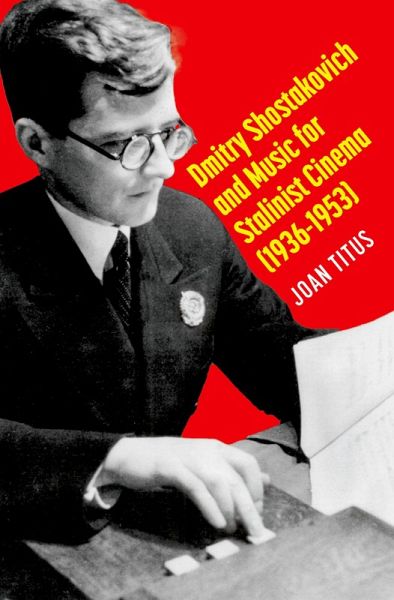
 (eBook, PDF)") Dmitry Shostakovich and Music for Stalinist Cinema (1936-1953) (eBook, PDF)48,95 €
Dmitry Shostakovich and Music for Stalinist Cinema (1936-1953) (eBook, PDF)48,95 €") Acoustic Profiles (eBook, ePUB)15,95 €
Acoustic Profiles (eBook, ePUB)15,95 €") Four Ways of Hearing Video Game Music (eBook, ePUB)17,95 €
Four Ways of Hearing Video Game Music (eBook, ePUB)17,95 €") Sounds as They Are (eBook, ePUB)40,95 €
Sounds as They Are (eBook, ePUB)40,95 €") Music for Prime Time (eBook, ePUB)7,99 €
Music for Prime Time (eBook, ePUB)7,99 €") The Presence of the Past (eBook, ePUB)15,95 €
The Presence of the Past (eBook, ePUB)15,95 €") The Musical Language of Italian Opera, 1813-1859 (eBook, ePUB)51,95 €
The Musical Language of Italian Opera, 1813-1859 (eBook, ePUB)51,95 €





In her first volume, Joan Titus explored the early years of Dmitry Shostakovich's career as the first Russian musician to emerge as a composer for the Soviet cinema. In this second volume, Dmitry Shostakovich and Music for Stalinist Cinema (1936-1953), Titus explores Shostakovich's continued development as a preeminent Soviet film composer and his navigation of the Soviet film industry amidst the cultural politics of late Stalinism. Based on archival materials and contemporaneous press, Titus combines musical analysis of eighteen scores with discussion of socio-cultural context and reception of his work. She frames the discussion using the concepts of the mainstream and middlebrow to highlight the complex role of Shostakovich's film music within Soviet arts culture. The composer's experience with diverse filmmakers, genres, and styles allowed him the opportunity to experiment with film scoring and musical meaning, which revealed his heterogenous and thorough knowledge of musical styles and his integration of classical and popular musical trends. This unusual and varied experience makes him an excellent case study for examining the development of the film composer within Soviet film industry during late Stalinism, and situates his scoring within an emerging global film music history.
Dieser Download kann aus rechtlichen Gründen nur mit Rechnungsadresse in A, B, BG, CY, CZ, D, DK, EW, E, FIN, F, GR, HR, H, IRL, I, LT, L, LR, M, NL, PL, P, R, S, SLO, SK ausgeliefert werden.