7,99 €
7,99 €
inkl. MwSt.
Sofort per Download lieferbar

0 °P sammeln
7,99 €
Als Download kaufen
7,99 €
inkl. MwSt.
Sofort per Download lieferbar
0 °P sammeln
Jetzt verschenken
Alle Infos zum eBook verschenken
7,99 €
inkl. MwSt.
Sofort per Download lieferbar
Alle Infos zum eBook verschenken
0 °P sammeln

Andere Kunden interessierten sich auch für
") Dom Casmurro (eBook, ePUB)7,99 €
Dom Casmurro (eBook, ePUB)7,99 €") Dom Casmurro (eBook, ePUB)8,49 €
Dom Casmurro (eBook, ePUB)8,49 €") Dom Casmurro (eBook, ePUB)7,99 €
Dom Casmurro (eBook, ePUB)7,99 €") DOM CASMURRO (eBook, ePUB)1,90 €
DOM CASMURRO (eBook, ePUB)1,90 €") Dom Casmurro (eBook, ePUB)9,60 €
Dom Casmurro (eBook, ePUB)9,60 €") Dom Casmurro (eBook, ePUB)9,95 €
Dom Casmurro (eBook, ePUB)9,95 €") Quincas Borba (eBook, ePUB)11,95 €
Quincas Borba (eBook, ePUB)11,95 €

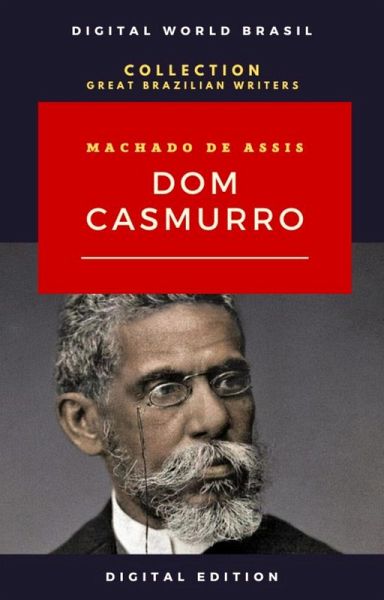
Dom Casmurro is more than a novel; it is the relentless mirror of the human soul and the quintessential landmark of Brazilian Realism. Under the brilliant pen of Machado de Assis, we delve into the "Memoirs" of Bento Santiago, the melancholic and reclusive Dom Casmurro, who attempts to "tie up the two ends of his life" by recounting his youth on Rua de Mata-cavalos. The work is constructed as a trial of a single witness, where the defendant and the judge merge. Bentinho, destined by a mother's promise to the seminary, has his future stolen by the love of Capitu. The girl with gypsy eyes, oblique and deceitful, with her "hangover eyes" capable of dragging the world inside, becomes the center of Bento's universe and, later, the source of his downfall. This is the supreme classic about doubt and jealousy. The tragedy lies not only in the potential betrayal, but in the mind of the narrator, who, consumed by paranoia, transforms the beauty of youth into a nightmare of old age. Machado de Assis forces us to question: Did Capitu betray Bentinho with her friend Escobar? Or was it all just the obsessive and selfish construction of a reclusive man, trying to rewrite history to justify his isolation? Ambiguity is his answer. The Revitalized Reading Experience: To ensure Machado's psychological depth and irony reach today's reader without the burden of archaic language, we present the digital edition of Dom Casmurro. Revised and adapted to modern vernacular Portuguese, this version preserves the content and complexity of the original, but dissolves the barriers of vocabulary and denser syntactical constructions. It is the perfect opportunity for collectors and new readers to unravel the greatest mystery of our literature without losing a single comma of Machado de Assis's mastery. Immerse yourself in the Classic! Are you ready to face the shadow of doubt and the genius of Brazil's greatest writer? Purchasing this digital edition guarantees a fluid and accessible read, ideal for those seeking maximum understanding of Brazilian classics. Don't let the old-fashioned language get in the way: Get the adapted digital version of Dom Casmurro now and discover if Capitu de Mata-cavalos was, in fact, already contained in Capitu da Praia da Glória. Click and unravel this eternal literary enigma!
Dieser Download kann aus rechtlichen Gründen nur mit Rechnungsadresse in A, B, BG, CY, CZ, D, DK, EW, E, FIN, F, GR, H, IRL, I, LT, L, LR, M, NL, PL, P, R, S, SLO, SK ausgeliefert werden.