11,95 €
11,95 €
inkl. MwSt.
Sofort per Download lieferbar

6 °P sammeln
11,95 €
Als Download kaufen
11,95 €
inkl. MwSt.
Sofort per Download lieferbar
6 °P sammeln
Jetzt verschenken
Alle Infos zum eBook verschenken
11,95 €
inkl. MwSt.
Sofort per Download lieferbar
Alle Infos zum eBook verschenken
6 °P sammeln

Andere Kunden interessierten sich auch für
") The Ultimate Game of Thrones and Philosophy (eBook, ePUB)11,95 €
The Ultimate Game of Thrones and Philosophy (eBook, ePUB)11,95 €") Inception and Philosophy (eBook, ePUB)11,95 €
Inception and Philosophy (eBook, ePUB)11,95 €") Philip K. Dick and Philosophy (eBook, ePUB)10,95 €
Philip K. Dick and Philosophy (eBook, ePUB)10,95 €") More Doctor Who and Philosophy (eBook, ePUB)11,95 €
More Doctor Who and Philosophy (eBook, ePUB)11,95 €") Steve Jobs and Philosophy (eBook, ePUB)11,95 €
Steve Jobs and Philosophy (eBook, ePUB)11,95 €") Breaking Bad and Philosophy (eBook, ePUB)11,95 €
Breaking Bad and Philosophy (eBook, ePUB)11,95 €") Louis C.K. and Philosophy (eBook, ePUB)10,95 €
Louis C.K. and Philosophy (eBook, ePUB)10,95 €
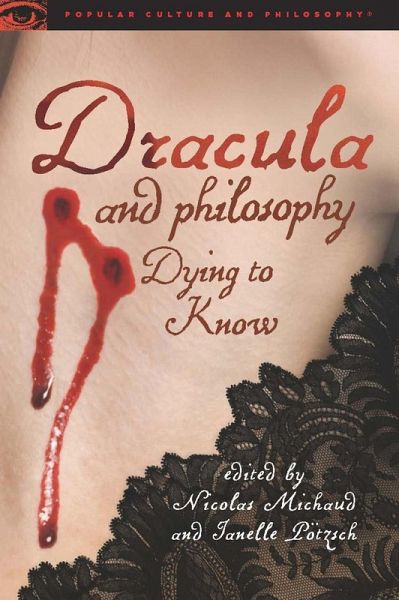
Twenty-four nocturnal philosophers stake out and vivisect Dracula from many angles, unearthing evidence from numerous movies and shows-macabre, terrifying, tragic, and comic. Altmann decides whether Dracula can really be blamed for his crimes, since it's his nature as a vampire to behave a certain way. Arp argues that Dracula's addiction to live human blood dooms him to perpetual misery. Karavitis sees Dracula as a Randian individual pitted against the Marxist collective. Ketcham contrives a meeting between Dracula and the Jewish theologian Maimonides. Littmann maintains that if we disapprove of Dracula's behavior, we ought to be vegetarians. Mahon uses the example of Dracula to resolve nagging problems about the desirability of immortality. McCrossin and Wolfe, disinter some of the re-interpretations of this now-mythical character, and asks whether we can identify an essential Dracula. Pramik shows how the Dracula tale embodies Kierkegaard's three stages of life. Barkman and Versteeg ponder what it would really feel like to be Dracula. The Greens publish some previous unknown letters between Dracula and Camus's Meursault. Vuckovich looks at the sexual morality of characters in the Dracula saga. De Waal explains that "Dragula" is scary because every time this being appears, it causes "gender trouble."
Dieser Download kann aus rechtlichen Gründen nur mit Rechnungsadresse in A, D ausgeliefert werden.