39,95 €
39,95 €
inkl. MwSt.
Sofort per Download lieferbar

20 °P sammeln
39,95 €
Als Download kaufen
39,95 €
inkl. MwSt.
Sofort per Download lieferbar
20 °P sammeln
Jetzt verschenken
Alle Infos zum eBook verschenken
39,95 €
inkl. MwSt.
Sofort per Download lieferbar
Alle Infos zum eBook verschenken
20 °P sammeln

Andere Kunden interessierten sich auch für
") Greek-Albanian Entanglements since the Nineteenth Century (eBook, ePUB)42,95 €
Greek-Albanian Entanglements since the Nineteenth Century (eBook, ePUB)42,95 €") The Routledge Handbook of Balkan and Southeast European History (eBook, ePUB)46,95 €
The Routledge Handbook of Balkan and Southeast European History (eBook, ePUB)46,95 €") Combatants and Civilians in Revolutionary Ireland, 1918-1923 (eBook, ePUB)42,95 €
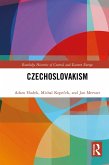
Combatants and Civilians in Revolutionary Ireland, 1918-1923 (eBook, ePUB)42,95 €") Czechoslovakism (eBook, ePUB)39,95 €
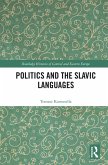
Czechoslovakism (eBook, ePUB)39,95 €") Politics and the Slavic Languages (eBook, ePUB)39,95 €
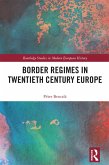
Politics and the Slavic Languages (eBook, ePUB)39,95 €") Border Regimes in Twentieth Century Europe (eBook, ePUB)39,95 €
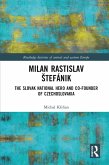
Border Regimes in Twentieth Century Europe (eBook, ePUB)39,95 €") Milan Rastislav stefánik (eBook, ePUB)39,95 €
Milan Rastislav stefánik (eBook, ePUB)39,95 €
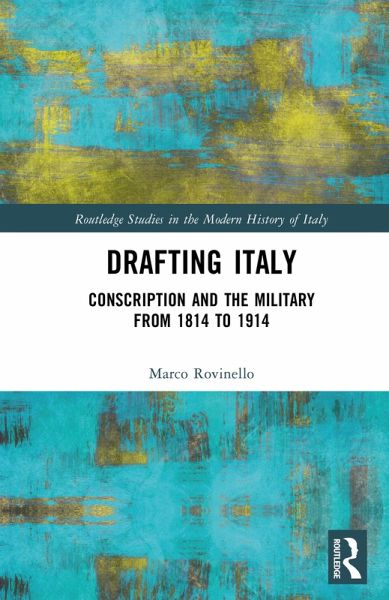
This is the first comprehensive history of conscription and the military in Italy from the Restoration to the eve of WWI. The comparative and transnational approach enables this work to compare and contrast the Italian experience with that of many other countries in the world as well as understand transfers and the adaptive and imitative processes that emerge when conscription and the military are viewed from an Italian perspective.
Peacetime and wartime recruitment, military life, culture, justice and civil-military relationships are analysed using a wide range of sources and an interdisciplinary approach that combines top-down and bottom-up perspectives. This enables the book not only to assess the contribution the military has made to the country in terms of state-building, nation building, modernization, pedagogical and disciplinary models, gender identity and roles, but also to reconsider the standard taxonomies as well as some established evolutionary models of the armies. Moreover, the Italian military is seen as an internally complex world that is incapable of defining its own one-dimensional identity or of imposing any such identity on its members. Consequently, it is an element in the history of a country that is substantially the same as any other such element and thus important in people's collective and individual lives whether or not they are in uniform. Rather than being an object of study in and of itself, the military becomes a vantage point from which to observe the Italian history in the long 19th century.
Therefore, this book can be profitably read by professional military historians and non-specialist readers interested in the military, as well as by all scholars working on Italian pre- and post-unification political, institutional, socio-economic, cultural and gender history.
Peacetime and wartime recruitment, military life, culture, justice and civil-military relationships are analysed using a wide range of sources and an interdisciplinary approach that combines top-down and bottom-up perspectives. This enables the book not only to assess the contribution the military has made to the country in terms of state-building, nation building, modernization, pedagogical and disciplinary models, gender identity and roles, but also to reconsider the standard taxonomies as well as some established evolutionary models of the armies. Moreover, the Italian military is seen as an internally complex world that is incapable of defining its own one-dimensional identity or of imposing any such identity on its members. Consequently, it is an element in the history of a country that is substantially the same as any other such element and thus important in people's collective and individual lives whether or not they are in uniform. Rather than being an object of study in and of itself, the military becomes a vantage point from which to observe the Italian history in the long 19th century.
Therefore, this book can be profitably read by professional military historians and non-specialist readers interested in the military, as well as by all scholars working on Italian pre- and post-unification political, institutional, socio-economic, cultural and gender history.
Dieser Download kann aus rechtlichen Gründen nur mit Rechnungsadresse in A, B, BG, CY, CZ, D, DK, EW, E, FIN, F, GR, HR, H, IRL, I, LT, L, LR, M, NL, PL, P, R, S, SLO, SK ausgeliefert werden.