19,99 €
inkl. MwSt.
Sofort per Download lieferbar
0 °P sammeln

Andere Kunden interessierten sich auch für
") Habits that Handicap (eBook, ePUB)19,99 €
Habits that Handicap (eBook, ePUB)19,99 €") The Opium Habit (eBook, ePUB)19,99 €
The Opium Habit (eBook, ePUB)19,99 €") An essay on the influence of tobacco upon life and health (eBook, ePUB)19,99 €
An essay on the influence of tobacco upon life and health (eBook, ePUB)19,99 €") Poisons, Their Effects and Detection (eBook, ePUB)19,99 €
Poisons, Their Effects and Detection (eBook, ePUB)19,99 €") The narcotic drug problem (eBook, ePUB)19,99 €
The narcotic drug problem (eBook, ePUB)19,99 €") Quacks and Grafters (eBook, ePUB)19,99 €
Quacks and Grafters (eBook, ePUB)19,99 €") On the Motion of the Heart and Blood in Animals (eBook, ePUB)0,99 €
On the Motion of the Heart and Blood in Animals (eBook, ePUB)0,99 €

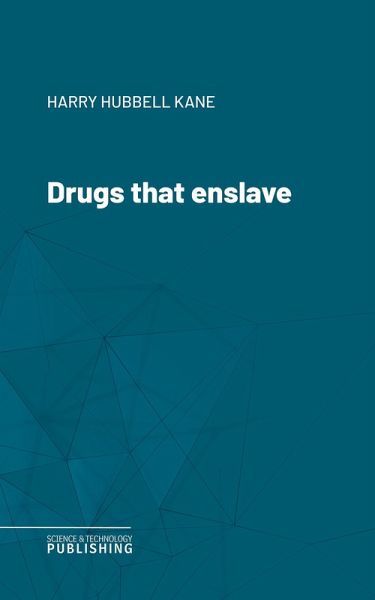
Drugs That Enslave: The Opium, Morphine, Chloral, and Hashish Habits by Victor Robinson is a compelling and meticulously researched exploration into the world of addictive substances and their profound impact on individuals and society. First published in the early 20th century, this book delves into the history, chemistry, and psychological effects of some of the most notorious drugs of its time, including opium, morphine, chloral, and hashish. Robinson, a physician and medical historian, presents a vivid narrative that combines scientific analysis with poignant human stories, illustrating how these substances have ensnared countless lives across cultures and generations. The book opens with a historical overview, tracing the origins and spread of these drugs from ancient civilizations to modern society. Robinson examines the allure and dangers of opium, detailing its use in medicine and its devastating role in addiction. He then turns to morphine, a derivative of opium, highlighting its initial promise as a painkiller and its subsequent reputation as a source of dependency and ruin. The discussion of chloral, once hailed as a miracle sedative, reveals the dark side of medical innovation when misused or misunderstood. Hashish, with its exotic mystique, is explored both as a cultural phenomenon and as a substance with the potential for abuse. Throughout Drugs That Enslave, Robinson weaves together medical facts, case studies, and social commentary, offering a balanced perspective that neither sensationalizes nor trivializes the subject. He addresses the psychological grip of addiction, the challenges of treatment, and the societal consequences of widespread drug abuse. The book also critiques the medical profession and pharmaceutical industry, urging greater responsibility and ethical consideration in the use of powerful drugs. Rich in historical anecdotes and scientific insight, Drugs That Enslave remains a relevant and thought-provoking work. It serves as both a cautionary tale and a call to action, encouraging readers to understand the complexities of addiction and the importance of compassion and knowledge in addressing this enduring human challenge.
Dieser Download kann aus rechtlichen Gründen nur mit Rechnungsadresse in A, B, BG, CY, CZ, D, DK, EW, E, FIN, F, GR, HR, H, IRL, I, LT, L, LR, M, NL, PL, P, R, S, SLO, SK ausgeliefert werden.