78,95 €
inkl. MwSt.
Sofort per Download lieferbar
39 °P sammeln

Andere Kunden interessierten sich auch für
") Reframing the Early Childhood Curriculum (eBook, PDF)48,95 €
Reframing the Early Childhood Curriculum (eBook, PDF)48,95 €") Curriculum in Early Childhood Education (eBook, PDF)36,95 €
Curriculum in Early Childhood Education (eBook, PDF)36,95 €") Creating Curriculum in Early Childhood (eBook, PDF)41,95 €
Creating Curriculum in Early Childhood (eBook, PDF)41,95 €") Scientific Influences on Early Childhood Education (eBook, PDF)41,95 €
Scientific Influences on Early Childhood Education (eBook, PDF)41,95 €") Rethinking Play and Pedagogy in Early Childhood Education (eBook, PDF)44,95 €
Rethinking Play and Pedagogy in Early Childhood Education (eBook, PDF)44,95 €") Studying for an Early Childhood Degree (eBook, PDF)26,95 €
Studying for an Early Childhood Degree (eBook, PDF)26,95 €") Doing Foucault in Early Childhood Studies (eBook, PDF)61,95 €
Doing Foucault in Early Childhood Studies (eBook, PDF)61,95 €

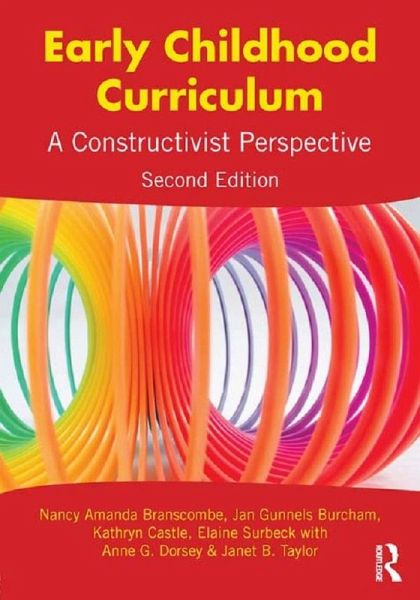
Through its unique integration of curriculum and learning principles, Early Childhood Curriculum: A Constructivist Perspective, 2nd Edition fosters authentic, developmentally appropriate practice for both preschool and early elementary classrooms. The constructivist format of this book encourages active involvement on the part of readers by asking them to observe, question, reflect, research, and analyze, thus allowing readers to create their own knowledge through their responses and actions.
Early Childhood Curriculum examines curricular goals such as autonomy, development, and problem solving and links those goals with constructivist principles of learning. It explores ways teachers can create meaningful learning environments and choose curriculum tasks appropriately-in all content areas-that are linked to the learning and development needs of young children. The text provides a wealth of practical detail about implementing constructivist curriculum as the authors discuss classroom climate and management, room design, play, and cooperative learning, among other topics. The book also includes information about how teachers can meet required mandates and national and state standards in appropriate ways as they plan their curriculum, and examines the early childhood educator's role with community agencies, reform and legal mandates, and public relations.
Special Features:
. "Curriculum Strategies" highlight models for developing curriculum, including projects, curricular alignment, integration of various subject matter areas, and types of knowledge.
. "Constructions" promote problem solving by allowing students to explore, revisit, examine, and learn from first-hand experience.
. "Multiple Perspectives from the Field" provide interviews with teachers and other early childhood professionals, offering students a realistic look at the profession from a diverse group of educators.
. "Teacher Dialogues" explore a wide range of student concerns, including curriculum, learning environments, assessment, and documentation, representing a collaborative support group for pre-service teachers and readers.
Early Childhood Curriculum examines curricular goals such as autonomy, development, and problem solving and links those goals with constructivist principles of learning. It explores ways teachers can create meaningful learning environments and choose curriculum tasks appropriately-in all content areas-that are linked to the learning and development needs of young children. The text provides a wealth of practical detail about implementing constructivist curriculum as the authors discuss classroom climate and management, room design, play, and cooperative learning, among other topics. The book also includes information about how teachers can meet required mandates and national and state standards in appropriate ways as they plan their curriculum, and examines the early childhood educator's role with community agencies, reform and legal mandates, and public relations.
Special Features:
. "Curriculum Strategies" highlight models for developing curriculum, including projects, curricular alignment, integration of various subject matter areas, and types of knowledge.
. "Constructions" promote problem solving by allowing students to explore, revisit, examine, and learn from first-hand experience.
. "Multiple Perspectives from the Field" provide interviews with teachers and other early childhood professionals, offering students a realistic look at the profession from a diverse group of educators.
. "Teacher Dialogues" explore a wide range of student concerns, including curriculum, learning environments, assessment, and documentation, representing a collaborative support group for pre-service teachers and readers.
Dieser Download kann aus rechtlichen Gründen nur mit Rechnungsadresse in A, B, BG, CY, CZ, D, DK, EW, E, FIN, F, GR, HR, H, IRL, I, LT, L, LR, M, NL, PL, P, R, S, SLO, SK ausgeliefert werden.