Sie sind bereits eingeloggt. Klicken Sie auf 2. tolino select Abo, um fortzufahren.
Bitte loggen Sie sich zunächst in Ihr Kundenkonto ein oder registrieren Sie sich bei bücher.de, um das eBook-Abo tolino select nutzen zu können.
This book is a major new history of capitalism that takes account of the material and ecological underpinnings of productive activity as well as the social, political and institutional dimensions of economic life. It retraces the history of capitalism over a long time period, giving particular attention to the role of food, agriculture, energy and natural resources, and with an eye to the future, mindful of the need to find solutions to an ecological crisis that threatens to overwhelm us all. Alessandro Stanziani shows that the development of capitalism since the twelfth century has been…mehr
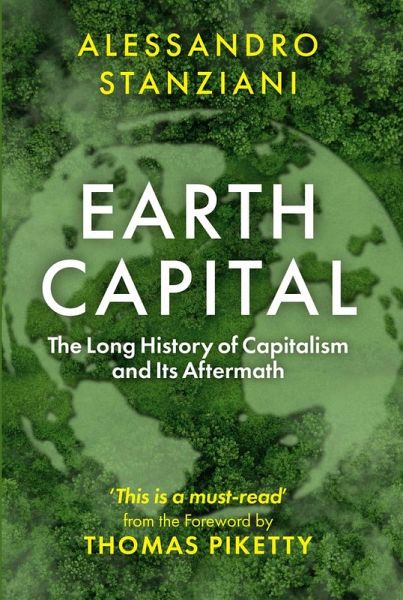
This book is a major new history of capitalism that takes account of the material and ecological underpinnings of productive activity as well as the social, political and institutional dimensions of economic life. It retraces the history of capitalism over a long time period, giving particular attention to the role of food, agriculture, energy and natural resources, and with an eye to the future, mindful of the need to find solutions to an ecological crisis that threatens to overwhelm us all.
Alessandro Stanziani shows that the development of capitalism since the twelfth century has been based on two primary forms of exploitation: of labour, often coerced, and of what he calls 'Earth capital', by which he means both the planet as a whole and its land and natural resources as factors of production. While these two forms of exploitation have gone hand-in-hand, the emphasis has shifted over time: forced labour gradually declined in importance from 1870 to the present, the exploitation of land, fossil fuels and natural resources grew at an unprecedented rate from 1870 to precedented rate, the destructive consequences of which are becoming increasingly apparent today.
Looking to the future, Stanziani argues that, in order to deal with the immense challenges we now face, we must be prepared radically to rethink our economic and political systems. He proposes a new social contract that would make democracy, social equality and the environment the three pillars of the world of tomorrow.
Dieser Download kann aus rechtlichen Gründen nur mit Rechnungsadresse in D ausgeliefert werden.
Die Herstellerinformationen sind derzeit nicht verfügbar.
Autorenporträt
Alessandro Stanziani is Professor at the École des hautes études en sciences sociales (EHESS) and the Centre National de la Recherche Scientifique (CNRS) in Paris.
Inhaltsangabe
Foreword by Thomas Piketty Earth Capital: Long Live Eco-History! Introduction When Does the Future Begin? Thinking About Time, Appropriating the Future: A Global Perspective
Part I. Green Growth and Forced Labour, 12th-19th Centuries 1: Indispensable Labour, Forced Labour Too Many People? Where's the Capital? A Law for the Masters Global Economic Growth 2: Energy Resources in Pre-Industrial Economies Wood and Coal Wind and Seawater Rivers Like No Others Animal and Human Power 3: Crops and Material Culture Wheat: The Wrong Right Answer Hybridisation or Perhaps Not: Pasta Many Rice Varieties, Not Just in Asia Afro-American Maize "Noble" Cane: Our Sweet Tooth, a Rod for Their Backs 4: A Dangerous Mix: Environment, Institutions and Inequality Little Ice Age and the Collapse of Agrarian Empires The Price is Right! Regulating Markets Meat: A Scarce Food Part I Conclusion: Why Europe? The Power of Violence and Constraint Part II. The Productivist Regime and the Great Acceleration, 1870-1970 5: The Age of Capital The Architecture of Competition What the Modernisation of Agriculture Really Means Creative Destruction? Chemicals in Food Production Smog in the Global North, Flogging in the South: A New Energy Equilibrium 6: Seeds, Plants, and Genetics Hybrid Maize: Miraculous Yields and Economic Dependence Rice and Floods Wheat: Standardization at the Expense of Nutrition 7: Transmissible Diseases and Food: Meat Meat for All, but at What Cost? Swine Trichinosis: Protectionism or Health Crisis? An Epidemic without Borders: Bovine Tuberculosis Conclusion: Epizootic to Zoonotic, the Pendulum Swings 8: Capital, Neo-Colonialism and Famine Capital and Markets: Allegro Ma Non Troppo Nouveaux Riches and Permanent Outsiders Colonial Famines Part II Conclusion Part III. From the 1970s to 2050: High Globalisation, Collapse and the World After 9: Neoliberalism and the Euphoria of Speculation Das Kapital Moves South Energy Sources in the Age of Globalisation Ever-Increasing Yields: The End of Illusions 10: Hunting for Seed Varieties vs. Genetic Selection From Hybrids to GMOs Seeds and Intellectual Property: Breaking the Link Breeding Wipes Out Everything in Its Path Why Can't We Live Without Meat? The Boomerang Effect: Mad Cow Disease, Avian Flu and Covid Babette's Feast 11: Towards the World After An Ideal World in the Past? Green Taxation vs. Inequalities Should We Get Out of Capitalism? Put an End to Speculation Seeds and Intellectual Property: Breaking the Link Restoring the Centrality of Labour Conclusion: Just Institutions vs. Just Societies
Foreword by Thomas Piketty Earth Capital: Long Live Eco-History! Introduction When Does the Future Begin? Thinking About Time, Appropriating the Future: A Global Perspective
Part I. Green Growth and Forced Labour, 12th-19th Centuries 1: Indispensable Labour, Forced Labour Too Many People? Where's the Capital? A Law for the Masters Global Economic Growth 2: Energy Resources in Pre-Industrial Economies Wood and Coal Wind and Seawater Rivers Like No Others Animal and Human Power 3: Crops and Material Culture Wheat: The Wrong Right Answer Hybridisation or Perhaps Not: Pasta Many Rice Varieties, Not Just in Asia Afro-American Maize "Noble" Cane: Our Sweet Tooth, a Rod for Their Backs 4: A Dangerous Mix: Environment, Institutions and Inequality Little Ice Age and the Collapse of Agrarian Empires The Price is Right! Regulating Markets Meat: A Scarce Food Part I Conclusion: Why Europe? The Power of Violence and Constraint Part II. The Productivist Regime and the Great Acceleration, 1870-1970 5: The Age of Capital The Architecture of Competition What the Modernisation of Agriculture Really Means Creative Destruction? Chemicals in Food Production Smog in the Global North, Flogging in the South: A New Energy Equilibrium 6: Seeds, Plants, and Genetics Hybrid Maize: Miraculous Yields and Economic Dependence Rice and Floods Wheat: Standardization at the Expense of Nutrition 7: Transmissible Diseases and Food: Meat Meat for All, but at What Cost? Swine Trichinosis: Protectionism or Health Crisis? An Epidemic without Borders: Bovine Tuberculosis Conclusion: Epizootic to Zoonotic, the Pendulum Swings 8: Capital, Neo-Colonialism and Famine Capital and Markets: Allegro Ma Non Troppo Nouveaux Riches and Permanent Outsiders Colonial Famines Part II Conclusion Part III. From the 1970s to 2050: High Globalisation, Collapse and the World After 9: Neoliberalism and the Euphoria of Speculation Das Kapital Moves South Energy Sources in the Age of Globalisation Ever-Increasing Yields: The End of Illusions 10: Hunting for Seed Varieties vs. Genetic Selection From Hybrids to GMOs Seeds and Intellectual Property: Breaking the Link Breeding Wipes Out Everything in Its Path Why Can't We Live Without Meat? The Boomerang Effect: Mad Cow Disease, Avian Flu and Covid Babette's Feast 11: Towards the World After An Ideal World in the Past? Green Taxation vs. Inequalities Should We Get Out of Capitalism? Put an End to Speculation Seeds and Intellectual Property: Breaking the Link Restoring the Centrality of Labour Conclusion: Just Institutions vs. Just Societies
Es gelten unsere Allgemeinen Geschäftsbedingungen: www.buecher.de/agb
Impressum
www.buecher.de ist ein Internetauftritt der buecher.de internetstores GmbH
Geschäftsführung: Monica Sawhney | Roland Kölbl | Günter Hilger
Sitz der Gesellschaft: Batheyer Straße 115 - 117, 58099 Hagen
Postanschrift: Bürgermeister-Wegele-Str. 12, 86167 Augsburg
Amtsgericht Hagen HRB 13257
Steuernummer: 321/5800/1497
USt-IdNr: DE450055826