
42,95 €
42,95 €
inkl. MwSt.
Sofort per Download lieferbar

21 °P sammeln
42,95 €
Als Download kaufen
42,95 €
inkl. MwSt.
Sofort per Download lieferbar
21 °P sammeln
Jetzt verschenken
Alle Infos zum eBook verschenken
42,95 €
inkl. MwSt.
Sofort per Download lieferbar
Alle Infos zum eBook verschenken
21 °P sammeln

Andere Kunden interessierten sich auch für
") Race, Science, and the Nation (eBook, PDF)39,95 €
Race, Science, and the Nation (eBook, PDF)39,95 €") Close to the Earth (eBook, PDF)27,95 €
Close to the Earth (eBook, PDF)27,95 €") Studies on Ottoman Science and Culture (eBook, PDF)39,95 €
Studies on Ottoman Science and Culture (eBook, PDF)39,95 €") Royal Mistresses (eBook, PDF)27,95 €
Royal Mistresses (eBook, PDF)27,95 €") Cultivating and Communicating Natural and Technical Knowledge around 1800 (eBook, PDF)0,00 €
Cultivating and Communicating Natural and Technical Knowledge around 1800 (eBook, PDF)0,00 €") Crime in England (eBook, PDF)43,95 €
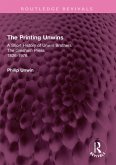
Crime in England (eBook, PDF)43,95 €") The Printing Unwins: A Short History of Unwin Brothers (eBook, PDF)27,95 €
The Printing Unwins: A Short History of Unwin Brothers (eBook, PDF)27,95 €


Using a transdisciplinary approach, this book examines how scientific understanding of the Earth has been created, transformed, and shared across time - combining perspectives from the history of science, sociology of knowledge, and cultural studies to explore the evolution of Earth sciences.
Focusing on the practices, actors, and socio-cultural contexts that have shaped knowledge production, this volume offers fresh methodological insights and highlights the contributions of scientists, local experts, and non-specialist collaborators. Case studies range from Johann Reinhold Forster's eighteenth-century mineralogical research to Cold War impact geology and interdisciplinary developments in ice core paleoclimatology.
Targeted at scholars, students, and general readers, this book provides an innovative lens for understanding the historical dimensions of Earth sciences, bridging disciplinary boundaries and uncovering new perspectives on the production and exchange of knowledge.
Focusing on the practices, actors, and socio-cultural contexts that have shaped knowledge production, this volume offers fresh methodological insights and highlights the contributions of scientists, local experts, and non-specialist collaborators. Case studies range from Johann Reinhold Forster's eighteenth-century mineralogical research to Cold War impact geology and interdisciplinary developments in ice core paleoclimatology.
Targeted at scholars, students, and general readers, this book provides an innovative lens for understanding the historical dimensions of Earth sciences, bridging disciplinary boundaries and uncovering new perspectives on the production and exchange of knowledge.
Dieser Download kann aus rechtlichen Gründen nur mit Rechnungsadresse in A, B, BG, CY, CZ, D, DK, EW, E, FIN, F, GR, HR, H, IRL, I, LT, L, LR, M, NL, PL, P, R, S, SLO, SK ausgeliefert werden.