4,49 €
4,49 €
inkl. MwSt.
Sofort per Download lieferbar

0 °P sammeln
4,49 €
Als Download kaufen
4,49 €
inkl. MwSt.
Sofort per Download lieferbar
0 °P sammeln
Jetzt verschenken
Alle Infos zum eBook verschenken
4,49 €
inkl. MwSt.
Sofort per Download lieferbar
Alle Infos zum eBook verschenken
0 °P sammeln

Andere Kunden interessierten sich auch für
") Beckett on Screen (eBook, ePUB)13,95 €
Beckett on Screen (eBook, ePUB)13,95 €") Earthquake and the Invention of America (eBook, ePUB)79,95 €
Earthquake and the Invention of America (eBook, ePUB)79,95 €") Manuscripts and Performances in Religions, Arts, and Sciences (eBook, ePUB)0,00 €
Manuscripts and Performances in Religions, Arts, and Sciences (eBook, ePUB)0,00 €") Mikhail Bakhtin's Heritage in Literature, Arts, and Psychology (eBook, ePUB)32,95 €
Mikhail Bakhtin's Heritage in Literature, Arts, and Psychology (eBook, ePUB)32,95 €") Restoration Stage Comedies and Hollywood Remarriage Films (eBook, ePUB)42,95 €
Restoration Stage Comedies and Hollywood Remarriage Films (eBook, ePUB)42,95 €") Socio-Environmental Crisis in Women's Novels and Films in The Americas (eBook, ePUB)39,95 €
Socio-Environmental Crisis in Women's Novels and Films in The Americas (eBook, ePUB)39,95 €") The Book of Five Rings by Miyamoto Musashi - Timeless Wisdom on Strategy, Martial Arts, and the Way of the Samurai for Modern Success (eBook, ePUB)0,99 €
The Book of Five Rings by Miyamoto Musashi - Timeless Wisdom on Strategy, Martial Arts, and the Way of the Samurai for Modern Success (eBook, ePUB)0,99 €



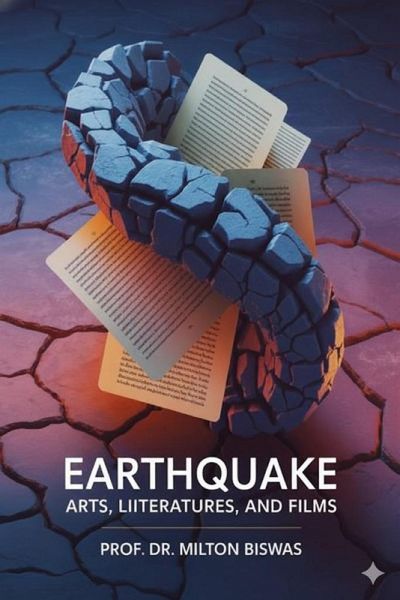
For thousands of years, earthquakes have terrified human beings-seen first as the footsteps of angry gods, the rage of monstrous serpents beneath the earth, or the punishment of forgotten sins. As civilizations evolved, so did their stories. Earthquakes became symbols of trauma, cultural memory, political collapse, and human resilience. This groundbreaking book travels across continents, centuries, and cultures to uncover how humanity has imagined, feared, narrated, and artistically represented earthquakes-from ancient mythologies to modern scientific realities.
What This Book Explores
Why This Book Matters
This book is more than a history of disasters-it is a cultural study of fear, imagination, faith, and survival. By combining mythology, literature, visual arts, film studies, and trauma theory, it shows how humans make meaning out of destruction and rebuild stories from the ruins.
Who Should Read This Book?
A must-read for anyone exploring the intersection of myth, memory, culture, and catastrophe.
What This Book Explores
- Myths of Gods and Monsters: Earthquakes in Greek, Roman, Hindu, Chinese, Japanese, and Indigenous cosmologies-Poseidon's trident, Naga serpents, Namazu catfish legends, and the wrath of subterranean deities.
- Literatures Shaken by Disaster: How global literatures portray earthquakes as punishment, poetic metaphor, political symbol, or psychological rupture-from ancient epics to contemporary fiction.
- Trauma, Memory, and Collective Fear: Cultural psychology of earthquakes: how shock, grief, faith, and collective memory shape rituals, folklore, and storytelling.
- Visual Arts and Earthquake Imagery: Paintings, sculptures, temple carvings, medieval illustrations, and modern disaster art.
- Earthquake in World Cinema: Hollywood destruction epics, Japanese disaster films, South Asian representations, documentaries, survival narratives, and cultural coding in film language.
- Science Meets Storytelling: How modern seismology transforms myths into metaphors-yet myths remain alive in art, narrative, and cultural imagination.
Why This Book Matters
This book is more than a history of disasters-it is a cultural study of fear, imagination, faith, and survival. By combining mythology, literature, visual arts, film studies, and trauma theory, it shows how humans make meaning out of destruction and rebuild stories from the ruins.
Who Should Read This Book?
- Scholars of literature, film, mythology, religion, anthropology
- Writers, artists, researchers, teachers
- Students of disaster studies, cultural studies, trauma theory
- General readers fascinated by myths, films, and global cultures
- Anyone curious about how humanity turns tragedy into powerful stories
A must-read for anyone exploring the intersection of myth, memory, culture, and catastrophe.
Dieser Download kann aus rechtlichen Gründen nur mit Rechnungsadresse in A, B, CY, CZ, D, DK, EW, E, FIN, F, GR, H, IRL, I, LT, L, LR, M, NL, PL, P, R, S, SLO, SK ausgeliefert werden.