0,00 €
inkl. MwSt.
Sofort per Download lieferbar
0 °P sammeln

Andere Kunden interessierten sich auch für
") East Central Europe and Communism (eBook, ePUB)0,00 €
East Central Europe and Communism (eBook, ePUB)0,00 €") Tradition, Literature and Politics in East-Central Europe (eBook, PDF)45,95 €
Tradition, Literature and Politics in East-Central Europe (eBook, PDF)45,95 €") KGB Operations against the USA and Canada in Soviet Ukraine, 1953-1991 (eBook, PDF)41,95 €
KGB Operations against the USA and Canada in Soviet Ukraine, 1953-1991 (eBook, PDF)41,95 €") Origins of People-to-People Diplomacy, U.S. and Russia, 1917-1957 (eBook, PDF)24,95 €
Origins of People-to-People Diplomacy, U.S. and Russia, 1917-1957 (eBook, PDF)24,95 €") Historicizing Roma in Central Europe (eBook, PDF)42,95 €
Historicizing Roma in Central Europe (eBook, PDF)42,95 €") Documents on Israeli-Soviet Relations, 1954-1967 (eBook, PDF)45,95 €
Documents on Israeli-Soviet Relations, 1954-1967 (eBook, PDF)45,95 €") Documents on Israeli-Soviet Relations, 1954-1967 (eBook, PDF)45,95 €
Documents on Israeli-Soviet Relations, 1954-1967 (eBook, PDF)45,95 €







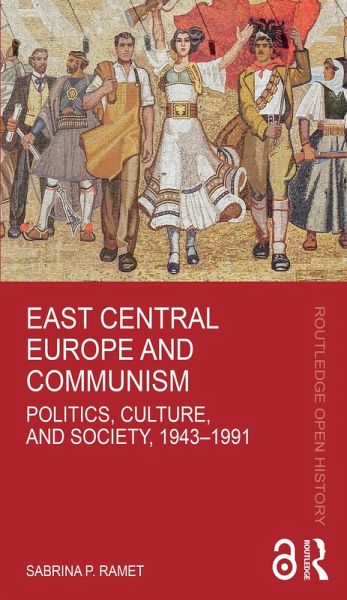
The communists of East Central Europe came to power promising to bring about genuine equality, paying special attention to achieving gender equality, to build up industry and create prosperous societies, and to use music, art, and literature to promote socialist ideals. Instead, they never succeeded in filling more than a third of their legislatures with women and were unable to make significant headway against entrenched patriarchal views; they considered it necessary (with the sole exception of Albania) to rely heavily on credits to build up their economies, eventually driving them into bankruptcy; and the effort to instrumentalize the arts ran aground in most of the region already by 1956, and, in Yugoslavia, by 1949.
Communism was all about planning, control, and politicization. Except for Yugoslavia after 1949, the communists sought to plan and control not only politics and the economy, but also the media and information, religious organizations, culture, and the promotion of women, which they understood in the first place as involving putting women to work. Inspired by the groundbreaking work of Robert K. Merton on functionalist theory, this book shows how communist policies were repeatedly undermined by unintended consequences and outright dysfunctions.
Communism was all about planning, control, and politicization. Except for Yugoslavia after 1949, the communists sought to plan and control not only politics and the economy, but also the media and information, religious organizations, culture, and the promotion of women, which they understood in the first place as involving putting women to work. Inspired by the groundbreaking work of Robert K. Merton on functionalist theory, this book shows how communist policies were repeatedly undermined by unintended consequences and outright dysfunctions.
Dieser Download kann aus rechtlichen Gründen nur mit Rechnungsadresse in A, B, BG, CY, CZ, D, DK, EW, E, FIN, F, GR, HR, H, IRL, I, LT, L, LR, M, NL, PL, P, R, S, SLO, SK ausgeliefert werden.
"As time passes the world of the communist states in Cold War Eastern Europe has come to seem remote, particularly for the young who never experienced them as contemporary political realities. Distinguished historian and commentator Sabrina.P.Ramet has produced a valuable text that will help remedy this situation. It can be recommended without reservation for all students, and particularly those involved in the rapidly expanding world of Cold War history. This is a book that everyone, however knowledgeable, can learn from, and it has a depth of reference that will make it essential reading." - James Pettifer, St Cross College, Oxford, United Kingdom
"Superbly documented, engagingly written, combining persuasively comparative theoretical analysis with political, social, and intellectual history, as well as an interest in ideas and values rather than ideological fallacies, Sabrina Ramet's new book is an outstanding scholarly achievement." - Vladimir Tismaneanu. University of Maryland, College Park, USA
"Sabrina P. Ramet's outstanding study provides a fascinating and comprehensive journey into the ideological nature, political structure and social mobilization of East Central European communism. This is the first sociological study of the intended and unintended consequences of communist policies in politics, economic planning, culture, religion, and gender equality during the Cold War period. It is a must-read for students, academics and policy makers." - Lucian N. Leustean, Aston University, United Kingdom, co-editor of The Oxford Handbook of Religion and Europe
"Sabrina P. Ramet has written one of the most original histories of communism in Central and South-Eastern Europe." - Florian Anghel, "Ovidius" University of Constan a, Romania, Historical Yearbook
"In conclusion, the stimulating and well-structured book by Ramet is an excellent opportunity for further analyzing the unintended consequences of Communism, paying particular attention to the mediation mechanism of political, economic, and social interests in socialist societies and the reasons for their failure." - Stefano Bianchini, University of Bologna, Human Rights Review
"an excellent, accessible introduction to a complex subject." - Marko Attila Hoare, Sarajevo School of Science and Technology, Europe-Asia Studies
"probably one of the best specialists in the world in the history of Eastern Europe in the twentieth century" - Hrvoje Klasic, University of Zagreb, Croatia
"Superbly documented, engagingly written, combining persuasively comparative theoretical analysis with political, social, and intellectual history, as well as an interest in ideas and values rather than ideological fallacies, Sabrina Ramet's new book is an outstanding scholarly achievement." - Vladimir Tismaneanu. University of Maryland, College Park, USA
"Sabrina P. Ramet's outstanding study provides a fascinating and comprehensive journey into the ideological nature, political structure and social mobilization of East Central European communism. This is the first sociological study of the intended and unintended consequences of communist policies in politics, economic planning, culture, religion, and gender equality during the Cold War period. It is a must-read for students, academics and policy makers." - Lucian N. Leustean, Aston University, United Kingdom, co-editor of The Oxford Handbook of Religion and Europe
"Sabrina P. Ramet has written one of the most original histories of communism in Central and South-Eastern Europe." - Florian Anghel, "Ovidius" University of Constan a, Romania, Historical Yearbook
"In conclusion, the stimulating and well-structured book by Ramet is an excellent opportunity for further analyzing the unintended consequences of Communism, paying particular attention to the mediation mechanism of political, economic, and social interests in socialist societies and the reasons for their failure." - Stefano Bianchini, University of Bologna, Human Rights Review
"an excellent, accessible introduction to a complex subject." - Marko Attila Hoare, Sarajevo School of Science and Technology, Europe-Asia Studies
"probably one of the best specialists in the world in the history of Eastern Europe in the twentieth century" - Hrvoje Klasic, University of Zagreb, Croatia