44,95 €
52,95 €**
44,95 €
inkl. MwSt.
**Preis der gedruckten Ausgabe (Broschiertes Buch)
Sofort per Download lieferbar

22 °P sammeln
44,95 €
52,95 €**
44,95 €
inkl. MwSt.
**Preis der gedruckten Ausgabe (Broschiertes Buch)
Sofort per Download lieferbar
Alle Infos zum eBook verschenken
22 °P sammeln
Als Download kaufen
52,95 €****
-15%11
44,95 €
inkl. MwSt.
**Preis der gedruckten Ausgabe (Broschiertes Buch)
Sofort per Download lieferbar
22 °P sammeln
Jetzt verschenken
Alle Infos zum eBook verschenken
52,95 €****
-15%11
44,95 €
inkl. MwSt.
**Preis der gedruckten Ausgabe (Broschiertes Buch)
Sofort per Download lieferbar
Alle Infos zum eBook verschenken
22 °P sammeln

Andere Kunden interessierten sich auch für
") Easterly Wind (eBook, PDF)44,95 €
Easterly Wind (eBook, PDF)44,95 €") Voices, Languages, Discourses (eBook, ePUB)50,95 €
Voices, Languages, Discourses (eBook, ePUB)50,95 €imagining African Independence (eBook, ePUB)") (Re)imagining African Independence (eBook, ePUB)59,95 €
(Re)imagining African Independence (eBook, ePUB)59,95 €") Beyond Binaries (eBook, ePUB)51,95 €
Beyond Binaries (eBook, ePUB)51,95 €") Postcolonial Nation and Narrative III: Literature & Cinema (eBook, ePUB)50,95 €
Postcolonial Nation and Narrative III: Literature & Cinema (eBook, ePUB)50,95 €") The Late Postcolonial Condition (eBook, ePUB)49,95 €
The Late Postcolonial Condition (eBook, ePUB)49,95 €") The Indian Ocean and the Portuguese-Speaking World (eBook, ePUB)55,95 €
The Indian Ocean and the Portuguese-Speaking World (eBook, ePUB)55,95 €
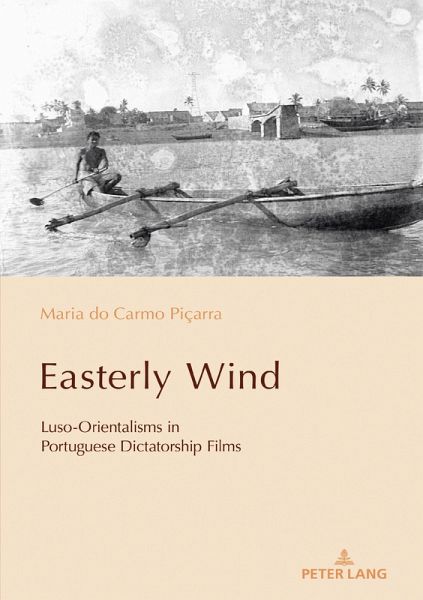
The filmography representing the 'Portuguese Orient' during the Estado Novo (1933-1974) is scarce and late, employing a simplified Luso- tropicalist rhetoric that repeatedly actualises the myth of a vast, long-lost, territory.
This book examines the impact of cinematographic representations of the former Portuguese territories in the Orient on socio-cultural memories and narrative identities, through a critical exhumation of the archives and analysis of existing filmography. The analysis reveals that films of the 'Portuguese Orient' depict this imagined community with a certain degree of vagueness. This is largely a consequence of the prolonged disintegration of the metropolis' relationship with this imagined community, a relationship that was mainly based on projections (about their alleged Portuguese identity) and ruins.
This book examines the impact of cinematographic representations of the former Portuguese territories in the Orient on socio-cultural memories and narrative identities, through a critical exhumation of the archives and analysis of existing filmography. The analysis reveals that films of the 'Portuguese Orient' depict this imagined community with a certain degree of vagueness. This is largely a consequence of the prolonged disintegration of the metropolis' relationship with this imagined community, a relationship that was mainly based on projections (about their alleged Portuguese identity) and ruins.
Dieser Download kann aus rechtlichen Gründen nur mit Rechnungsadresse in A, D ausgeliefert werden.