
55,95 €
55,95 €
inkl. MwSt.
Sofort per Download lieferbar

28 °P sammeln
55,95 €
Als Download kaufen
55,95 €
inkl. MwSt.
Sofort per Download lieferbar
28 °P sammeln
Jetzt verschenken
Alle Infos zum eBook verschenken
55,95 €
inkl. MwSt.
Sofort per Download lieferbar
Alle Infos zum eBook verschenken
28 °P sammeln

Andere Kunden interessierten sich auch für
") Ecocultures (eBook, PDF)55,95 €
Ecocultures (eBook, PDF)55,95 €") The Shaping of Greenland's Resource Spaces (eBook, ePUB)39,95 €
The Shaping of Greenland's Resource Spaces (eBook, ePUB)39,95 €") Managing Forests as Complex Adaptive Systems (eBook, ePUB)51,95 €
Managing Forests as Complex Adaptive Systems (eBook, ePUB)51,95 €") Becoming Nature Positive (eBook, ePUB)31,95 €
Becoming Nature Positive (eBook, ePUB)31,95 €") Negotiating the Environment (eBook, ePUB)21,95 €
Negotiating the Environment (eBook, ePUB)21,95 €") Natural Resource Conflicts and Sustainable Development (eBook, ePUB)39,95 €
Natural Resource Conflicts and Sustainable Development (eBook, ePUB)39,95 €") Urban Water Ecosystems in Africa and Asia (eBook, ePUB)42,95 €
Urban Water Ecosystems in Africa and Asia (eBook, ePUB)42,95 €
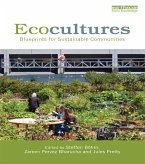


The world faces a 'perfect storm' of social and ecological stresses, including climate change, habitat loss, resource degradation and social, economic and cultural change. In order to cope with these, communities are struggling to transition to sustainable ways of living that improve well-being and increase resilience. This book demonstrates how communities in both developed and developing countries are already taking action to maintain or build resilient and sustainable lifestyles. These communities, here designated as 'Ecocultures', are exemplars of the art and science of sustainable living. Though they form a diverse group, they organise themselves around several common organising principles including an ethic of care for nature, a respect for community, high ecological knowledge, and a desire to maintain and improve personal and social wellbeing.
Case studies from both developed and developing countries including Australia, Brazil, Finland, Greenland, India, Indonesia, South Africa, UK and USA, show how, based on these principles, communities have been able to increase social, ecological and personal wellbeing and resilience. They also address how other more mainstream communities are beginning to transition to more sustainable, resilient alternatives. Some examples also illustrate the decline of ecocultures in the face of economic pressures, globalisation and climate change. Theoretical chapters examine the barriers and bridges to wider application of these examples. Overall, the volume describes how ecocultures can provide the global community with important lessons for a wider transition to sustainability and will show how we can redefine our personal and collective futures around these principles.
Case studies from both developed and developing countries including Australia, Brazil, Finland, Greenland, India, Indonesia, South Africa, UK and USA, show how, based on these principles, communities have been able to increase social, ecological and personal wellbeing and resilience. They also address how other more mainstream communities are beginning to transition to more sustainable, resilient alternatives. Some examples also illustrate the decline of ecocultures in the face of economic pressures, globalisation and climate change. Theoretical chapters examine the barriers and bridges to wider application of these examples. Overall, the volume describes how ecocultures can provide the global community with important lessons for a wider transition to sustainability and will show how we can redefine our personal and collective futures around these principles.
Dieser Download kann aus rechtlichen Gründen nur mit Rechnungsadresse in A, B, BG, CY, CZ, D, DK, EW, E, FIN, F, GR, HR, H, IRL, I, LT, L, LR, M, NL, PL, P, R, S, SLO, SK ausgeliefert werden.
"Ecocultures: Blueprints for Sustainable Communities is a much needed antidote to the many illnesses now pervading the planet. The earth is unwell and its temperature is rising. The contributors to Ecocultures give us good medicine and demonstrate that healthy cultures mean healthy people and a healthy earth." - Glenn Albrecht, environmental philosopher, former Professor of Sustainability, Murdoch University, Perth, Western Australia.
"This book contributes novel perspectives on existing and emerging ecocultures across the world, offering hope and pathways for a more sustainable future." - Peggy F. Barlett, Goodrich C. White Professor of Anthropology, Emory University, USA; Co-editor, Sustainability in Higher Education: Stories and Strategies for Transformation and Editor, Urban Place: Reconnecting with the Natural World.
"The contexts for the concerns of Ecocultures is the global polycrisis of ecological despoliation and human social inequalities. But this is not a despairing account of inevitable demise. Instead, the authors, drawing on the perspectives, practices and wisdom of traditional and emerging ecocultures across the globe, explore the possibilities of an interlinked Three Rs - Revisioning, Reconnection and Rebraiding - to achieve new ways of human wellbeing lived within and with a new planetary wellbeing. Ecocultures is a magnificent contribution to present debates about, and practices of, environmental ethics." - Garry Marvin, Professor of Human-Animal Studies, University of Roehampton, London, UK.
"This book contributes novel perspectives on existing and emerging ecocultures across the world, offering hope and pathways for a more sustainable future." - Peggy F. Barlett, Goodrich C. White Professor of Anthropology, Emory University, USA; Co-editor, Sustainability in Higher Education: Stories and Strategies for Transformation and Editor, Urban Place: Reconnecting with the Natural World.
"The contexts for the concerns of Ecocultures is the global polycrisis of ecological despoliation and human social inequalities. But this is not a despairing account of inevitable demise. Instead, the authors, drawing on the perspectives, practices and wisdom of traditional and emerging ecocultures across the globe, explore the possibilities of an interlinked Three Rs - Revisioning, Reconnection and Rebraiding - to achieve new ways of human wellbeing lived within and with a new planetary wellbeing. Ecocultures is a magnificent contribution to present debates about, and practices of, environmental ethics." - Garry Marvin, Professor of Human-Animal Studies, University of Roehampton, London, UK.