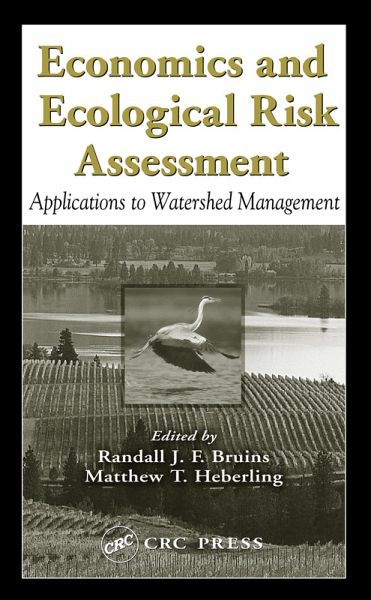
Economics and Ecological Risk Assessment (eBook, ePUB)
Applications to Watershed Management
Redaktion: Bruins, Randall J. F.; Heberling, Matthew T.
48,95 €
48,95 €
inkl. MwSt.
Sofort per Download lieferbar

24 °P sammeln

48,95 €
Als Download kaufen
48,95 €
inkl. MwSt.
Sofort per Download lieferbar
24 °P sammeln
Jetzt verschenken
Alle Infos zum eBook verschenken
48,95 €
inkl. MwSt.
Sofort per Download lieferbar
Alle Infos zum eBook verschenken
24 °P sammeln
Economics and Ecological Risk Assessment (eBook, ePUB)
Applications to Watershed Management
Redaktion: Bruins, Randall J. F.; Heberling, Matthew T.
- Format: ePub
- Merkliste
- Auf die Merkliste
- Bewerten Bewerten
- Teilen
- Produkt teilen
- Produkterinnerung
- Produkterinnerung

Bitte loggen Sie sich zunächst in Ihr Kundenkonto ein oder registrieren Sie sich bei
bücher.de, um das eBook-Abo tolino select nutzen zu können.
Hier können Sie sich einloggen
Sie sind bereits eingeloggt. Klicken Sie auf 2. tolino select Abo, um fortzufahren.

Bitte loggen Sie sich zunächst in Ihr Kundenkonto ein oder registrieren Sie sich bei bücher.de, um das eBook-Abo tolino select nutzen zu können.
With contributions from a wide array of economists, ecologists, and government agency professionals, Economics and Ecological Risk Assessment: Applications to Watershed Management provides a multidisciplinary approach to environmental decision-making at a watershed level. It introduces the fields of ecological risk assessment (ERA) and economic ana
- Geräte: eReader
- mit Kopierschutz
- eBook Hilfe
Andere Kunden interessierten sich auch für
Environmental Economics for Watershed Restoration (eBook, ePUB)76,95 €
Regional Scale Ecological Risk Assessment (eBook, ePUB)48,95 €
Charles JobProduction, Use, and Sustainability of Groundwater (eBook, ePUB)51,95 €
Lawrence V. TannenbaumEcological Risk Assessment (eBook, ePUB)113,95 €
Jr. StahlValuation of Ecological Resources (eBook, ePUB)177,95 €
Charles JobCost-Benefit Analysis of Groundwater Policy and Projects, with Case Studies (eBook, ePUB)49,95 €
Economics and Ecological Risk Assessment (eBook, PDF)48,95 €-
-
-
With contributions from a wide array of economists, ecologists, and government agency professionals, Economics and Ecological Risk Assessment: Applications to Watershed Management provides a multidisciplinary approach to environmental decision-making at a watershed level. It introduces the fields of ecological risk assessment (ERA) and economic ana
Dieser Download kann aus rechtlichen Gründen nur mit Rechnungsadresse in A, B, BG, CY, CZ, D, DK, EW, E, FIN, F, GR, HR, H, IRL, I, LT, L, LR, M, NL, PL, P, R, S, SLO, SK ausgeliefert werden.
Produktdetails
- Produktdetails
- Verlag: Taylor & Francis eBooks
- Seitenzahl: 472
- Erscheinungstermin: 28. Dezember 2004
- Englisch
- ISBN-13: 9781135462642
- Artikelnr.: 57417410
- Verlag: Taylor & Francis eBooks
- Seitenzahl: 472
- Erscheinungstermin: 28. Dezember 2004
- Englisch
- ISBN-13: 9781135462642
- Artikelnr.: 57417410
- Herstellerkennzeichnung Die Herstellerinformationen sind derzeit nicht verfügbar.
Randall J. F. Bruins, Matthew T. Heberling
Introduction. Background, Concepts, and Methods. Watershed Planning and
Management in the United States. Introduction to Ecological Risk Assessment
in Watersheds. A Framework for Risk Analysis for Ecological Restoration
Projects in the U.S. Army Corps of Engineers. Appendix 4-A: Example
Application of Risk Analysis for a USACE Ecological Restoration Project.
Introduction to Economic Analysis in Watersheds. Appendix 5-A: Discussion
of Stated Preference Methods Used in Three Case Studies. Ecological and
Economic Analysis for Water Quality Standards. Appendix 6-A: Using
Multimedia Indices to Define the Integrity of Stream Biological Assemblages
and Instream Habitat. Decision-Making and Uncertainty in Ambient Water
Quality Management. Scaling Environmental Restoration and Habitat
Equivalency Analysis. A Conceptual Approach for Integrated Watershed
Management. Appendix 9-A: Discussion of Existing Frameworks that Have Been
Applied To Watershed Management. Appendix 9-B: Sociocultural Assessment
Methods. Applications. Evaluating Development Alternatives for a
High-quality Stream Threatened by Urbanization: Big Darby Creek Watershed.
Weighing Biodiversity and Sectoral Development Values in a Rural Valley:
Clinch and Powell River Watershed. Appendix 11-A: Random Utility Model.
Appendix 11-B: Excerpt from Survey Administered by the University of
Tennessee: Explanation of Hypothetical Agricultural Policies and their
Potential Impacts. Seeking Solutions for an Interstate Conflict over Water
and Endangered Species: Platte River Watershed. Appendix 12-A: Summary of
Survey Response Information Used to Calculate Utility of Environmental
Management Policy Options for the Central Platte River Floodplain. An
Integrated Ecological-Economic Model for Scenario Analysis: Anticipating
Change in the Hudson River Watershed. Determining Tradeoffs among
Ecological Services: Planning for Ecological Restoration in the Lower Fox
River and Green Bay. The Habitat-Based Replacement Cost Method: Building on
the Habitat Equivalency Method to Inform Regulatory or Permit Decisions
under the Clean Water Act. Conclusions.
Management in the United States. Introduction to Ecological Risk Assessment
in Watersheds. A Framework for Risk Analysis for Ecological Restoration
Projects in the U.S. Army Corps of Engineers. Appendix 4-A: Example
Application of Risk Analysis for a USACE Ecological Restoration Project.
Introduction to Economic Analysis in Watersheds. Appendix 5-A: Discussion
of Stated Preference Methods Used in Three Case Studies. Ecological and
Economic Analysis for Water Quality Standards. Appendix 6-A: Using
Multimedia Indices to Define the Integrity of Stream Biological Assemblages
and Instream Habitat. Decision-Making and Uncertainty in Ambient Water
Quality Management. Scaling Environmental Restoration and Habitat
Equivalency Analysis. A Conceptual Approach for Integrated Watershed
Management. Appendix 9-A: Discussion of Existing Frameworks that Have Been
Applied To Watershed Management. Appendix 9-B: Sociocultural Assessment
Methods. Applications. Evaluating Development Alternatives for a
High-quality Stream Threatened by Urbanization: Big Darby Creek Watershed.
Weighing Biodiversity and Sectoral Development Values in a Rural Valley:
Clinch and Powell River Watershed. Appendix 11-A: Random Utility Model.
Appendix 11-B: Excerpt from Survey Administered by the University of
Tennessee: Explanation of Hypothetical Agricultural Policies and their
Potential Impacts. Seeking Solutions for an Interstate Conflict over Water
and Endangered Species: Platte River Watershed. Appendix 12-A: Summary of
Survey Response Information Used to Calculate Utility of Environmental
Management Policy Options for the Central Platte River Floodplain. An
Integrated Ecological-Economic Model for Scenario Analysis: Anticipating
Change in the Hudson River Watershed. Determining Tradeoffs among
Ecological Services: Planning for Ecological Restoration in the Lower Fox
River and Green Bay. The Habitat-Based Replacement Cost Method: Building on
the Habitat Equivalency Method to Inform Regulatory or Permit Decisions
under the Clean Water Act. Conclusions.
Introduction. Background, Concepts, and Methods. Watershed Planning and
Management in the United States. Introduction to Ecological Risk Assessment
in Watersheds. A Framework for Risk Analysis for Ecological Restoration
Projects in the U.S. Army Corps of Engineers. Appendix 4-A: Example
Application of Risk Analysis for a USACE Ecological Restoration Project.
Introduction to Economic Analysis in Watersheds. Appendix 5-A: Discussion
of Stated Preference Methods Used in Three Case Studies. Ecological and
Economic Analysis for Water Quality Standards. Appendix 6-A: Using
Multimedia Indices to Define the Integrity of Stream Biological Assemblages
and Instream Habitat. Decision-Making and Uncertainty in Ambient Water
Quality Management. Scaling Environmental Restoration and Habitat
Equivalency Analysis. A Conceptual Approach for Integrated Watershed
Management. Appendix 9-A: Discussion of Existing Frameworks that Have Been
Applied To Watershed Management. Appendix 9-B: Sociocultural Assessment
Methods. Applications. Evaluating Development Alternatives for a
High-quality Stream Threatened by Urbanization: Big Darby Creek Watershed.
Weighing Biodiversity and Sectoral Development Values in a Rural Valley:
Clinch and Powell River Watershed. Appendix 11-A: Random Utility Model.
Appendix 11-B: Excerpt from Survey Administered by the University of
Tennessee: Explanation of Hypothetical Agricultural Policies and their
Potential Impacts. Seeking Solutions for an Interstate Conflict over Water
and Endangered Species: Platte River Watershed. Appendix 12-A: Summary of
Survey Response Information Used to Calculate Utility of Environmental
Management Policy Options for the Central Platte River Floodplain. An
Integrated Ecological-Economic Model for Scenario Analysis: Anticipating
Change in the Hudson River Watershed. Determining Tradeoffs among
Ecological Services: Planning for Ecological Restoration in the Lower Fox
River and Green Bay. The Habitat-Based Replacement Cost Method: Building on
the Habitat Equivalency Method to Inform Regulatory or Permit Decisions
under the Clean Water Act. Conclusions.
Management in the United States. Introduction to Ecological Risk Assessment
in Watersheds. A Framework for Risk Analysis for Ecological Restoration
Projects in the U.S. Army Corps of Engineers. Appendix 4-A: Example
Application of Risk Analysis for a USACE Ecological Restoration Project.
Introduction to Economic Analysis in Watersheds. Appendix 5-A: Discussion
of Stated Preference Methods Used in Three Case Studies. Ecological and
Economic Analysis for Water Quality Standards. Appendix 6-A: Using
Multimedia Indices to Define the Integrity of Stream Biological Assemblages
and Instream Habitat. Decision-Making and Uncertainty in Ambient Water
Quality Management. Scaling Environmental Restoration and Habitat
Equivalency Analysis. A Conceptual Approach for Integrated Watershed
Management. Appendix 9-A: Discussion of Existing Frameworks that Have Been
Applied To Watershed Management. Appendix 9-B: Sociocultural Assessment
Methods. Applications. Evaluating Development Alternatives for a
High-quality Stream Threatened by Urbanization: Big Darby Creek Watershed.
Weighing Biodiversity and Sectoral Development Values in a Rural Valley:
Clinch and Powell River Watershed. Appendix 11-A: Random Utility Model.
Appendix 11-B: Excerpt from Survey Administered by the University of
Tennessee: Explanation of Hypothetical Agricultural Policies and their
Potential Impacts. Seeking Solutions for an Interstate Conflict over Water
and Endangered Species: Platte River Watershed. Appendix 12-A: Summary of
Survey Response Information Used to Calculate Utility of Environmental
Management Policy Options for the Central Platte River Floodplain. An
Integrated Ecological-Economic Model for Scenario Analysis: Anticipating
Change in the Hudson River Watershed. Determining Tradeoffs among
Ecological Services: Planning for Ecological Restoration in the Lower Fox
River and Green Bay. The Habitat-Based Replacement Cost Method: Building on
the Habitat Equivalency Method to Inform Regulatory or Permit Decisions
under the Clean Water Act. Conclusions.