Sie sind bereits eingeloggt. Klicken Sie auf 2. tolino select Abo, um fortzufahren.
Bitte loggen Sie sich zunächst in Ihr Kundenkonto ein oder registrieren Sie sich bei bücher.de, um das eBook-Abo tolino select nutzen zu können.
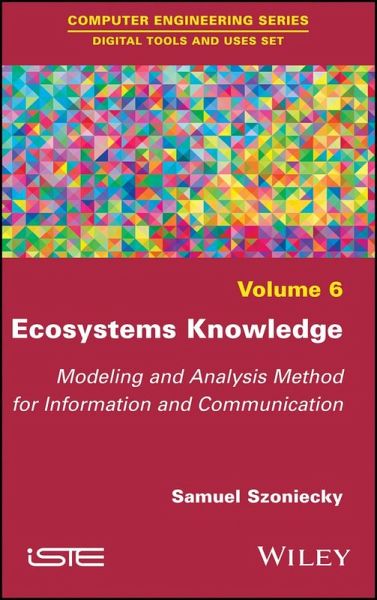
To analyze complex situations we use everyday analogies that allow us to invest in an unknown domain knowledge we have acquired in a known field. In this work the author proposes a modeling and analysis method that uses the analogy of the ecosystem to embrace the complexity of an area of knowledge. After a history of the ecosystem concept and these derivatives (nature, ecology, environment ) from antiquity to the present, the analysis method based on the modeling of socio-semantic ontologies is presented, followed by practical examples of this approach in the areas of software development,…mehr
To analyze complex situations we use everyday analogies that allow us to invest in an unknown domain knowledge we have acquired in a known field. In this work the author proposes a modeling and analysis method that uses the analogy of the ecosystem to embrace the complexity of an area of knowledge. After a history of the ecosystem concept and these derivatives (nature, ecology, environment ) from antiquity to the present, the analysis method based on the modeling of socio-semantic ontologies is presented, followed by practical examples of this approach in the areas of software development, digital humanities, Big Data, and more generally in the area of complex analysis.
Dieser Download kann aus rechtlichen Gründen nur mit Rechnungsadresse in D ausgeliefert werden.
Die Herstellerinformationen sind derzeit nicht verfügbar.
Autorenporträt
Samuel Szoniecky is a lecturer in Digital Humanities at Paris 8 University, France, and a researcher at the Laboratoire Paragraphe.
Inhaltsangabe
Introduction ix Chapter 1. Use of the Ecosystem Concept on the Web 1 1.1. For marketing 2 1.2. For personal data 4 1.3. For services and applications 5 1.4. For dynamic interactivity 7 1.5. For pictorial analogies 8 1.6. For the information and communication sciences 12 Chapter 2. Ecosystem Modeling: A Generic Method of Analysis 15 2.1. Hypertextual gardening fertilized by the chaos of John Cage 16 2.2. An entrepreneurial experience 17 2.2.1. Objectives 18 2.2.2. Principle of the game 18 2.2.3. Motivations 19 2.2.3.1. Why model a cognitive ecology? 19 2.2.3.2. The relevance of the garden analogy 20 2.2.4. Strategic interests and potential benefits 23 2.3. The maturation of a research project 24 2.3.1. Evaluating index activity 24 2.3.2. Folksonomies explorer 28 2.3.3. Tweet Palette: Semantic mapping 34 Chapter 3. Fundamental Principles for Modeling an Existence 41 3.1. Key concepts for thinking about knowledge ecosystems 42 3.1.1. The noosphere 42 3.1.2. Enaction 44 3.1.3. Complexity 45 3.1.4. Trajective reason 46 3.1.5. Agency 47 3.2. Spinozist principles for an ethical ontology 48 3.2.1. Spinoza: ethical ontology 49 3.2.2. Limitations of Spinozism 50 3.2.3. Three dimensions of existence and three kinds of knowledge 51 3.2.4. Spinozist symbol politics 55 3.2.5. Spinozist ethics for the Web 57 3.2.6. The ontological principles of Descola 58 3.2.7. Principles of ontological matrices 59 3.2.8. The Web as analogist ontology 63 3.2.9. Principles of computer models 67 3.2.10. From Zeno to Turing via Spinoza 68 3.2.11. The search for the perfect language 74 3.3. Semantic knowledge management 77 3.3.1. The boundaries of ontologies 77 3.3.2. The semantic sphere IEML 78 Chapter 4. Graphical Specifications for Modeling Existences 89 4.1. Principles of graphical modeling 90 4.1.1. Unified modeling language 90 4.1.2. Graphic partitions and diagrams 92 4.1.3. Fixed image versus dynamic diagram 94 4.2. Semantic maps 97 4.2.1. Maps of physical spaces 97 4.2.2. Time maps 99 4.2.3. Maps of conceptual spaces 101 4.2.4. Interpretation maps 107 4.3. Graphical modeling rules 110 4.3.1. Physical dimensions 110 4.3.2. Actors 111 4.3.3. Concepts 111 4.3.4. Relations 112 4.3.5. Calculating the complexity of an ecosystem 113 Chapter 5. Web Platform Specifications for Knowledge Ecosystems 117 5.1. The generic management of resources 119 5.1.1. Non-digital resources 119 5.1.2. Digital resources 122 5.1.3. Management of digital resources 131 5.2. Principles for developing a Web ecosystem platform 138 5.2.1. Databases as a model of the ecosystem 138 5.2.2. Algorithmic platform to manage the ecosystem 153 5.2.3. Editorial platform for controlling collaborative practices 157 5.2.4. Client applications to explore ecosystem views 162 5.2.5. From technical specification to the organization of collective intelligence 171 Conclusion 173 Appendix 185 Bibliography 201 Index 217
Introduction ix Chapter 1. Use of the Ecosystem Concept on the Web 1 1.1. For marketing 2 1.2. For personal data 4 1.3. For services and applications 5 1.4. For dynamic interactivity 7 1.5. For pictorial analogies 8 1.6. For the information and communication sciences 12 Chapter 2. Ecosystem Modeling: A Generic Method of Analysis 15 2.1. Hypertextual gardening fertilized by the chaos of John Cage 16 2.2. An entrepreneurial experience 17 2.2.1. Objectives 18 2.2.2. Principle of the game 18 2.2.3. Motivations 19 2.2.3.1. Why model a cognitive ecology? 19 2.2.3.2. The relevance of the garden analogy 20 2.2.4. Strategic interests and potential benefits 23 2.3. The maturation of a research project 24 2.3.1. Evaluating index activity 24 2.3.2. Folksonomies explorer 28 2.3.3. Tweet Palette: Semantic mapping 34 Chapter 3. Fundamental Principles for Modeling an Existence 41 3.1. Key concepts for thinking about knowledge ecosystems 42 3.1.1. The noosphere 42 3.1.2. Enaction 44 3.1.3. Complexity 45 3.1.4. Trajective reason 46 3.1.5. Agency 47 3.2. Spinozist principles for an ethical ontology 48 3.2.1. Spinoza: ethical ontology 49 3.2.2. Limitations of Spinozism 50 3.2.3. Three dimensions of existence and three kinds of knowledge 51 3.2.4. Spinozist symbol politics 55 3.2.5. Spinozist ethics for the Web 57 3.2.6. The ontological principles of Descola 58 3.2.7. Principles of ontological matrices 59 3.2.8. The Web as analogist ontology 63 3.2.9. Principles of computer models 67 3.2.10. From Zeno to Turing via Spinoza 68 3.2.11. The search for the perfect language 74 3.3. Semantic knowledge management 77 3.3.1. The boundaries of ontologies 77 3.3.2. The semantic sphere IEML 78 Chapter 4. Graphical Specifications for Modeling Existences 89 4.1. Principles of graphical modeling 90 4.1.1. Unified modeling language 90 4.1.2. Graphic partitions and diagrams 92 4.1.3. Fixed image versus dynamic diagram 94 4.2. Semantic maps 97 4.2.1. Maps of physical spaces 97 4.2.2. Time maps 99 4.2.3. Maps of conceptual spaces 101 4.2.4. Interpretation maps 107 4.3. Graphical modeling rules 110 4.3.1. Physical dimensions 110 4.3.2. Actors 111 4.3.3. Concepts 111 4.3.4. Relations 112 4.3.5. Calculating the complexity of an ecosystem 113 Chapter 5. Web Platform Specifications for Knowledge Ecosystems 117 5.1. The generic management of resources 119 5.1.1. Non-digital resources 119 5.1.2. Digital resources 122 5.1.3. Management of digital resources 131 5.2. Principles for developing a Web ecosystem platform 138 5.2.1. Databases as a model of the ecosystem 138 5.2.2. Algorithmic platform to manage the ecosystem 153 5.2.3. Editorial platform for controlling collaborative practices 157 5.2.4. Client applications to explore ecosystem views 162 5.2.5. From technical specification to the organization of collective intelligence 171 Conclusion 173 Appendix 185 Bibliography 201 Index 217
Es gelten unsere Allgemeinen Geschäftsbedingungen: www.buecher.de/agb
Impressum
www.buecher.de ist ein Internetauftritt der buecher.de internetstores GmbH
Geschäftsführung: Monica Sawhney | Roland Kölbl | Günter Hilger
Sitz der Gesellschaft: Batheyer Straße 115 - 117, 58099 Hagen
Postanschrift: Bürgermeister-Wegele-Str. 12, 86167 Augsburg
Amtsgericht Hagen HRB 13257
Steuernummer: 321/5800/1497
USt-IdNr: DE450055826