24,95 €
24,95 €
inkl. MwSt.
Sofort per Download lieferbar

12 °P sammeln
24,95 €
Als Download kaufen
24,95 €
inkl. MwSt.
Sofort per Download lieferbar
12 °P sammeln
Jetzt verschenken
Alle Infos zum eBook verschenken
24,95 €
inkl. MwSt.
Sofort per Download lieferbar
Alle Infos zum eBook verschenken
12 °P sammeln

Andere Kunden interessierten sich auch für
") Political Will and Improving Public Schools (eBook, PDF)24,95 €
Political Will and Improving Public Schools (eBook, PDF)24,95 €") Student Dress Codes and the First Amendment (eBook, PDF)24,95 €
Student Dress Codes and the First Amendment (eBook, PDF)24,95 €") The Silent Voice in Education (eBook, PDF)19,95 €
The Silent Voice in Education (eBook, PDF)19,95 €") School Leader Problem-Solving Skills (eBook, PDF)15,95 €
School Leader Problem-Solving Skills (eBook, PDF)15,95 €") Soft Skills for Leaders: Scenarios from Higher Education Administrators (eBook, PDF)16,95 €
Soft Skills for Leaders: Scenarios from Higher Education Administrators (eBook, PDF)16,95 €") Ethnographic Methods (eBook, PDF)45,95 €
Ethnographic Methods (eBook, PDF)45,95 €") Communicating Mobility and Technology (eBook, PDF)46,95 €
Communicating Mobility and Technology (eBook, PDF)46,95 €

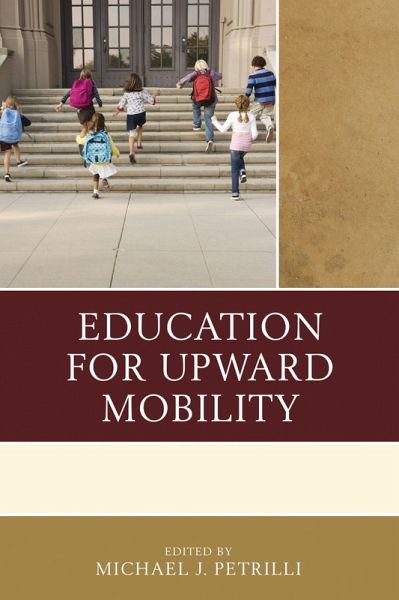
This book seeks answers to a fundamental question, perhaps one of the most important questions in America today: How can we help children born into poverty transcend their disadvantages and enter the middle class as adults? And in particular, what role can our schools play? There's little doubt that education and opportunity are tightly joined in the twenty-first-century economy. Almost every week brings a new study demonstrating that highly skilled workers are being rewarded with stronger pay and excellent working conditions, while Americans with few skills are struggling mightily. Expanding educational achievement, then, appears to be a clear route to expanding economic opportunity. Yet much of our public discourse ends there. Of course more young Americans need better education in order to succeed. But what kind of education? Is the goal "college for all"? What do we mean by "college"? Do our young people mostly need a strong foundation in academics? What about so-called "non-cognitive" skills? Should technical education make a comeback? Education for Upward Mobility provides fresh perspectives and concrete ideas for policymakers at every level of government; for leaders and policy analysts in education reform organizations in the states and in Washington; for philanthropists and membership associations; and for local superintendents and school board members. It combines the latest research evidence on relevant topics with in-depth explorations of promising practices on the ground, in real places, achieving real successes.