41,95 €
41,95 €
inkl. MwSt.
Sofort per Download lieferbar

21 °P sammeln
41,95 €
Als Download kaufen
41,95 €
inkl. MwSt.
Sofort per Download lieferbar
21 °P sammeln
Jetzt verschenken
Alle Infos zum eBook verschenken
41,95 €
inkl. MwSt.
Sofort per Download lieferbar
Alle Infos zum eBook verschenken
21 °P sammeln

Andere Kunden interessierten sich auch für
") Educational Leadership (eBook, ePUB)41,95 €
Educational Leadership (eBook, ePUB)41,95 €") Accountability and Culture of School Teachers and Principals (eBook, PDF)18,95 €
Accountability and Culture of School Teachers and Principals (eBook, PDF)18,95 €") The Nature of Educational Theories (eBook, PDF)37,95 €
The Nature of Educational Theories (eBook, PDF)37,95 €") Bearing with Strangers (eBook, PDF)39,95 €
Bearing with Strangers (eBook, PDF)39,95 €") Nancy Fraser and Participatory Parity (eBook, PDF)39,95 €
Nancy Fraser and Participatory Parity (eBook, PDF)39,95 €") The Importance of Philosophy in Teacher Education (eBook, PDF)41,95 €
The Importance of Philosophy in Teacher Education (eBook, PDF)41,95 €") Time and the Rhythms of Emancipatory Education (eBook, PDF)0,00 €
Time and the Rhythms of Emancipatory Education (eBook, PDF)0,00 €


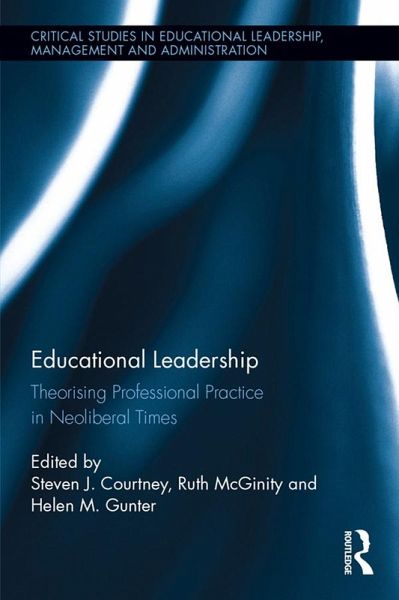
Educational Leadership brings together innovative perspectives on the crucial role of theory and theorising in educational leadership at a time when the multiple pressures of marketisation, competition and system fragmentation dominate the educational landscape. This original and highly thought-provoking edited collection is a much-needed counterbalance to the anti-theoretical trends that have underpinned recent education reforms.
Contributors employ a range of theories in original and innovate ways in order to reveal the lived experiences of what it means to be an educational leader at a time of rapid modernisation, where the conceptual terrain of 'modern' has been appropriated by corporate and private interests, where notions of 'public' are not only hidden, but also derided, and where school leaders must meet the conflicting demands of competing accountabilities. Drawing on research projects conducted in the UK, Educational Leadership presents convincing evidence that the need to consider theory crosses national borders, and the authors discuss changes to professional identities and practices that researchers around the world will recognise.
This detailed and insightful work will appeal to academics, researchers and postgraduate students in the fields of education and sociology, as well as those with an interest in organisational and political theory. The topical subject matter also makes the book of relevance to practitioners and policy-makers in education and the public services more generally.
Contributors employ a range of theories in original and innovate ways in order to reveal the lived experiences of what it means to be an educational leader at a time of rapid modernisation, where the conceptual terrain of 'modern' has been appropriated by corporate and private interests, where notions of 'public' are not only hidden, but also derided, and where school leaders must meet the conflicting demands of competing accountabilities. Drawing on research projects conducted in the UK, Educational Leadership presents convincing evidence that the need to consider theory crosses national borders, and the authors discuss changes to professional identities and practices that researchers around the world will recognise.
This detailed and insightful work will appeal to academics, researchers and postgraduate students in the fields of education and sociology, as well as those with an interest in organisational and political theory. The topical subject matter also makes the book of relevance to practitioners and policy-makers in education and the public services more generally.
Dieser Download kann aus rechtlichen Gründen nur mit Rechnungsadresse in A, B, BG, CY, CZ, D, DK, EW, E, FIN, F, GR, HR, H, IRL, I, LT, L, LR, M, NL, PL, P, R, S, SLO, SK ausgeliefert werden.
'This powerful book provides its readers with a rich and productive range of theoretical lenses drawn from the social, political, and organizational sciences to make sense of educational leadership as a professional practice in these troubling times. One of the most powerful contributions is how it captures the tensions and dilemmas for leadership practitioners as they attempt to straddle the (il)logic of practice that characterizes the contemporary education field. The book stands as a testimony to and repudiation of the Global Education Reform Movement (GERM): the book's site of practice may lie in Anglophone nations, but the dilemmas and contradictions it speaks to reach far beyond their shores. There are lessons to be learned from this book for educational practitioners from a range of nations - it is a compelling book, which should be read by scholars and practitioners in the field.' - Jane Wilkinson, Associate Professor Educational Leadership and Associate Dean, Graduate Education, Faculty of Education, Monash University, Melbourne, Australia.
'This excellent book will be of help to anyone researching educational leadership, but also head teachers and other educational leaders who want or need to confront the difficult question of what sort of leader it is possible to be in current arrangements. Educational leadership has always been important, but the last 15 years have seen a profound and far-reaching elevation of it, especially in England. It is now seen as the key to a successful school. At the same time, there are crises in recruiting and retaining head teachers, and evidence of unprecedented stress. This paradox is one of the foundations for this book, and one of the main reasons it is so important. By presenting a diverse yet coherent series of examples of scholarship driven by critical theory, it offers ways to make sense of the interplay of policy, agency, and structure.
A particularly welcome feature is the incisive engagement with the concealed theory behind policy: the sort of theorizations that claim they are nothing to do with theory, but rather 'common sense', or the realm of the 'practical'. This endlessly and deliberately refreshed element of neoliberal thinking has to be the starting-point for anyone that really cares about the nature and quality of education and its effects, or who is worried or affected by the pressure to force these things into the simplistic reckoning of examination results. Yet the book goes further than this, offering insight and imagination, pointing the way to more hopeful reconceptualizations of leadership and to opportunities for challenge and change. I wholeheartedly recommend it.' - David James, Professor, School of Social Sciences, Cardiff University, UK
'This excellent book will be of help to anyone researching educational leadership, but also head teachers and other educational leaders who want or need to confront the difficult question of what sort of leader it is possible to be in current arrangements. Educational leadership has always been important, but the last 15 years have seen a profound and far-reaching elevation of it, especially in England. It is now seen as the key to a successful school. At the same time, there are crises in recruiting and retaining head teachers, and evidence of unprecedented stress. This paradox is one of the foundations for this book, and one of the main reasons it is so important. By presenting a diverse yet coherent series of examples of scholarship driven by critical theory, it offers ways to make sense of the interplay of policy, agency, and structure.
A particularly welcome feature is the incisive engagement with the concealed theory behind policy: the sort of theorizations that claim they are nothing to do with theory, but rather 'common sense', or the realm of the 'practical'. This endlessly and deliberately refreshed element of neoliberal thinking has to be the starting-point for anyone that really cares about the nature and quality of education and its effects, or who is worried or affected by the pressure to force these things into the simplistic reckoning of examination results. Yet the book goes further than this, offering insight and imagination, pointing the way to more hopeful reconceptualizations of leadership and to opportunities for challenge and change. I wholeheartedly recommend it.' - David James, Professor, School of Social Sciences, Cardiff University, UK