69,00 €
inkl. MwSt.
Sofort per Download lieferbar
0 °P sammeln

Andere Kunden interessierten sich auch für
") Basic Yiddish (eBook, PDF)52,95 €
Basic Yiddish (eBook, PDF)52,95 €") Quellen zur jüdischen Geschichte im Heiligen Römischen Reich und seinen Nachfolgestaaten (eBook, PDF)49,00 €
Quellen zur jüdischen Geschichte im Heiligen Römischen Reich und seinen Nachfolgestaaten (eBook, PDF)49,00 €") Haut ab! (eBook, PDF)4,99 €
Haut ab! (eBook, PDF)4,99 €") 3. Makkabäerbuch (eBook, PDF)139,00 €
3. Makkabäerbuch (eBook, PDF)139,00 €") Rumänien (eBook, PDF)65,00 €
Rumänien (eBook, PDF)65,00 €") The Jewish Teachers of Jesus, James, and Jude (eBook, PDF)24,95 €
The Jewish Teachers of Jesus, James, and Jude (eBook, PDF)24,95 €") Hessisches Jiddisch (eBook, PDF)58,00 €
Hessisches Jiddisch (eBook, PDF)58,00 €

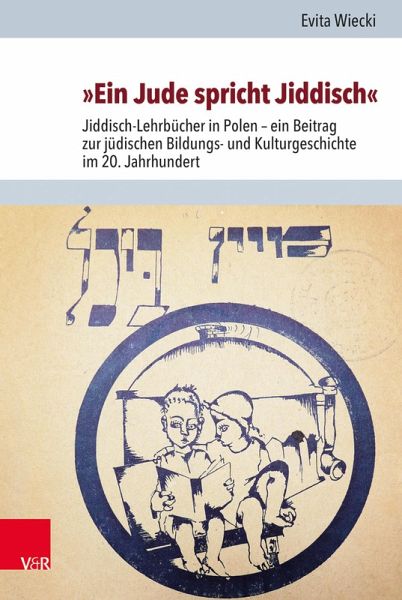
Towards the end of the 19th century, Yiddish, the mother tongue of the majority of Jews in Eastern Europe, ceased to be a mere "jargon" and became a full-fledged language of high culture and source of identity politics. Education played a vital role in this process, yet little is known about its development. Taking textbooks written between 1886 and 1964 for courses taught in Yiddish as guideposts, Evita Wiecki portrays the history of Yiddish education and culture in Poland. It is a history that, despite marked changes and the holocaust, displays significant continuities.
Dieser Download kann aus rechtlichen Gründen nur mit Rechnungsadresse in A, B, BG, CY, CZ, D, DK, EW, E, FIN, F, GR, H, IRL, I, LT, L, LR, M, NL, PL, P, R, S, SLO, SK ausgeliefert werden.