20,95 €
20,95 €
inkl. MwSt.
Sofort per Download lieferbar

10 °P sammeln
20,95 €
Als Download kaufen
20,95 €
inkl. MwSt.
Sofort per Download lieferbar
10 °P sammeln
Jetzt verschenken
Alle Infos zum eBook verschenken
20,95 €
inkl. MwSt.
Sofort per Download lieferbar
Alle Infos zum eBook verschenken
10 °P sammeln

Andere Kunden interessierten sich auch für
") A Third Term for FDR (eBook, ePUB)28,95 €
A Third Term for FDR (eBook, ePUB)28,95 €") Ronald Reagan (eBook, ePUB)38,95 €
Ronald Reagan (eBook, ePUB)38,95 €") FDR and Reagan (eBook, ePUB)44,95 €
FDR and Reagan (eBook, ePUB)44,95 €") The Hardest Job in the World (eBook, ePUB)6,99 €
The Hardest Job in the World (eBook, ePUB)6,99 €") When America Was Great (eBook, ePUB)45,95 €
When America Was Great (eBook, ePUB)45,95 €") Four Hats in the Ring (eBook, ePUB)18,95 €
Four Hats in the Ring (eBook, ePUB)18,95 €") The Real Making of the President (eBook, ePUB)11,95 €
The Real Making of the President (eBook, ePUB)11,95 €
Winner: George Pendleton Prize
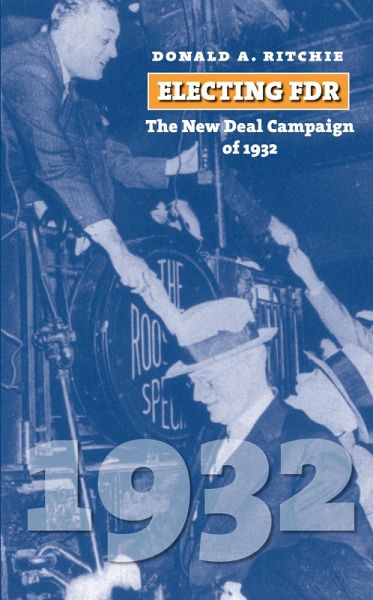
With the landmark election of Franklin Delano Roosevelt in 1932, decades of Republican ascendancy gave way to a half century of Democratic dominance. It was nothing less than a major political realignment, as the direction of federal policy shifted from conservative to liberaland liberalism itself was redefined in the process.
Electing FDR is the first book in seventy years to examine in its entirety the 1932 presidential election that ushered in the New Deal. Award-winning historian Donald Ritchie looks at how candidates responded to the nation's economic crisis and how voters evaluated their performance. More important, he explains how the Democratic Party rebuilt itself after three successive Republican landslides: where the major shifts in party affiliation took place, what contingencies contributed to FDR's victory, and why the new coalition persisted as long as it did.
Ritchie challenges prevailing assumptions that the Depression made Roosevelt's election inevitable. He shows that FDR came close to losing the nomination to contenders who might have run to the right of Hoover, and discusses the role of newspapers and radio in presenting the candidates to voters. He also analyzes Roosevelt's campaign strategies, recounting his attempts to appeal to disaffected voters of all ideological stripes, often by altering his positions to broaden his popularity.
With the advent of the New Deal, Americans came to enjoy a wide federal safety net that provided everything from old age pensions to rural electricitygovernment innovations so embraced by voters that even later conservative presidents recognized their importance. Ritchie traces this legacy through the Reagan and Bush years, but he relates how FDR in 1932 was often vague about the specifics of his program and questions whether voters really knew what they were in for with the New Deal.
As pundits, politicians, and citizens eye the upcoming 2008 campaign, Electing FDR reminds incumbents not to take their party support for granted or to underestimate their opponentsand reminds students of history that understanding the New Deal begins with the 1932's transformative election.
With the landmark election of Franklin Delano Roosevelt in 1932, decades of Republican ascendancy gave way to a half century of Democratic dominance. It was nothing less than a major political realignment, as the direction of federal policy shifted from conservative to liberaland liberalism itself was redefined in the process.
Electing FDR is the first book in seventy years to examine in its entirety the 1932 presidential election that ushered in the New Deal. Award-winning historian Donald Ritchie looks at how candidates responded to the nation's economic crisis and how voters evaluated their performance. More important, he explains how the Democratic Party rebuilt itself after three successive Republican landslides: where the major shifts in party affiliation took place, what contingencies contributed to FDR's victory, and why the new coalition persisted as long as it did.
Ritchie challenges prevailing assumptions that the Depression made Roosevelt's election inevitable. He shows that FDR came close to losing the nomination to contenders who might have run to the right of Hoover, and discusses the role of newspapers and radio in presenting the candidates to voters. He also analyzes Roosevelt's campaign strategies, recounting his attempts to appeal to disaffected voters of all ideological stripes, often by altering his positions to broaden his popularity.
With the advent of the New Deal, Americans came to enjoy a wide federal safety net that provided everything from old age pensions to rural electricitygovernment innovations so embraced by voters that even later conservative presidents recognized their importance. Ritchie traces this legacy through the Reagan and Bush years, but he relates how FDR in 1932 was often vague about the specifics of his program and questions whether voters really knew what they were in for with the New Deal.
As pundits, politicians, and citizens eye the upcoming 2008 campaign, Electing FDR reminds incumbents not to take their party support for granted or to underestimate their opponentsand reminds students of history that understanding the New Deal begins with the 1932's transformative election.
Dieser Download kann aus rechtlichen Gründen nur mit Rechnungsadresse in A, D ausgeliefert werden.